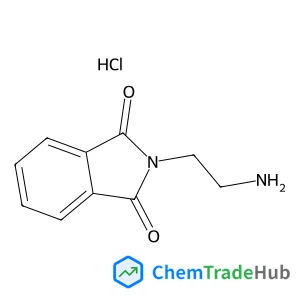
2-(2-Aminoethyl)-1H-isoindole-1,3(2H)-dione hydrochloride (1:1)
CAS Number:
30250-67-0
Molecular Formula:
C10H11ClN2O2
Shi-quan Lin, Tian-min Shao
The mechanism underlying bipolar charge distribution in the context of triboelectrification remains ambiguous. Furthermore, water can either promote or inhibit triboelectrification. It was determined through experimental and first-principles calculations that water can also reverse the polarity of transferred charges and cause a bipolar charge transfer. We examined triboelectrification between an Au/Cr-coated tip and stoichiometric Si3N2 film using Kelvin probe force microscopy. In addition, we investigated the generation of a bipolar charge distribution on the insulating Si3N2 surface by controlling the frictional conditions. With regard to the effect of a water meniscus in the interface between the surface and tip, we predicted the dissociation of water molecules on the Si3N2 surface and polarity reversing induced by water via first principles. Finally, we focused on the effect of water on the dangling bonds of Si atoms and surface states of Si3N2. The results indicated that the dangling bonds and surface states are essential to a bipolar charge transfer.
Shuming Bai, Mario Barbatti
DOI: 10.1039/C8CP02306A
Junbo Ren, Wangqing Wang, Weibin Qiu, Pingping Qiu, Zeyu Wang, Zhili Lin, Jia-Xian Wang
DOI: 10.1039/C8CP01281D
Bin Liu, Meihua Gao, Haiping Li, Jianqiang Liu, Shiling Yuan, Na Du
DOI: 10.1039/C7CP06379B
Emily Sahadeo, Jaehee Song, Karen Gaskell, Nam Kim, Sang Bok Lee
DOI: 10.1039/C7CP06312A
Mohit Chawla, Ida Autiero, Romina Oliva, Luigi Cavallo
DOI: 10.1039/C7CP07400J
Liluo Shi, Yaxin Chen, Renyue He, Xiaohong Chen, Huaihe Song
DOI: 10.1039/C8CP01681J
Sara Llamas, Laura Fernández-Peña, Víctor Ortega, Aurelio G. Csaky, Richard A. Campbell
DOI: 10.1039/C7CP05528E
Reiner Zorn, Huajie Yin, Wiebke Lohstroh, Wayne Harrison, Peter M. Budd, Brian R. Pauw, Martin Böhning, Andreas Schönhals
DOI: 10.1039/C7CP07141H
Takeyuki Sekimoto, Michio Suzuka, Tomoyasu Yokoyama, Ryusuke Uchida, Shin’ichi Machida, Takashi Sekiguchi, Kenji Kawano
DOI: 10.1039/C7CP07477H
Yadong Zhang, Qi Shi, Yuzhen Liu, Aijun Du, Ruifeng Lu
DOI: 10.1039/C8CP01648H
(1R,3S)-1,3-Cyclopentanediol finds applications in various industries. In the ph...
When handling N'-[4-(Dimethylamino)phenyl]-N,N-dimethyl-1,4-benzenediamine, it i...
There are several alternatives to 5-(2,4-Difluorophenyl)-2-methoxypyrimidine in ...
1-(3-Methoxyphenoxy)propan-2-ol (CAS: 382141-68-6) must comply with the Globally...
Tetrodotoxin Citrate is extremely dangerous and should be handled with extreme c...
2-Methyl-2-propanyl [(1R,3S)-3-hydroxycyclopentyl]carbamate (CAS: 225641-84-9) i...
Waste containing 4-(2-Hydroxyhexafluoroisopropyl)Benzoic Acid (CAS: 16261-80-6) ...
2-Methyl-2-proanyl {(2S)-1-[(benzyloxy)amino]-3-hydroxy-3-methyl-1-oxo-2-butanyl...
Benzeneethanamine, α-ethyl-, hydrochloride (1:1) is an organic compound with the...
In the synthesis of compounds similar to 3-{(E)-[4-(Dimethylamino)phenyl]diazeny...

Physical Chemistry Chemical Physics (PCCP) is an international journal co-owned by 19 physical chemistry and physics societies from around the world. This journal publishes original, cutting-edge research in physical chemistry, chemical physics and biophysical chemistry. To be suitable for publication in PCCP, articles must include significant innovation and/or insight into physical chemistry; this is the most important criterion that reviewers and Editors will judge against when evaluating submissions. The journal has a broad scope and welcomes contributions spanning experiment, theory, computation and data science. Topical coverage includes spectroscopy, dynamics, kinetics, statistical mechanics, thermodynamics, electrochemistry, catalysis, surface science, quantum mechanics, quantum computing and machine learning. Interdisciplinary research areas such as polymers and soft matter, materials, nanoscience, energy, surfaces/interfaces, and biophysical chemistry are welcomed if they demonstrate significant innovation and/or insight into physical chemistry. Joined experimental/theoretical studies are particularly appreciated when complementary and based on up-to-date approaches.
![Ethyl 3-((6-(4,5-dihydro-1H-benzo[d]azepin-3(2H)-yl)-2-(pyridin-2-yl)pyrimidin-4-yl)amino)propanoate structure](https://static.chemtradehub.com/structs/137/1373423-53-0-496a.webp "Ethyl 3-((6-(4,5-dihydro-1H-benzo[d]azepin-3(2H)-yl)-2-(pyridin-2-yl)pyrimidin-4-yl)amino)propanoate structure")