5,7,8'-Trihydroxy-2',2'-dimethyl-2'H,4H-3,6'-bichromen-4-one
CAS Number:
129280-33-7
Molecular Formula:
C20H16O6
Reiner Zorn, Huajie Yin, Wiebke Lohstroh, Wayne Harrison, Peter M. Budd, Brian R. Pauw, Martin Böhning, Andreas Schönhals
Polymers with intrinsic microporosity are promising candidates for the active separation layer in gas separation membranes. Here, the vibrational density of states (VDOS) for PIM-1, the prototypical polymer with intrinsic microporosity, is investigated by means of inelastic neutron scattering. The results are compared to data measured for a more conventional high-performance polyimide used in gas separation membranes (Matrimid). The measured data show the characteristic low frequency excess contribution to VDOS above the Debye sound wave level, generally known as the Boson peak in glass-forming materials. In comparison to the Boson peak of Matrimid, that of PIM-1 is shifted to lower frequencies. This shift is discussed considering the microporous, sponge-like structure of PIM-1 as providing a higher compressibility at the molecular scale than for conventional polymers. For an annealed PIM-1 sample, the Boson peak shifts to higher frequencies in comparison to the un-annealed sample. These changes in the VDOS of the annealed PIM-1 sample are related to changes in the microporous structure as confirmed by X-ray scattering.
Stephan Enthaler
DOI: 10.1039/C0CY00039F
Laura Martini, Sheref S. Mansy
DOI: 10.1039/C1CC13930D
Rachid Amrousse, Akimasa Tsutsumi, Ahmed Bachar
DOI: 10.1039/C2CY20439H
João Nuno Moreira, Carlos F. G. C. Geraldes, Silvia Rizzitelli, Silvio Aime, Enzo Terreno
DOI: 10.1039/C1CC14019A
Woo Jin Bae, Andrew R. Davis, Jaewoong Jung, Won Ho Jo, Kenneth R. Carter, E. Bryan Coughlin
DOI: 10.1039/C1CC13137K
Shouxin Ren, Ling Gao
DOI: 10.1039/C0AN00433B
Kalluri V. S. Ranganath, Frank Glorius
DOI: 10.1039/C0CY00069H
Chien-Tien Chen, Jun-Qi Kao, Cheng-Yuan Liu, Ling-Yu Jiang
DOI: 10.1039/C0CY00005A
Shao-Lu Li, Tangxin Xiao, Bingjie Hu, Yajie Zhang, Feng Zhao, Ya Ji, Yihua Yu, Chen Lin, Leyong Wang
DOI: 10.1039/C1CC14559B
(1R,3S)-1,3-Cyclopentanediol finds applications in various industries. In the ph...
When handling N'-[4-(Dimethylamino)phenyl]-N,N-dimethyl-1,4-benzenediamine, it i...
There are several alternatives to 5-(2,4-Difluorophenyl)-2-methoxypyrimidine in ...
1-(3-Methoxyphenoxy)propan-2-ol (CAS: 382141-68-6) must comply with the Globally...
Tetrodotoxin Citrate is extremely dangerous and should be handled with extreme c...
2-Methyl-2-propanyl [(1R,3S)-3-hydroxycyclopentyl]carbamate (CAS: 225641-84-9) i...
Waste containing 4-(2-Hydroxyhexafluoroisopropyl)Benzoic Acid (CAS: 16261-80-6) ...
2-Methyl-2-proanyl {(2S)-1-[(benzyloxy)amino]-3-hydroxy-3-methyl-1-oxo-2-butanyl...
Benzeneethanamine, α-ethyl-, hydrochloride (1:1) is an organic compound with the...
In the synthesis of compounds similar to 3-{(E)-[4-(Dimethylamino)phenyl]diazeny...

Physical Chemistry Chemical Physics (PCCP) is an international journal co-owned by 19 physical chemistry and physics societies from around the world. This journal publishes original, cutting-edge research in physical chemistry, chemical physics and biophysical chemistry. To be suitable for publication in PCCP, articles must include significant innovation and/or insight into physical chemistry; this is the most important criterion that reviewers and Editors will judge against when evaluating submissions. The journal has a broad scope and welcomes contributions spanning experiment, theory, computation and data science. Topical coverage includes spectroscopy, dynamics, kinetics, statistical mechanics, thermodynamics, electrochemistry, catalysis, surface science, quantum mechanics, quantum computing and machine learning. Interdisciplinary research areas such as polymers and soft matter, materials, nanoscience, energy, surfaces/interfaces, and biophysical chemistry are welcomed if they demonstrate significant innovation and/or insight into physical chemistry. Joined experimental/theoretical studies are particularly appreciated when complementary and based on up-to-date approaches.

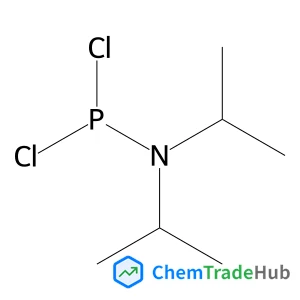
![N,N'-1,2-Ethanediylbis[2-(vinylsulfonyl)acetamide] structure](https://static.chemtradehub.com/structs/667/66710-66-5-b556.webp "N,N'-1,2-Ethanediylbis[2-(vinylsulfonyl)acetamide] structure")