












Dynamic tailoring of electromagnetic behaviors of graphene plasmonic oligomers by local chemical potential
Literature Information
Publication Date
2018-05-22
DOI
10.1039/C8CP01281D
Impact Factor
3.676
Authors
Junbo Ren, Wangqing Wang, Weibin Qiu, Pingping Qiu, Zeyu Wang, Zhili Lin, Jia-Xian Wang
View Original
Abstract
In the mid-infrared and terahertz (THz) regime, graphene supports tunable surface plasmon resonance (SPR) by controlling the chemical potential, which promotes light–matter interaction at the selected wavelength, showing exceptional promise for optoelectronic applications. In this article, we show that the electromagnetic (EM) response of graphene oligomers can be substantially modified by the modification of the local chemical potential, strengthening or reducing the intrinsic plasmonic modes. The effect mechanism is corroborated by a graphene nanocluster composed of 13 nanodisks with D6h symmetry; by transforming to D3h symmetry, the effect mechanism was retained and more available plasmonic resonance modes appeared. The intriguing properties open a new way to design nanodevices made of graphene oligomers with highly efficient photoresponse enhancement and tunable spectral selectivity for highly accurate photodetection.
Related Literature
Empirical modelling as an experimental approach to optimize lactone production
Nelma Gomes, José A. Teixeira, Isabel Belo
2011-02-04
Paper
DOI: 10.1039/C0CY00017E
Reduction of organic azides to amines using reusable Fe3O4nanoparticles in aqueous medium
Subham Surana, Ajay Chauhan, Bibudha Parasar
2012-12-19
Communication
DOI: 10.1039/C2CY20776A
Pentametallic lanthanide-alkoxide square-based pyramids: high energy barrier for thermal relaxation in a holmium single molecule magnet‡
Robin J. Blagg, Floriana Tuna, Eric J. L. McInnes, Richard E. P. Winpenny
2011-09-01
Communication
DOI: 10.1039/C1CC14186D
Titanium nitride catalyst cathode in a Li–air fuel cell with an acidic aqueous solution
Ping He, Yonggang Wang, Haoshen Zhou
2011-09-05
Communication
DOI: 10.1039/C1CC14144A
The preparation of 2H-1,4-benzoxazin-3-(4H)-ones viapalladium-catalyzed intramolecular C–O bond formation
Kai E. O. Ylijoki, E. Peter Kündig
2011-08-24
Communication
DOI: 10.1039/C1CC14209G
An organogel formed from a cyclic β-aminoalcohol
Chuanqing Kang, Zheng Bian, Yabing He, Fushe Han, Xuepeng Qiu, Lianxun Gao
2011-08-24
Communication
DOI: 10.1039/C1CC13179F
Breaking the Fischer–Tropsch synthesis selectivity: direct conversion of syngas to gasoline over hierarchical Co/H-ZSM-5 catalysts
Sina Sartipi, Kshitij Parashar, Michiel Makkee, Jorge Gascon, Freek Kapteijn
2012-12-06
Communication
DOI: 10.1039/C2CY20744C
Fused perylenebisimide–carbazole: new ladder chromophores with enhanced third-order nonlinear optical activities
Yang Yang, Yaochuan Wang, Yuanpeng Xie, Tao Xiong, Zhongyi Yuan, Youdi Zhang, Shixiong Qian, Yi Xiao
2011-08-25
Communication
DOI: 10.1039/C1CC14071J
Cell-like systems with riboswitch controlled gene expression
Laura Martini, Sheref S. Mansy
2011-08-25
Communication
DOI: 10.1039/C1CC13930D
Novel N,O-Cu(OAc)2 complex catalysed diastereo- and enantioselective 1,4-addition of glycine derivatives to alkylidene malonates
Ming Wang, Yu-Hua Shi, Jun-Fei Luo, Wenting Du, Xiao-Xin Shi, Wei-Ping Deng
2011-02-04
Paper
DOI: 10.1039/C0CY00001A
You might also like
Compound Q&A
What industries use (1R,3S)-1,3-Cyclopentanediol (CAS: 16326-97-9)?
(1R,3S)-1,3-Cyclopentanediol finds applications in various industries. In the ph...
16326-97-9(1R,3S)-1,3-Cyclopen...
Compound Q&A
What precautions should be taken when handling N'-[4-(Dimethylamino)phenyl]-N,N-dimethyl-1,4-benzenediamine (CAS: 637-31-0)?
When handling N'-[4-(Dimethylamino)phenyl]-N,N-dimethyl-1,4-benzenediamine, it i...
637-31-0N'-[4-(Dimethylamino...
Compound Q&A
Are there alternatives to 5-(2,4-Difluorophenyl)-2-methoxypyrimidine (CAS: 1352318-16-1) in synthesis?
There are several alternatives to 5-(2,4-Difluorophenyl)-2-methoxypyrimidine in ...
1352318-16-15-(2,4-Difluoropheny...
Compound Q&A
What regulatory guidelines apply to 1-(3-Methoxyphenoxy)propan-2-ol (CAS: 382141-68-6)?
1-(3-Methoxyphenoxy)propan-2-ol (CAS: 382141-68-6) must comply with the Globally...
382141-68-61-(3-Methoxyphenoxy)...
Compound Q&A
Is Tetrodotoxin Citrate (CAS: 18660-81-6) safe?
Tetrodotoxin Citrate is extremely dangerous and should be handled with extreme c...
18660-81-6Tetrodotoxin Citrate
Compound Q&A
What are the main uses of 2-Methyl-2-propanyl [(1R,3S)-3-hydroxycyclopentyl]carbamate (CAS: 225641-84-9)?
2-Methyl-2-propanyl [(1R,3S)-3-hydroxycyclopentyl]carbamate (CAS: 225641-84-9) i...
225641-84-92-Methyl-2-propanyl ...
Compound Q&A
How should waste containing 4-(2-Hydroxyhexafluoroisopropyl)Benzoic Acid (CAS: 16261-80-6) be handled?
Waste containing 4-(2-Hydroxyhexafluoroisopropyl)Benzoic Acid (CAS: 16261-80-6) ...
16261-80-64-(2-Hydroxyhexafluo...
Compound Q&A
How is 2-Methyl-2-proanyl {(2S)-1-[(benzyloxy)amino]-3-hydroxy-3-methyl-1-oxo-2-butanyl}carbamate (CAS: 102507-19-7) typically synthesized?
2-Methyl-2-proanyl {(2S)-1-[(benzyloxy)amino]-3-hydroxy-3-methyl-1-oxo-2-butanyl...
102507-19-72-Methyl-2-propanyl ...
Compound Q&A
What is Benzeneethanamine, α-ethyl-, hydrochloride (1:1) (CAS: 20735-15-3)?
Benzeneethanamine, α-ethyl-, hydrochloride (1:1) is an organic compound with the...
20735-15-3Benzeneethanamine, α...
Compound Q&A
Are there alternatives to 3-{(E)-[4-(Dimethylamino)phenyl]diazenyl}benzoic acid (CAS: 20691-84-3) in synthesis?
In the synthesis of compounds similar to 3-{(E)-[4-(Dimethylamino)phenyl]diazeny...
20691-84-33-{(E)-[4-(Dimethyla...
Source Journal
Physical Chemistry Chemical Physics

CiteScore:
5.5
Self-citation Rate:
10.3%
Articles per Year:
3036
Physical Chemistry Chemical Physics (PCCP) is an international journal co-owned by 19 physical chemistry and physics societies from around the world. This journal publishes original, cutting-edge research in physical chemistry, chemical physics and biophysical chemistry. To be suitable for publication in PCCP, articles must include significant innovation and/or insight into physical chemistry; this is the most important criterion that reviewers and Editors will judge against when evaluating submissions. The journal has a broad scope and welcomes contributions spanning experiment, theory, computation and data science. Topical coverage includes spectroscopy, dynamics, kinetics, statistical mechanics, thermodynamics, electrochemistry, catalysis, surface science, quantum mechanics, quantum computing and machine learning. Interdisciplinary research areas such as polymers and soft matter, materials, nanoscience, energy, surfaces/interfaces, and biophysical chemistry are welcomed if they demonstrate significant innovation and/or insight into physical chemistry. Joined experimental/theoretical studies are particularly appreciated when complementary and based on up-to-date approaches.
Recommended Compounds
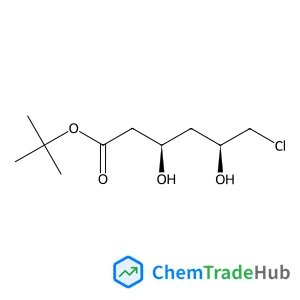
2-Methyl-2-propanyl (3R,5S)-6-chloro-3,5-dihydroxyhexanoate
CAS Number:
154026-93-4
Molecular Formula:
C10H19ClO4

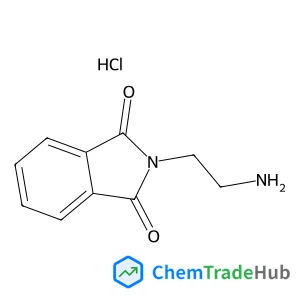
2-(2-Aminoethyl)-1H-isoindole-1,3(2H)-dione hydrochloride (1:1)
CAS Number:
30250-67-0
Molecular Formula:
C10H11ClN2O2
Recommended Suppliers





Disclaimer
This page provides academic journal information for reference and research purposes only. We are not affiliated with any journal publishers and do not handle publication submissions. For publication-related inquiries, please contact the respective journal publishers directly.
If you notice any inaccuracies in the information displayed, please contact us at support@chemtradehub.com. We will promptly review and address your concerns.