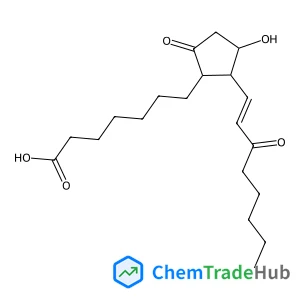
(11alpha,13E)-11-Hydroxy-9,15-dioxoprost-13-en-1-oic acid
CAS Number:
22973-19-9
Molecular Formula:
C20H32O5
Chaoping Liang, Yongping Zheng, Nickolas Ashburn, Young Jun Oh, Fantai Kong, Chenxi Zhang, Yifan Nie, Jian Sun, Kaihua He, Yu Ye, Rong Chen, Kyeongjae Cho
Transition metal (TM) modification is a common strategy for converting an earth-abundant mineral into a cost-effective catalyst for industrial applications. Among a variety of minerals, Al2SiO5, which has three phases, andalusite, sillimanite and kyanite, is emerging as a promising candidate for new catalyst development. In this paper, we use Mn to demonstrate the rationale of 3d TM doping at the Al sites in each of these three phases through first-principles calculations and the cluster expansion method. The results of cluster expansion show that Mn has a strong site preference for the six-coordinated Al octahedral chains in the andalusite and sillimanite phases, while distributing randomly in the kyanite phase. Moreover, Mn can only replace Al in sillimanite and kyanite in low concentrations; however, higher concentrations of Mn can replace Al in andalusite. We found that the concentration sensitivity is due to the Jahn–Teller distortion and 3d orbital splitting. This finding can also explain the low doping concentrations of other 3d TMs (Fe, Cr and V) in Al2SiO5 compounds. Based on the calculated Helmholtz free energy, we constructed a (MnxAl1−x)AlSiO5 temperature-composite phase diagram, which explains the physical mechanisms behind the results for 3d transition metal doping and phase transitions in Al2SiO5. This work could shed light on the related physics, chemistry, and geoscience of (MnxAl1−x)AlSiO5, and more importantly, a design rationale for the engineering of cheap catalysts.
Maaike Rump, Shantanu Maheshwari, Lei Bao
DOI: 10.1039/C8CP02353K
DOI: 10.1039/C8CP07276K
Takatoshi Fujita, Md. Khorshed Alam, Takeo Hoshi
DOI: 10.1039/C8CP05574B
Andres Rojano Crisson, Enrique Wagemann, Harvey A. Zambrano
DOI: 10.1039/C8CP03186J
James A. Jarvis, Maria Concistre, Richard W. Bounds, Ilya Kuprov, Marina Carravetta, Philip T. F. Williamson
DOI: 10.1039/C8CP06276E
Xue Yao, Yaru Wang, Xingyou Lang, Yongfu Zhu, Qing Jiang
DOI: 10.1039/C8CP07267A
Ranganathan Krishnan, Shiuan-Yau Wu, Hsin-Tsung Chen
DOI: 10.1039/C8CP04745F
Ian Carmichael
DOI: 10.1039/C8CP02718H
Bertrand Morel, Maria Paz Carrasco, Samuel Jurado, Carmen Marco, Francisco Conejero-Lara
DOI: 10.1039/C8CP02685H
Deepak Ojha, Amalendu Chandra
DOI: 10.1039/C8CP07121G
6-(3-Fluorophenyl)picolinic acid is generally considered safe for laboratory use...
(3R)-3-Pyrrolidinol is used in the pharmaceutical industry as a precursor for dr...
When handling (4R,5R)-4,5-Diethoxycarbonyl-2,2-dimethyldioxolane (CAS: 59779-75-...
1-(6-Chloroimidazo[1,2-b]pyridazin-3-yl)ethanone is often synthesized via a mult...
The market for N-Ethyl-3,4-dimethylbenzylamine (CAS: 39180-83-1) remains steady,...
Tert-butyl 3-(pyrrolidin-1-yl)azetidine-1-carboxylate is a chemical compound wit...
1-Bromo-3-chloro-2,4-dimethoxybenzene (CAS: 1228956-93-1) falls under the classi...
The safety of 8-Bromo-2-methyl-3,4-dihydroisoquinolin-1(2H)-one (CAS: 1368622-07...
Benzyl [(3S)-2,6-dioxo-3-piperidinyl]carbamate is generally safe when handled wi...
1-{[4-(4,4,5,5-Tetramethyl-1,3,2-dioxaborolan-2-yl)phenyl]sulfonyl}pyrrolidine s...

Physical Chemistry Chemical Physics (PCCP) is an international journal co-owned by 19 physical chemistry and physics societies from around the world. This journal publishes original, cutting-edge research in physical chemistry, chemical physics and biophysical chemistry. To be suitable for publication in PCCP, articles must include significant innovation and/or insight into physical chemistry; this is the most important criterion that reviewers and Editors will judge against when evaluating submissions. The journal has a broad scope and welcomes contributions spanning experiment, theory, computation and data science. Topical coverage includes spectroscopy, dynamics, kinetics, statistical mechanics, thermodynamics, electrochemistry, catalysis, surface science, quantum mechanics, quantum computing and machine learning. Interdisciplinary research areas such as polymers and soft matter, materials, nanoscience, energy, surfaces/interfaces, and biophysical chemistry are welcomed if they demonstrate significant innovation and/or insight into physical chemistry. Joined experimental/theoretical studies are particularly appreciated when complementary and based on up-to-date approaches.