


![Pyrazolo[1,5-a]pyridine-3-carbothioamide structure](https://static.chemtradehub.com/structs/885/885275-44-5-aae0.webp "Pyrazolo[1,5-a]pyridine-3-carbothioamide structure")
Effect of an external electric field on capillary filling of water in hydrophilic silica nanochannels
Literature Information
Publication Date
2018-06-22
DOI
10.1039/C8CP03186J
Impact Factor
3.676
Authors
Andres Rojano Crisson, Enrique Wagemann, Harvey A. Zambrano
View Original
Abstract
Development of functional nanofluidic devices requires understanding the fundamentals of capillary driven flow in nanochannels. In this context, we conduct molecular dynamics simulations of water capillary imbibition in silica nanoslits under externally applied electric (E) fields with strengths between 0 and 1 V nm−1. For increasing E-fields, we observe a systematic lowering in the meniscus contact angle and a decrease in the corresponding water filling rates. These results contrast markedly the classical Washburn–Bosanquet's equation which predicts an increase in filling rates for lower water contact angles. Our study provides evidence that the observed decrease in water filling rates can be attributed to the interplay between two underlying mechanisms, a reduced fluidity of interfacial water and a systematic alignment of the water molecules in the bulk as a response to the particular strength of the applied E-field. Therefore, during water capillary filling a constant E-field applied in the direction parallel to the water imbibition leads to a lower than expected filling rate caused by a viscosity increase in the bulk and an altered solid–liquid friction on the channel walls. These coupled mechanisms governing capillarity under the action of applied E-fields could be manipulated for controlling imbibition of polar liquid solutions in nanofluidic devices.
Recommended Journals

Physical Chemistry Chemical Physics

Angewandte Chemie International Edition

Molecular Diversity

Green Chemistry

CrystEngComm

Photochemical & Photobiological Sciences

Mini-Reviews in Medicinal Chemistry

Nature Reviews Drug Discovery

Advanced Engineering Materials

Journal of Enzyme inhibition and Medicinal Chemistry
Related Literature
Metal selectivity and translocation mechanism characterization in proteoliposomes of the transmembrane NiCoT transporter NixA from Helicobacter pylori
Jayoh A. Hernandez, Paul S. Micus, Sean Alec Lois Sunga, Luca Mazzei, Stefano Ciurli, Gabriele Meloni
2023-11-29
Edge Article
DOI: 10.1039/D3SC05135H
Organic metal chalcogenide-assisted metabolic molecular diagnosis of central precocious puberty
Dan Ouyang, Chuanzhe Wang, Chao Zhong, Juan Lin, Gang Xu, Guane Wang, Zian Lin
2023-11-27
Edge Article
DOI: 10.1039/D3SC05633C
Group 13 ion coordination to pyridyl breaks the reduction potential vs. hydricity scaling relationship for dihydropyridinates
Leo W. T. Parsons, James C. Fettinger, Louise A. Berben
2023-11-16
Edge Article
DOI: 10.1039/D3SC03806H
Recent advances in the utilization of covalent organic frameworks (COFs) as electrode materials for supercapacitors
Shen Xu, Jinghang Wu, Xiang Wang
2023-11-07
Review Article
DOI: 10.1039/D3SC04571D
Strain induced reactivity of cyclic iminoboranes: the (2 + 2) cycloaddition of a 1H-1,3,2-diazaborepine with ethene
Divanshu Gupta, Ralf Einholz, Holger F. Bettinger
2023-12-12
Edge Article
DOI: 10.1039/D3SC04901A
An atomic surface site interaction point description of non-covalent interactions
Maria Chiara Storer, Katarzyna J. Zator, Derek P. Reynolds, Christopher A. Hunter
2023-12-08
Edge Article
DOI: 10.1039/D3SC05690B
Boosting the interfacial dynamics and thermodynamics in polyanion cathode by carbon dots for ultrafast-charging sodium ion batteries
Yujin Li, Yu Mei, Roya Momen, Bai Song, Yujie Huang, Xue Zhong, Hanrui Ding, Wentao Deng, Guoqiang Zou, Hongshuai Hou, Xiaobo Ji
2023-11-30
Edge Article
DOI: 10.1039/D3SC05593K
Endogenous metal-ion dynamic nuclear polarization for NMR signal enhancement in metal organic frameworks
Ilia B. Moroz, Yishay Feldman, Raanan Carmieli, Xinyu Liu, Michal Leskes
2023-12-02
Edge Article
DOI: 10.1039/D3SC03456A
Lewis acid catalysed polymerisation of cyclopentenone
Deepamali Dissanayake, Alysia Draper, Neelofur Jaunnoo, Joris J. Haven, Craig Forsyth, Alasdair I. McKay, Tanja Junkers, Dragoslav Vidović
2023-12-02
Edge Article
DOI: 10.1039/D3SC05186B
You might also like
Compound Q&A
What precautions should be taken when handling 4-(2-Furylmethyl)thiomorpholine 1,1-dioxide (CAS: 79206-94-3)?
When handling 4-(2-Furylmethyl)thiomorpholine 1,1-dioxide (CAS: 79206-94-3), it ...
79206-94-34-(2-Furylmethyl)thi...
Compound Q&A
What precautions should be taken when handling 4-Chloro-N-[2-(4-morpholinyl)ethyl]benzamide (CAS: 71320-77-9)?
When handling 4-Chloro-N-[2-(4-morpholinyl)ethyl]benzamide (CAS: 71320-77-9), it...
71320-77-94-Chloro-N-[2-(4-mor...
Compound Q&A
How should waste containing 2-[2-(2-Methoxyethoxy)ethoxy]ethyl 4-methylbenzenesulfonate (CAS: 62921-74-8) be handled?
Waste containing this compound (CAS: 62921-74-8) should be handled according to ...
62921-74-82-[2-(2-Methoxyethox...
Compound Q&A
How should waste containing (S)-Methyl 2-amino-3-cyclohexylpropanoate be handled?
Waste containing (S)-Methyl 2-amino-3-cyclohexylpropanoate should be collected i...
40056-18-6(S)-Methyl 2-amino-3...
Compound Q&A
How is 5-({4-[(2S,4R)-4-Hydroxy-2-methyltetrahydro-2H-pyran-4-yl]-2-thienyl}sulfanyl)-1-methyl-1,3-dihydro-2H-indol-2-one (CAS: 166882-70-8) typically synthesized?
This compound can be synthesized using a multi-step process involving the conjug...
166882-70-85-({4-[(2S,4R)-4-Hyd...
Compound Q&A
Are there alternatives to (2E)-3-(3,4-Dichlorophenyl)acrylic acid (CAS: 7312-27-8) in synthesis?
There are several alternatives to (2E)-3-(3,4-Dichlorophenyl)acrylic acid in syn...
7312-27-8(2E)-3-(3,4-Dichloro...
Compound Q&A
How should Ethyl 6-(2-nitrophenyl)imidazo[2,1-b][1,3]thiazole-3-carboxylate (CAS: 925437-84-9) be stored?
Ethyl 6-(2-nitrophenyl)imidazo[2,1-b][1,3]thiazole-3-carboxylate (CAS: 925437-84...
925437-84-9Ethyl 6-(2-nitrophen...
Compound Q&A
How should waste containing 2-(1,3-Thiazol-2-yl)ethanamine (CAS: 18453-07-1) be handled?
Waste containing 2-(1,3-Thiazol-2-yl)ethanamine (CAS: 18453-07-1) should be coll...
18453-07-12-(1,3-Thiazol-2-yl)...
Compound Q&A
How is Methyl 5-iodo-2-methylbenzoate (CAS: 103440-54-6) typically synthesized?
Methyl 5-iodo-2-methylbenzoate can be synthesized through the iodination of meth...
103440-54-6Methyl 5-iodo-2-meth...
Compound Q&A
How is 5-Chloro[1,2,4]triazolo[1,5-a]pyridine (CAS: 1427399-34-5) typically synthesized?
5-Chloro[1,2,4]triazolo[1,5-a]pyridine is commonly synthesized via the condensat...
1427399-34-55-Chloro[1,2,4]triaz...
Source Journal
Physical Chemistry Chemical Physics
CiteScore:
5.5
Self-citation Rate:
10.3%
Articles per Year:
3036
Physical Chemistry Chemical Physics (PCCP) is an international journal co-owned by 19 physical chemistry and physics societies from around the world. This journal publishes original, cutting-edge research in physical chemistry, chemical physics and biophysical chemistry. To be suitable for publication in PCCP, articles must include significant innovation and/or insight into physical chemistry; this is the most important criterion that reviewers and Editors will judge against when evaluating submissions. The journal has a broad scope and welcomes contributions spanning experiment, theory, computation and data science. Topical coverage includes spectroscopy, dynamics, kinetics, statistical mechanics, thermodynamics, electrochemistry, catalysis, surface science, quantum mechanics, quantum computing and machine learning. Interdisciplinary research areas such as polymers and soft matter, materials, nanoscience, energy, surfaces/interfaces, and biophysical chemistry are welcomed if they demonstrate significant innovation and/or insight into physical chemistry. Joined experimental/theoretical studies are particularly appreciated when complementary and based on up-to-date approaches.
Recommended Compounds
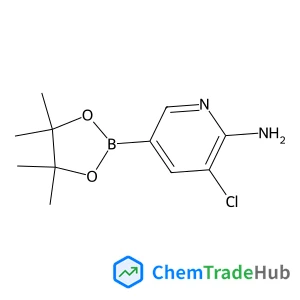
3-Chloro-5-(4,4,5,5-tetramethyl-1,3,2-dioxaborolan-2-yl)-2-pyridinamine
CAS Number:
1032758-99-8
Molecular Formula:
C11H16BClN2O2
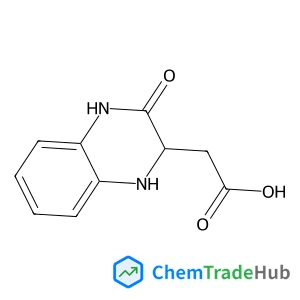
(3-Oxo-1,2,3,4-tetrahydro-2-quinoxalinyl)acetic acid
CAS Number:
136584-14-0
Molecular Formula:
C10H10N2O3
![5-Methyl-4,5,6,7-tetrahydropyrazolo[1,5-a]pyrazin-2-amine structure](https://static.chemtradehub.com/structs/122/1227210-33-4-8d64.webp "5-Methyl-4,5,6,7-tetrahydropyrazolo[1,5-a]pyrazin-2-amine structure")
5-Methyl-4,5,6,7-tetrahydropyrazolo[1,5-a]pyrazin-2-amine
CAS Number:
1227210-33-4
Molecular Formula:
C7H12N4
Recommended Suppliers






Disclaimer
This page provides academic journal information for reference and research purposes only. We are not affiliated with any journal publishers and do not handle publication submissions. For publication-related inquiries, please contact the respective journal publishers directly.
If you notice any inaccuracies in the information displayed, please contact us at support@chemtradehub.com. We will promptly review and address your concerns.