












Thousand-atom ab initio calculations of excited states at organic/organic interfaces: toward first-principles investigations of charge photogeneration
Literature Information
Publication Date
2018-10-01
DOI
10.1039/C8CP05574B
Impact Factor
3.676
Authors
Takatoshi Fujita, Md. Khorshed Alam, Takeo Hoshi
View Original
Abstract
Predicting electronically excited states across electron-donor/electron acceptor interfaces is essential for understanding the charge photogeneration process in organic solar cells. However, organic solar cells are large and disordered systems, and their excited states cannot be easily accessed by conventional quantum chemistry approaches. Moreover, a large number of excited states must be obtained to fully understand the charge separation mechanism. Recently, we have developed a novel fragment-based excited state method which can efficiently calculate a large number of states in molecular aggregates. In this article, we demonstrate the large-scale excited-state calculations by investigating interfacial charge transfer (ICT) states across the electron-donor/electron acceptor interfaces. As the model systems, we considered the face-on and edge-on configurations of pentacene/C60 bilayer heterojunction structures. These model structures contain approximately 1.8 × 10⁵ atoms, and their local interface regions containing 2000 atoms were treated quantum mechanically, embedded in the electrostatic potentials from the remaining parts. Therefore, the charge delocalization effect, structural disorder, and the resulting heterogeneous electrostatic and polarizable environments were taken into account in the excited-state calculations. The computed energies of the low-lying ICT states are in reasonable agreement with experimental estimates. By comparing the edge-on and face-on configurations of the pentacene/C60 interfaces, we discuss the influence of interfacial morphologies on the energetics and charge delocalization of ICT states. In addition, we present the detailed characterization of excited states and highlight the importance of hybridization effects between pentacene excited states and ICT states. The large-scale ab initio calculations for the interface systems enabled the exploration of the ICT states, leading to first-principles investigation of the charge separation mechanism in organic solar cells.
Related Literature
Critical assessment of selenourea as an efficient small molecule fluorescence quenching probe to monitor protein dynamics
2023-09-26
Edge Article
DOI: 10.1039/D3SC04287A
Selective chiral dimerization and folding driven by arene–perfluoroarene force
Qiuhong Cheng, Aiyou Hao, Pengyao Xing
2023-11-29
Edge Article
DOI: 10.1039/D3SC05212E
Evoking C2+ production from electrochemical CO2 reduction by the steric confinement effect of ordered porous Cu2O
Longlong Fan, Qinghong Geng, Lian Ma, Chengming Wang, Jun-Xuan Li, Wei Zhu, Ruiwen Shao, Wei Li, Xiao Feng
2023-11-11
Edge Article
DOI: 10.1039/D3SC04840C
Manipulating the crystal plane angle within the primary particle arrangement for the radial ordered structure in a Ni-rich cathode
Ting Chen, Chuyao Wen, Chen Wu, Lang Qiu, Zhenguo Wu, Jiayang Li, Yanfang Zhu, Haoyu Li, Qingquan Kong, Yang Song, Fang Wan, Mingzhe Chen, Ismael Saadoune, Benhe Zhong, Shixue Dou, Yao Xiao
2023-11-27
Edge Article
DOI: 10.1039/D3SC05461F
An atomic surface site interaction point description of non-covalent interactions
Maria Chiara Storer, Katarzyna J. Zator, Derek P. Reynolds, Christopher A. Hunter
2023-12-08
Edge Article
DOI: 10.1039/D3SC05690B
An orbitally adapted push–pull template for N2 activation and reduction to diazene-diide
David Specklin, Marie-Christine Boegli, Anaïs Coffinet, Léon Escomel, Laure Vendier, Mary Grellier, Antoine Simonneau
2023-11-21
Edge Article
DOI: 10.1039/D3SC04390H
Photoinduced cerium-catalyzed C–H acylation of unactivated alkanes
Jing Cao, Joshua L. Zhu, Karl A. Scheidt
2023-11-25
Edge Article
DOI: 10.1039/D3SC05162E
EnzymeMap: curation, validation and data-driven prediction of enzymatic reactions
Daniel Probst, William H. Green, Georg K. H. Madsen
2023-11-22
Edge Article
DOI: 10.1039/D3SC02048G
A recombinant approach for stapled peptide discovery yields inhibitors of the RAD51 recombinase
Pedro Zuazua-Villar, Oliwia Koczy, Andrew J. Counsell, Stephen J. Walsh, Naomi S. Robertson, David R. Spring, Jessica A. Downs, Marko Hyvönen
2023-11-21
Edge Article
DOI: 10.1039/D3SC03331G
A salt-concentrated electrolyte for aqueous ammonium-ion hybrid batteries
Jianming Meng, Jing Wang, Peng Hei, Chang Liu, Mengxue Li, Yulai Lin
2023-11-29
Edge Article
DOI: 10.1039/D3SC05318K
You might also like
Compound Q&A
What precautions should be taken when handling 4-(2-Furylmethyl)thiomorpholine 1,1-dioxide (CAS: 79206-94-3)?
When handling 4-(2-Furylmethyl)thiomorpholine 1,1-dioxide (CAS: 79206-94-3), it ...
79206-94-34-(2-Furylmethyl)thi...
Compound Q&A
What precautions should be taken when handling 4-Chloro-N-[2-(4-morpholinyl)ethyl]benzamide (CAS: 71320-77-9)?
When handling 4-Chloro-N-[2-(4-morpholinyl)ethyl]benzamide (CAS: 71320-77-9), it...
71320-77-94-Chloro-N-[2-(4-mor...
Compound Q&A
How should waste containing 2-[2-(2-Methoxyethoxy)ethoxy]ethyl 4-methylbenzenesulfonate (CAS: 62921-74-8) be handled?
Waste containing this compound (CAS: 62921-74-8) should be handled according to ...
62921-74-82-[2-(2-Methoxyethox...
Compound Q&A
How should waste containing (S)-Methyl 2-amino-3-cyclohexylpropanoate be handled?
Waste containing (S)-Methyl 2-amino-3-cyclohexylpropanoate should be collected i...
40056-18-6(S)-Methyl 2-amino-3...
Compound Q&A
How is 5-({4-[(2S,4R)-4-Hydroxy-2-methyltetrahydro-2H-pyran-4-yl]-2-thienyl}sulfanyl)-1-methyl-1,3-dihydro-2H-indol-2-one (CAS: 166882-70-8) typically synthesized?
This compound can be synthesized using a multi-step process involving the conjug...
166882-70-85-({4-[(2S,4R)-4-Hyd...
Compound Q&A
Are there alternatives to (2E)-3-(3,4-Dichlorophenyl)acrylic acid (CAS: 7312-27-8) in synthesis?
There are several alternatives to (2E)-3-(3,4-Dichlorophenyl)acrylic acid in syn...
7312-27-8(2E)-3-(3,4-Dichloro...
Compound Q&A
How should Ethyl 6-(2-nitrophenyl)imidazo[2,1-b][1,3]thiazole-3-carboxylate (CAS: 925437-84-9) be stored?
Ethyl 6-(2-nitrophenyl)imidazo[2,1-b][1,3]thiazole-3-carboxylate (CAS: 925437-84...
925437-84-9Ethyl 6-(2-nitrophen...
Compound Q&A
How should waste containing 2-(1,3-Thiazol-2-yl)ethanamine (CAS: 18453-07-1) be handled?
Waste containing 2-(1,3-Thiazol-2-yl)ethanamine (CAS: 18453-07-1) should be coll...
18453-07-12-(1,3-Thiazol-2-yl)...
Compound Q&A
How is Methyl 5-iodo-2-methylbenzoate (CAS: 103440-54-6) typically synthesized?
Methyl 5-iodo-2-methylbenzoate can be synthesized through the iodination of meth...
103440-54-6Methyl 5-iodo-2-meth...
Compound Q&A
How is 5-Chloro[1,2,4]triazolo[1,5-a]pyridine (CAS: 1427399-34-5) typically synthesized?
5-Chloro[1,2,4]triazolo[1,5-a]pyridine is commonly synthesized via the condensat...
1427399-34-55-Chloro[1,2,4]triaz...
Source Journal
Physical Chemistry Chemical Physics

CiteScore:
5.5
Self-citation Rate:
10.3%
Articles per Year:
3036
Physical Chemistry Chemical Physics (PCCP) is an international journal co-owned by 19 physical chemistry and physics societies from around the world. This journal publishes original, cutting-edge research in physical chemistry, chemical physics and biophysical chemistry. To be suitable for publication in PCCP, articles must include significant innovation and/or insight into physical chemistry; this is the most important criterion that reviewers and Editors will judge against when evaluating submissions. The journal has a broad scope and welcomes contributions spanning experiment, theory, computation and data science. Topical coverage includes spectroscopy, dynamics, kinetics, statistical mechanics, thermodynamics, electrochemistry, catalysis, surface science, quantum mechanics, quantum computing and machine learning. Interdisciplinary research areas such as polymers and soft matter, materials, nanoscience, energy, surfaces/interfaces, and biophysical chemistry are welcomed if they demonstrate significant innovation and/or insight into physical chemistry. Joined experimental/theoretical studies are particularly appreciated when complementary and based on up-to-date approaches.
Recommended Compounds
![tert-Butyl N-[(2-chloropyridin-4-yl)methyl]carbamate structure](https://static.chemtradehub.com/structs/916/916210-27-0-9f95.webp "tert-Butyl N-[(2-chloropyridin-4-yl)methyl]carbamate structure")
tert-Butyl N-[(2-chloropyridin-4-yl)methyl]carbamate
CAS Number:
916210-27-0
Molecular Formula:
C11H15ClN2O2
![2,6-Bis({(2R)-2-[hydroxy(diphenyl)methyl]-1-pyrrolidinyl}methyl)-4-methylphenol structure](https://static.chemtradehub.com/structs/877/877395-58-9-70bf.webp "2,6-Bis({(2R)-2-[hydroxy(diphenyl)methyl]-1-pyrrolidinyl}methyl)-4-methylphenol structure")
2,6-Bis({(2R)-2-[hydroxy(diphenyl)methyl]-1-pyrrolidinyl}methyl)-4-methylphenol
CAS Number:
877395-58-9
Molecular Formula:
C43H46N2O3
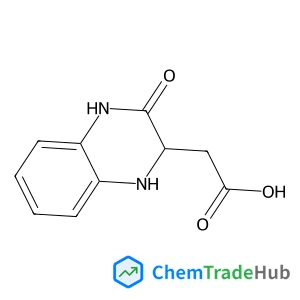
(3-Oxo-1,2,3,4-tetrahydro-2-quinoxalinyl)acetic acid
CAS Number:
136584-14-0
Molecular Formula:
C10H10N2O3
Recommended Suppliers




Disclaimer
This page provides academic journal information for reference and research purposes only. We are not affiliated with any journal publishers and do not handle publication submissions. For publication-related inquiries, please contact the respective journal publishers directly.
If you notice any inaccuracies in the information displayed, please contact us at support@chemtradehub.com. We will promptly review and address your concerns.