


![1-[3-(4-Morpholinylsulfonyl)phenyl]methanamine structure](https://static.chemtradehub.com/structs/933/933989-32-3-51af.webp "1-[3-(4-Morpholinylsulfonyl)phenyl]methanamine structure")
Dynamic micellar oligomers of amyloid beta peptides play a crucial role in their aggregation mechanisms
Literature Information
Publication Date
2018-07-23
DOI
10.1039/C8CP02685H
Impact Factor
3.676
Authors
Bertrand Morel, Maria Paz Carrasco, Samuel Jurado, Carmen Marco, Francisco Conejero-Lara
View Original
Abstract
A deep understanding of the early molecular mechanism of amyloid beta peptides (Aβ) is crucial to develop therapeutic and preventive approaches for Alzheimer's disease (AD). Using a variety of biophysical techniques, we have found that micelle-like dynamic oligomers are rapidly formed by Aβ40 and Aβ42 above specific critical concentrations. Analysis of the initial aggregation rates at 37 °C measured by thioflavin T and Bis-ANS fluorescence using a mass-action micellization model revealed a concentration-dependent switch in the nucleation mechanism. Bimolecular nucleation appears to occur at low peptide concentration while above the critical micellar concentration, the nucleation takes place more efficiently in the micelles. Upon incubation, these micelles mediate a rapid formation of larger, more stable oligomers enriched in beta-sheet structure. These oligomers formed from Aβ40, enriched in amyloid nuclei, acquire a higher capacity to fibrillate than their micellar precursors. Aβ42 can also form similar oligomers but they have lower beta-sheet structure content and lower capacity to fibrillate. On the other hand, a considerable fraction of the Aβ42 peptide forms morphologically distinct oligomers that are unable to fibrillate and show significant effect on SH-SY5Y cell viability. Overall, our results highlight the importance of micellar structures as mediators of amyloid nucleation and contribute to the understanding of the differences between the aggregation pathways of Aβ40 and Aβ42.
Recommended Journals

Journal of Enzyme inhibition and Medicinal Chemistry

Faraday Discussions

European Journal of Organic Chemistry

Physical Chemistry Chemical Physics

Contact Lens & Anterior Eye

Mini-Reviews in Medicinal Chemistry

Angewandte Chemie International Edition

Nature Reviews Drug Discovery

CrystEngComm

Journal of Medical Biochemistry
Related Literature
A β-barrel-like tetramer formed by a β-hairpin derived from Aβ
Tuan D. Samdin, Chelsea R. Jones, Gretchen Guaglianone, Adam G. Kreutzer, J. Alfredo Freites, Michał Wierzbicki
2023-11-28
Edge Article
DOI: 10.1039/D3SC05185D
Towards designer polyolefins: highly tuneable olefin copolymerisation using a single permethylindenyl post-metallocene catalyst
Clement G. Collins Rice, Louis J. Morris, Jean-Charles Buffet, Zoë R. Turner, Dermot O'Hare
2023-12-06
Edge Article
DOI: 10.1039/D3SC04861F
Exploring the local solvation structure of redox molecules in a mixed solvent for increasing the Seebeck coefficient of thermocells
Hirotaka Inoue, Hongyao Zhou, Hideo Ando, Sakuya Nakagawa, Teppei Yamada
2023-11-27
Edge Article
DOI: 10.1039/D3SC04955H
An atomic surface site interaction point description of non-covalent interactions
Maria Chiara Storer, Katarzyna J. Zator, Derek P. Reynolds, Christopher A. Hunter
2023-12-08
Edge Article
DOI: 10.1039/D3SC05690B
Cobalt-catalyzed decarboxylative difluoroalkylation of nitrophenylacetic acid salts
Ebbin Joseph, Ian Smith, Jon A. Tunge
2023-11-16
Edge Article
DOI: 10.1039/D3SC05583C
Oxidative cleavage of ketoximes to ketones using photoexcited nitroarenes
Lucas T. Göttemann, Stefan Wiesler, Richmond Sarpong
2023-11-24
Edge Article
DOI: 10.1039/D3SC05414D
Selective chiral dimerization and folding driven by arene–perfluoroarene force
Qiuhong Cheng, Aiyou Hao, Pengyao Xing
2023-11-29
Edge Article
DOI: 10.1039/D3SC05212E
Machine learning for analysis of experimental scattering and spectroscopy data in materials chemistry
Andy S. Anker, Keith T. Butler, Kirsten M. Ø. Jensen
2023-11-22
Perspective
DOI: 10.1039/D3SC05081E
You might also like
Compound Q&A
What precautions should be taken when handling 4-(2-Furylmethyl)thiomorpholine 1,1-dioxide (CAS: 79206-94-3)?
When handling 4-(2-Furylmethyl)thiomorpholine 1,1-dioxide (CAS: 79206-94-3), it ...
79206-94-34-(2-Furylmethyl)thi...
Compound Q&A
What precautions should be taken when handling 4-Chloro-N-[2-(4-morpholinyl)ethyl]benzamide (CAS: 71320-77-9)?
When handling 4-Chloro-N-[2-(4-morpholinyl)ethyl]benzamide (CAS: 71320-77-9), it...
71320-77-94-Chloro-N-[2-(4-mor...
Compound Q&A
How should waste containing 2-[2-(2-Methoxyethoxy)ethoxy]ethyl 4-methylbenzenesulfonate (CAS: 62921-74-8) be handled?
Waste containing this compound (CAS: 62921-74-8) should be handled according to ...
62921-74-82-[2-(2-Methoxyethox...
Compound Q&A
How should waste containing (S)-Methyl 2-amino-3-cyclohexylpropanoate be handled?
Waste containing (S)-Methyl 2-amino-3-cyclohexylpropanoate should be collected i...
40056-18-6(S)-Methyl 2-amino-3...
Compound Q&A
How is 5-({4-[(2S,4R)-4-Hydroxy-2-methyltetrahydro-2H-pyran-4-yl]-2-thienyl}sulfanyl)-1-methyl-1,3-dihydro-2H-indol-2-one (CAS: 166882-70-8) typically synthesized?
This compound can be synthesized using a multi-step process involving the conjug...
166882-70-85-({4-[(2S,4R)-4-Hyd...
Compound Q&A
Are there alternatives to (2E)-3-(3,4-Dichlorophenyl)acrylic acid (CAS: 7312-27-8) in synthesis?
There are several alternatives to (2E)-3-(3,4-Dichlorophenyl)acrylic acid in syn...
7312-27-8(2E)-3-(3,4-Dichloro...
Compound Q&A
How should Ethyl 6-(2-nitrophenyl)imidazo[2,1-b][1,3]thiazole-3-carboxylate (CAS: 925437-84-9) be stored?
Ethyl 6-(2-nitrophenyl)imidazo[2,1-b][1,3]thiazole-3-carboxylate (CAS: 925437-84...
925437-84-9Ethyl 6-(2-nitrophen...
Compound Q&A
How should waste containing 2-(1,3-Thiazol-2-yl)ethanamine (CAS: 18453-07-1) be handled?
Waste containing 2-(1,3-Thiazol-2-yl)ethanamine (CAS: 18453-07-1) should be coll...
18453-07-12-(1,3-Thiazol-2-yl)...
Compound Q&A
How is Methyl 5-iodo-2-methylbenzoate (CAS: 103440-54-6) typically synthesized?
Methyl 5-iodo-2-methylbenzoate can be synthesized through the iodination of meth...
103440-54-6Methyl 5-iodo-2-meth...
Compound Q&A
How is 5-Chloro[1,2,4]triazolo[1,5-a]pyridine (CAS: 1427399-34-5) typically synthesized?
5-Chloro[1,2,4]triazolo[1,5-a]pyridine is commonly synthesized via the condensat...
1427399-34-55-Chloro[1,2,4]triaz...
Source Journal
Physical Chemistry Chemical Physics
CiteScore:
5.5
Self-citation Rate:
10.3%
Articles per Year:
3036
Physical Chemistry Chemical Physics (PCCP) is an international journal co-owned by 19 physical chemistry and physics societies from around the world. This journal publishes original, cutting-edge research in physical chemistry, chemical physics and biophysical chemistry. To be suitable for publication in PCCP, articles must include significant innovation and/or insight into physical chemistry; this is the most important criterion that reviewers and Editors will judge against when evaluating submissions. The journal has a broad scope and welcomes contributions spanning experiment, theory, computation and data science. Topical coverage includes spectroscopy, dynamics, kinetics, statistical mechanics, thermodynamics, electrochemistry, catalysis, surface science, quantum mechanics, quantum computing and machine learning. Interdisciplinary research areas such as polymers and soft matter, materials, nanoscience, energy, surfaces/interfaces, and biophysical chemistry are welcomed if they demonstrate significant innovation and/or insight into physical chemistry. Joined experimental/theoretical studies are particularly appreciated when complementary and based on up-to-date approaches.
Recommended Compounds
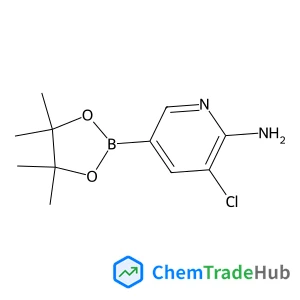
3-Chloro-5-(4,4,5,5-tetramethyl-1,3,2-dioxaborolan-2-yl)-2-pyridinamine
CAS Number:
1032758-99-8
Molecular Formula:
C11H16BClN2O2
![Methyl 4-({[(2-methyl-2-propanyl)oxy]carbonyl}amino)bicyclo[2.2.2]octane-1-carboxylate structure](https://static.chemtradehub.com/structs/943/943845-74-7-b7e5.webp "Methyl 4-({[(2-methyl-2-propanyl)oxy]carbonyl}amino)bicyclo[2.2.2]octane-1-carboxylate structure")
Methyl 4-({[(2-methyl-2-propanyl)oxy]carbonyl}amino)bicyclo[2.2.2]octane-1-carboxylate
CAS Number:
943845-74-7
Molecular Formula:
C15H25NO4
Recommended Suppliers





Disclaimer
This page provides academic journal information for reference and research purposes only. We are not affiliated with any journal publishers and do not handle publication submissions. For publication-related inquiries, please contact the respective journal publishers directly.
If you notice any inaccuracies in the information displayed, please contact us at support@chemtradehub.com. We will promptly review and address your concerns.