



Kinetics of the BrO + HO2 reaction over the temperature range T = 246–314 K
Literature Information
Publication Date
2017-08-15
DOI
10.1039/C7CP03854B
Impact Factor
3.676
Authors
Michael K. M. Ward, David M. Rowley
View Original
Abstract
The kinetics of the reaction between gas phase BrO and HO2 radicals, BrO + HO2 → HOBr + O2 (1), have been studied over the atmospherically relevant temperature range T = 246–314 K and at ambient pressure, p = 760 ± 20 Torr, using laser flash photolysis coupled with ultraviolet absorption spectroscopy. The reaction was initiated by the generation of bromine monoxide radicals following laser photolytic generation of Br atoms from Br2/Cl2 containing mixtures and their reaction with ozone. Subsequently, the addition of methanol vapour to the reaction mixture, in the presence of excess oxygen, afforded the efficient simultaneous post-photolysis formation of HO2 radicals using well-defined chemistry. The decay of BrO radicals, in the presence and absence of HO2, was interrogated to determine the rate coefficients for the BrO + BrO and the BrO + HO2 reactions. A detailed sensitivity analysis was performed to ensure that the BrO + HO2 reaction was unequivocally monitored. The rate coefficient for reaction (1) is described by the Arrhenius expression: where statistical errors are 1σ. The negative temperature dependence of this reaction is in general accord with those reported by previous studies of this reaction. However, the present work reports greater absolute values for k1 than those of several previous studies. An assessment of previous laboratory studies of k1 is presented. This work confirms that reaction (1) plays a significant role in HOBr formation throughout the atmosphere following both anthropogenic, biogenic and volcanic emissions of brominated species. Reaction (1) therefore contributes to an efficient ozone depleting process in the atmosphere, and further confirms the significance of interactions between two different families of reactive atmospheric trace species.
Recommended Journals

Journal of Organometallic Chemistry

Journal of Medicinal Chemistry

Journal of Heterocyclic Chemistry

Fibre Chemistry

Pure and Applied Chemistry

Journal of Catalysis

Proceedings of the National Academy of Sciences of the United States of America

Israel Journal of Chemistry

Organic Preparations and Procedures International

Science
Related Literature
Thiol substrate-promoted dehydrogenative cyclization of arylmethyl thiols with ortho-substituted amines: a universal approach to heteroaromatic compounds
Mengjun Qiao, Ling Chen, Yibo Dong, Chengkang Jiao, Shengqi Liao
2019-06-15
Research Article
DOI: 10.1039/C9QO00554D
Rh(iii)-Catalyzed C–H activation/annulation of salicylaldehydes with sulfoxonium ylides for the synthesis of chromones
Libo Cai, Xiaoyi Zhu, Jiayi Chen, Aijun Lin, Hequan Yao
2019-09-19
Research Article
DOI: 10.1039/C9QO00830F
Access to polyfunctionalized carbazoles through π-extension of 2-methyl-3-oxoacetate indoles
Yingying Guo, Zhoulu Wang, Ying Zhu, Qiaochu Zhang, Donghui Wei, Xiang Liu, Zhenqian Fu
2019-09-27
Research Article
DOI: 10.1039/C9QO01093A
Organocatalyzed asymmetric formal [3 + 2] cycloaddition of isocyanoacetates with N-itaconimides: facile access to optically active spiropyrroline succinimide derivatives
Mei-Xin Zhao, Qiang Liu, Kun-Ming Yu, Xiao-Li Zhao
2019-10-17
Research Article
DOI: 10.1039/C9QO00939F
Transition metal-free aerobic oxidative cleavage of the C–N bonds of α-amino esters
Shenpeng Tan, Feng Li, Soojun Park, Sanghee Kim
2019-10-12
Research Article
DOI: 10.1039/C9QO01033E
Visible-light-induced radical hydrodifluoromethylation of alkenes
Jiao Yu, Jin-Hong Lin, Yu-Cai Cao, Ji-Chang Xiao
2019-09-05
Research Article
DOI: 10.1039/C9QO00919A
Steric hindrance classified: treatment of isothiocyanatoallene with secondary amines bearing bulky substituents to generate 2-aminothiazoles‡
Klaus Banert, Jennifer Seifert
2019-05-17
Research Article
DOI: 10.1039/C9QO00312F
You might also like
Compound Q&A
Is 6-(3-Fluorophenyl)picolinic acid (CAS: 887982-40-3) safe?
6-(3-Fluorophenyl)picolinic acid is generally considered safe for laboratory use...
887982-40-36-(3-Fluorophenyl)pi...
Compound Q&A
What industries use (3R)-3-Pyrrolidinol (CAS: 2799-21-5)?
(3R)-3-Pyrrolidinol is used in the pharmaceutical industry as a precursor for dr...
2799-21-5(3R)-3-Pyrrolidinol
Compound Q&A
What precautions should be taken when handling (4R,5R)-4,5-Diethoxycarbonyl-2,2-dimethyldioxolane (CAS: 59779-75-8)?
When handling (4R,5R)-4,5-Diethoxycarbonyl-2,2-dimethyldioxolane (CAS: 59779-75-...
59779-75-8(4R,5R)-4,5-Diethoxy...
Compound Q&A
How is 1-(6-Chloroimidazo[1,2-b]pyridazin-3-yl)ethanone (CAS: 90734-71-7) typically synthesized?
1-(6-Chloroimidazo[1,2-b]pyridazin-3-yl)ethanone is often synthesized via a mult...
90734-71-71-(6-Chloroimidazo[1...
Compound Q&A
What is the market or research trend for N-Ethyl-3,4-dimethylbenzylamine (CAS: 39180-83-1)?
The market for N-Ethyl-3,4-dimethylbenzylamine (CAS: 39180-83-1) remains steady,...
39180-83-1N-Ethyl-3,4-dimethyl...
Compound Q&A
What is Tert-butyl 3-(pyrrolidin-1-yl)azetidine-1-carboxylate (CAS: 1019008-21-9)?
Tert-butyl 3-(pyrrolidin-1-yl)azetidine-1-carboxylate is a chemical compound wit...
1019008-21-9Tert-butyl 3-(pyrrol...
Compound Q&A
What regulatory guidelines apply to 1-Bromo-3-chloro-2,4-dimethoxybenzene (CAS: 1228956-93-1)?
1-Bromo-3-chloro-2,4-dimethoxybenzene (CAS: 1228956-93-1) falls under the classi...
1228956-93-11-Bromo-3-chloro-2,4...
Compound Q&A
Is 8-Bromo-2-methyl-3,4-dihydroisoquinolin-1(2H)-one (CAS: 1368622-07-4) safe?
The safety of 8-Bromo-2-methyl-3,4-dihydroisoquinolin-1(2H)-one (CAS: 1368622-07...
1368622-07-48-Bromo-2-methyl-3,4...
Compound Q&A
Is Benzyl [(3S)-2,6-dioxo-3-piperidinyl]carbamate (CAS: 22785-43-9) safe?
Benzyl [(3S)-2,6-dioxo-3-piperidinyl]carbamate is generally safe when handled wi...
22785-43-9Benzyl [(3S)-2,6-dio...
Compound Q&A
How should 1-{[4-(4,4,5,5-Tetramethyl-1,3,2-dioxaborolan-2-yl)phenyl]sulfonyl}pyrrolidine (CAS: 928657-21-0) be stored?
1-{[4-(4,4,5,5-Tetramethyl-1,3,2-dioxaborolan-2-yl)phenyl]sulfonyl}pyrrolidine s...
928657-21-01-{[4-(4,4,5,5-Tetra...
Source Journal
Physical Chemistry Chemical Physics

CiteScore:
5.5
Self-citation Rate:
10.3%
Articles per Year:
3036
Physical Chemistry Chemical Physics (PCCP) is an international journal co-owned by 19 physical chemistry and physics societies from around the world. This journal publishes original, cutting-edge research in physical chemistry, chemical physics and biophysical chemistry. To be suitable for publication in PCCP, articles must include significant innovation and/or insight into physical chemistry; this is the most important criterion that reviewers and Editors will judge against when evaluating submissions. The journal has a broad scope and welcomes contributions spanning experiment, theory, computation and data science. Topical coverage includes spectroscopy, dynamics, kinetics, statistical mechanics, thermodynamics, electrochemistry, catalysis, surface science, quantum mechanics, quantum computing and machine learning. Interdisciplinary research areas such as polymers and soft matter, materials, nanoscience, energy, surfaces/interfaces, and biophysical chemistry are welcomed if they demonstrate significant innovation and/or insight into physical chemistry. Joined experimental/theoretical studies are particularly appreciated when complementary and based on up-to-date approaches.
Recommended Compounds
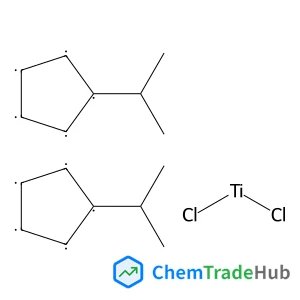
BIS(I-PROPYLCYCLOPENTADIENYL)TITANIUM DICHLORIDE
CAS Number:
12130-65-3
Molecular Formula:
C16H22Cl2Ti
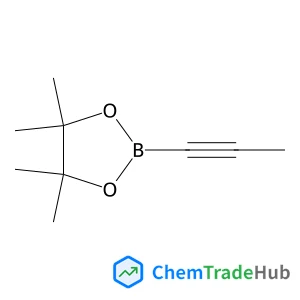
4,4,5,5-Tetramethyl-2-(1-propyn-1-YL)-1,3,2-dioxaborolane
CAS Number:
347389-75-7
Molecular Formula:
C9H15BO2
Recommended Suppliers





Disclaimer
This page provides academic journal information for reference and research purposes only. We are not affiliated with any journal publishers and do not handle publication submissions. For publication-related inquiries, please contact the respective journal publishers directly.
If you notice any inaccuracies in the information displayed, please contact us at support@chemtradehub.com. We will promptly review and address your concerns.