













Photophysical characterization and time-resolved spectroscopy of a anthradithiophene dimer: exploring the role of conformation in singlet fission
Literature Information
Publication Date
2017-08-18
DOI
10.1039/C7CP03774K
Impact Factor
3.676
Authors
Jacob C. Dean, Ruomeng Zhang, Rawad K. Hallani, Ryan D. Pensack, Samuel N. Sanders, Daniel G. Oblinsky, Sean R. Parkin, Luis M. Campos, John E. Anthony, Gregory D. Scholes
View Original
Abstract
Quantitative singlet fission has been observed for a variety of acene derivatives such as tetracene and pentacene, and efforts to extend the library of singlet fission compounds is of current interest. Preliminary calculations suggest anthradithiophenes exhibit significant exothermicity between the first optically-allowed singlet state, S1, and 2 × T1 with an energy difference of >5000 cm−1. Given the fulfillment of this ingredient for singlet fission, here we investigate the singlet fission capability of a difluorinated anthradithiophene dimer (2ADT) covalently linked by a (dimethylsilyl)ethane bridge and derivatized by triisobutylsilylethynyl (TIBS) groups. Photophysical characterization of 2ADT and the single functionalized ADT monomer were carried out in toluene and acetone solution via absorption and fluorescence spectroscopy, and their photo-initiated dynamics were investigated with time-resolved fluorescence (TRF) and transient absorption (TA) spectroscopy. In accordance with computational predictions, two conformers of 2ADT were observed via fluorescence spectroscopy and were assigned to structures with the ADT cores trans or cis to one another about the covalent bridge. The two conformers exhibited markedly different excited state deactivation mechanisms, with the minor trans population being representative of the ADT monomer showing primarily radiative decay, while the dominant cis population underwent relaxation into an excimer geometry before internally converting to the ground state. The excimer formation kinetics were found to be solvent dependent, yielding time constants of ∼1.75 ns in toluene, and ∼600 ps in acetone. While the difference in rates elicits a role for the solvent in stabilizing the excimer structure, the rate is still decidedly long compared to most singlet fission rates of analogous dimers, suggesting that the excimer is neither a kinetic nor a thermodynamic trap, yet singlet fission was still not observed. The result highlights the sensitivity of the electronic coupling element between the singlet and correlated triplet pair states, to the dimer conformation in dictating singlet fission efficiency even when the energetic requirements are met.
Related Literature
New low-bandgap polymetallaynes of platinum functionalized with a triphenylamine-benzothiadiazole donor–acceptor unit for solar cell applications‡
Qiwei Wang, Wai-Yeung Wong
2010-12-01
Paper
DOI: 10.1039/C0PY00273A
A fluorescent all-fluorene polyazomethine—towards soluble conjugated polymers exhibiting high fluorescence and electrochromic properties
Satyananda Barik, W. G. Skene
2011-02-07
Paper
DOI: 10.1039/C0PY00394H
Synthesis of nanogels/microgels by conventional and controlled radical crosslinking copolymerization
Nicolas Sanson, Jutta Rieger
2010-04-26
Review Article
DOI: 10.1039/C0PY00010H
Local conformation of poly(methyl methacrylate) at nitrogen and water interfaces
Yohei Tateishi, Naoki Kai, Hidenori Noguchi, Kohei Uosaki, Toshihiko Nagamura, Keiji Tanaka
2009-12-21
Paper
DOI: 10.1039/B9PY00227H
Synthesis of thermoresponsive phenyl- and naphthyl-terminated poly(NIPAM) derivatives using RAFT and their complexation with cyclobis(paraquat-p-phenylene) derivatives in water
Graeme Cooke
2010-05-21
Paper
DOI: 10.1039/C0PY00085J
Pd-mediated carbenepolymerisation: activity of palladium(ii) versus low-valent palladium
Joost N. H. Reek, Bas de Bruin
2010-11-12
Paper
DOI: 10.1039/C0PY00249F
Connection of polymer chains using diepoxide in CO2/propylene oxide copolymerizations
Anish Cyriac, Sang Hwan Lee, Bun Yeoul Lee
2011-01-21
Paper
DOI: 10.1039/C0PY00365D
A facile method for the homogeneous synthesis of cyanoethyl cellulose in NaOH/urea aqueous solutions
Jinping Zhou, Qian Li, Yongbo Song, Lina Zhang, Xiaoyan Lin
2010-09-06
Paper
DOI: 10.1039/C0PY00163E
Synthesis and evaluation of partly fluorinated polyelectrolytes as components in 19F MRI-detectable nanoparticles
Leena Nurmi, Hui Peng, Jukka Seppälä, David M. Haddleton, Idriss Blakey, Andrew K. Whittaker
2010-05-14
Paper
DOI: 10.1039/C0PY00035C
You might also like
Compound Q&A
Is 6-(3-Fluorophenyl)picolinic acid (CAS: 887982-40-3) safe?
6-(3-Fluorophenyl)picolinic acid is generally considered safe for laboratory use...
887982-40-36-(3-Fluorophenyl)pi...
Compound Q&A
What industries use (3R)-3-Pyrrolidinol (CAS: 2799-21-5)?
(3R)-3-Pyrrolidinol is used in the pharmaceutical industry as a precursor for dr...
2799-21-5(3R)-3-Pyrrolidinol
Compound Q&A
What precautions should be taken when handling (4R,5R)-4,5-Diethoxycarbonyl-2,2-dimethyldioxolane (CAS: 59779-75-8)?
When handling (4R,5R)-4,5-Diethoxycarbonyl-2,2-dimethyldioxolane (CAS: 59779-75-...
59779-75-8(4R,5R)-4,5-Diethoxy...
Compound Q&A
How is 1-(6-Chloroimidazo[1,2-b]pyridazin-3-yl)ethanone (CAS: 90734-71-7) typically synthesized?
1-(6-Chloroimidazo[1,2-b]pyridazin-3-yl)ethanone is often synthesized via a mult...
90734-71-71-(6-Chloroimidazo[1...
Compound Q&A
What is the market or research trend for N-Ethyl-3,4-dimethylbenzylamine (CAS: 39180-83-1)?
The market for N-Ethyl-3,4-dimethylbenzylamine (CAS: 39180-83-1) remains steady,...
39180-83-1N-Ethyl-3,4-dimethyl...
Compound Q&A
What is Tert-butyl 3-(pyrrolidin-1-yl)azetidine-1-carboxylate (CAS: 1019008-21-9)?
Tert-butyl 3-(pyrrolidin-1-yl)azetidine-1-carboxylate is a chemical compound wit...
1019008-21-9Tert-butyl 3-(pyrrol...
Compound Q&A
What regulatory guidelines apply to 1-Bromo-3-chloro-2,4-dimethoxybenzene (CAS: 1228956-93-1)?
1-Bromo-3-chloro-2,4-dimethoxybenzene (CAS: 1228956-93-1) falls under the classi...
1228956-93-11-Bromo-3-chloro-2,4...
Compound Q&A
Is 8-Bromo-2-methyl-3,4-dihydroisoquinolin-1(2H)-one (CAS: 1368622-07-4) safe?
The safety of 8-Bromo-2-methyl-3,4-dihydroisoquinolin-1(2H)-one (CAS: 1368622-07...
1368622-07-48-Bromo-2-methyl-3,4...
Compound Q&A
Is Benzyl [(3S)-2,6-dioxo-3-piperidinyl]carbamate (CAS: 22785-43-9) safe?
Benzyl [(3S)-2,6-dioxo-3-piperidinyl]carbamate is generally safe when handled wi...
22785-43-9Benzyl [(3S)-2,6-dio...
Compound Q&A
How should 1-{[4-(4,4,5,5-Tetramethyl-1,3,2-dioxaborolan-2-yl)phenyl]sulfonyl}pyrrolidine (CAS: 928657-21-0) be stored?
1-{[4-(4,4,5,5-Tetramethyl-1,3,2-dioxaborolan-2-yl)phenyl]sulfonyl}pyrrolidine s...
928657-21-01-{[4-(4,4,5,5-Tetra...
Source Journal
Physical Chemistry Chemical Physics

CiteScore:
5.5
Self-citation Rate:
10.3%
Articles per Year:
3036
Physical Chemistry Chemical Physics (PCCP) is an international journal co-owned by 19 physical chemistry and physics societies from around the world. This journal publishes original, cutting-edge research in physical chemistry, chemical physics and biophysical chemistry. To be suitable for publication in PCCP, articles must include significant innovation and/or insight into physical chemistry; this is the most important criterion that reviewers and Editors will judge against when evaluating submissions. The journal has a broad scope and welcomes contributions spanning experiment, theory, computation and data science. Topical coverage includes spectroscopy, dynamics, kinetics, statistical mechanics, thermodynamics, electrochemistry, catalysis, surface science, quantum mechanics, quantum computing and machine learning. Interdisciplinary research areas such as polymers and soft matter, materials, nanoscience, energy, surfaces/interfaces, and biophysical chemistry are welcomed if they demonstrate significant innovation and/or insight into physical chemistry. Joined experimental/theoretical studies are particularly appreciated when complementary and based on up-to-date approaches.
Recommended Compounds
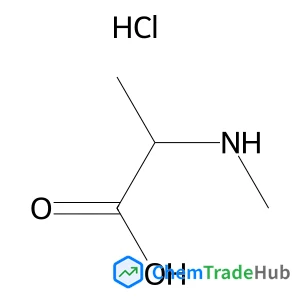
(R)-2-(Methylamino)propanoic acid hydrochloride
CAS Number:
1155878-14-0
Molecular Formula:
C4H10ClNO2
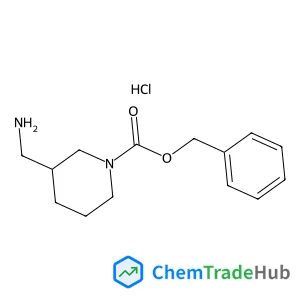
Benzyl 3-(aminomethyl)piperidine-1-carboxylate hydrochloride
CAS Number:
1186663-23-9
Molecular Formula:
C14H21ClN2O2
Recommended Suppliers






Disclaimer
This page provides academic journal information for reference and research purposes only. We are not affiliated with any journal publishers and do not handle publication submissions. For publication-related inquiries, please contact the respective journal publishers directly.
If you notice any inaccuracies in the information displayed, please contact us at support@chemtradehub.com. We will promptly review and address your concerns.