












Pd-mediated carbenepolymerisation: activity of palladium(ii) versus low-valent palladium
Literature Information
Publication Date
2010-11-12
DOI
10.1039/C0PY00249F
Impact Factor
5.582
Authors
Joost N. H. Reek, Bas de Bruin
View Original
Abstract
Copolymerisation of olefins and carbene monomers was attempted with several well-defined Pd catalysts active in both olefin polymerisation and carbene polymerisation. In none of the attempts copolymer formation or even formation of the homopolymers was observed. This indicates that olefin polymerisation and carbene polymerisation are incompatible, despite the fact that the proposed transition states for these processes are very similar. Detailed investigations of Pd catalysed homopolymerisation of carbenes using both PdII and Pd0 complexes revealed that the active species in these reactions are most likely low-valent Pd species rather than PdII–alkyl species generally assumed to mediate carbene polymerisation. Well-defined PdII–alkyl species showed only a few insertions of carbene monomers, while longer oligomers (∼20 carbene units) are formed from Pd0 salts. In agreement with previous investigations, Pd0–NHC complexes allow formation of higher-Mw materials. Activation of the catalyst by NaBPh4 is required. Mechanistic studies revealed that involvement of PdII species in this process is highly unlikely, but the exact nature of the low-valent active species (Pd nanoparticles, molecular Pd0 or PdI species) is not clear. However, involvement of free radical species can be ruled out. Since olefin polymerisation requires PdII as the active species, the likely involvement of lower-valent Pd species in carbene polymerisation explains the incompatibility of both processes. The absence of formation of olefin homopolymers by well-known Pd-based olefin polymerisation catalysts in the presence of EDA can be explained by in situ reduction of the PdII species by EDA.
Related Literature
Three-dimensional auxetic properties in group V–VI binary monolayer crystals X3M2 (X = S, Se; M = N, P, As)
Yan Chen, Xiangbiao Liao, Xiaoyang Shi, Yilun Liu
2018-11-29
Paper
DOI: 10.1039/C8CP05260C
Interaction of liquid water with the p-GaInP2(100) surface covered with submonolayer oxide
Andreas Hajduk, Mikhail V. Lebedev, Bernhard Kaiser, Wolfram Jaegermann
2018-07-31
Paper
DOI: 10.1039/C8CP03337D
Time-resolved IR spectroscopy reveals mechanistic details of ion transport in the sodium pump Krokinobacter eikastus rhodopsin 2
Marvin Asido, Peter Eberhardt, Clara Nassrin Kriebel, Markus Braun, Clemens Glaubitz, Josef Wachtveitl
2019-02-01
Paper
DOI: 10.1039/C8CP07418F
Liquid–liquid phase separation and evaporation of a laser-trapped organic–organic airborne droplet using temporal spatial-resolved Raman spectroscopy
Aimable Kalume, Chuji Wang, Joshua Santarpia, Yong-Le Pan
2018-06-14
Paper
DOI: 10.1039/C8CP02372G
Oxygen-functionalized TlTe buckled honeycomb from first-principles study
Qing Lu, Yi-Ming Wen, Zhao-Yi Zeng, Xiang-Rong Chen, Qi-Feng Chen
2019-02-12
Paper
DOI: 10.1039/C8CP07246A
Bismuth oxysulfide film electrodes with giant incident photon-to-current conversion efficiency: the dynamics of properties with deposition time
Evgeny A. Bondarenko, Eugene A. Streltsov, Alexander V. Mazanik, Anatoly I. Kulak, Vytautas Grivickas, Patrik Ščajev, Ekaterina V. Skorb
2018-06-22
Paper
DOI: 10.1039/C8CP03225D
Role of suppressed oxygen vacancies in the BiFeO3 nanofiller to improve the polar phase and multifunctional performance of poly(vinylidene fluoride)
Abhishek Sasmal, Shrabanee Sen, P. Sujatha Devi
2019-02-21
Paper
DOI: 10.1039/C8CP07281G
Gold substrates of controlled roughness and electrokinetic properties formed by nanoparticle deposition
Maria Morga, Małgorzata Nattich-Rak, Magdalena Oćwieja, Zbigniew Adamczyk
2019-02-22
Paper
DOI: 10.1039/C9CP00440H
Rotational (de)-excitation of linear C3O by collision with He
Fehmi Khadri, Kamel Hammami
2019-01-29
Paper
DOI: 10.1039/C8CP07409G
You might also like
Compound Q&A
Is 6-(3-Fluorophenyl)picolinic acid (CAS: 887982-40-3) safe?
6-(3-Fluorophenyl)picolinic acid is generally considered safe for laboratory use...
887982-40-36-(3-Fluorophenyl)pi...
Compound Q&A
What industries use (3R)-3-Pyrrolidinol (CAS: 2799-21-5)?
(3R)-3-Pyrrolidinol is used in the pharmaceutical industry as a precursor for dr...
2799-21-5(3R)-3-Pyrrolidinol
Compound Q&A
What precautions should be taken when handling (4R,5R)-4,5-Diethoxycarbonyl-2,2-dimethyldioxolane (CAS: 59779-75-8)?
When handling (4R,5R)-4,5-Diethoxycarbonyl-2,2-dimethyldioxolane (CAS: 59779-75-...
59779-75-8(4R,5R)-4,5-Diethoxy...
Compound Q&A
How is 1-(6-Chloroimidazo[1,2-b]pyridazin-3-yl)ethanone (CAS: 90734-71-7) typically synthesized?
1-(6-Chloroimidazo[1,2-b]pyridazin-3-yl)ethanone is often synthesized via a mult...
90734-71-71-(6-Chloroimidazo[1...
Compound Q&A
What is the market or research trend for N-Ethyl-3,4-dimethylbenzylamine (CAS: 39180-83-1)?
The market for N-Ethyl-3,4-dimethylbenzylamine (CAS: 39180-83-1) remains steady,...
39180-83-1N-Ethyl-3,4-dimethyl...
Compound Q&A
What is Tert-butyl 3-(pyrrolidin-1-yl)azetidine-1-carboxylate (CAS: 1019008-21-9)?
Tert-butyl 3-(pyrrolidin-1-yl)azetidine-1-carboxylate is a chemical compound wit...
1019008-21-9Tert-butyl 3-(pyrrol...
Compound Q&A
What regulatory guidelines apply to 1-Bromo-3-chloro-2,4-dimethoxybenzene (CAS: 1228956-93-1)?
1-Bromo-3-chloro-2,4-dimethoxybenzene (CAS: 1228956-93-1) falls under the classi...
1228956-93-11-Bromo-3-chloro-2,4...
Compound Q&A
Is 8-Bromo-2-methyl-3,4-dihydroisoquinolin-1(2H)-one (CAS: 1368622-07-4) safe?
The safety of 8-Bromo-2-methyl-3,4-dihydroisoquinolin-1(2H)-one (CAS: 1368622-07...
1368622-07-48-Bromo-2-methyl-3,4...
Compound Q&A
Is Benzyl [(3S)-2,6-dioxo-3-piperidinyl]carbamate (CAS: 22785-43-9) safe?
Benzyl [(3S)-2,6-dioxo-3-piperidinyl]carbamate is generally safe when handled wi...
22785-43-9Benzyl [(3S)-2,6-dio...
Compound Q&A
How should 1-{[4-(4,4,5,5-Tetramethyl-1,3,2-dioxaborolan-2-yl)phenyl]sulfonyl}pyrrolidine (CAS: 928657-21-0) be stored?
1-{[4-(4,4,5,5-Tetramethyl-1,3,2-dioxaborolan-2-yl)phenyl]sulfonyl}pyrrolidine s...
928657-21-01-{[4-(4,4,5,5-Tetra...
Source Journal
Polymer Chemistry

CiteScore:
8.6
Self-citation Rate:
7.3%
Articles per Year:
457
Polymer Chemistry welcomes submissions in all areas of polymer science that have a strong focus on macromolecular chemistry. Manuscripts may cover a broad range of fields, yet no direct application focus is required.
Recommended Compounds
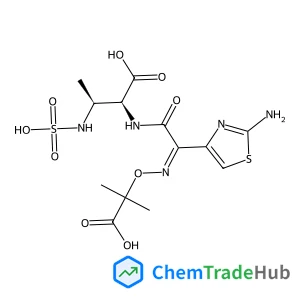
Aztreonam USP Related Compound A (Open-ring Aztreonam)
CAS Number:
87500-74-1
Molecular Formula:
C13H19N5O9S2
![Benzyl spiro[indole-3,4'-piperidine]-1(2H)-carboxylate hydrochloride (1:1) structure](https://static.chemtradehub.com/structs/159/159635-46-8-8de0.webp "Benzyl spiro[indole-3,4'-piperidine]-1(2H)-carboxylate hydrochloride (1:1) structure")
Benzyl spiro[indole-3,4'-piperidine]-1(2H)-carboxylate hydrochloride (1:1)
CAS Number:
159635-46-8
Molecular Formula:
C20H23ClN2O2
Recommended Suppliers




Disclaimer
This page provides academic journal information for reference and research purposes only. We are not affiliated with any journal publishers and do not handle publication submissions. For publication-related inquiries, please contact the respective journal publishers directly.
If you notice any inaccuracies in the information displayed, please contact us at support@chemtradehub.com. We will promptly review and address your concerns.