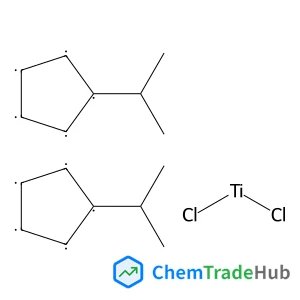
BIS(I-PROPYLCYCLOPENTADIENYL)TITANIUM DICHLORIDE
CAS Number:
12130-65-3
Molecular Formula:
C16H22Cl2Ti
Jianyi Wang, Qing Chen, Cheng Zhong
To obtain new insights into the resistance caused by T315I and the differential selectivities of dasatinib and axitinib against BCR-ABL1(WT) and BCR-ABL1(T315), molecular dynamics simulations and free energy calculations were performed. A rule is summarized that the opening/closure of the P-loop and hinge of BCR-ABL1 could reflect the low/high bioactivities of dasatinib and axitinib. This may be because strong interactions of the ligands with key residues induce the P-loop and hinge of BCR-ABL1 to close, being favorable for the retention of the ligand in the binding site. However, weak interactions of the ligands with key residues cause the P-loop and hinge of BCR-ABL1 to open, improving the dissociation of the ligand. These key residues, which predominantly govern the differential selectivities of dasatinib and axitinib against BCR-ABL1(WT) and BCR-ABL1(T315), are highlighted, and the impacts of T315 mutation and the chemical structures of dasatinib and axitinib are also explored. The rule extracted from this study may have potential in screening kinase inhibitors, rationally designing the next generation kinase inhibitors, and guiding the precise treatment of kinase-related cancer.
Meng Shan, Tao Liang, Ye-Fei Zhang, Ming-Sheng Xie, Gui-Rong Qu, Hai-Ming Guo
DOI: 10.1039/C9QO01146C
Mengmeng Lan, Guodong Cui, Hongwei Zhang
DOI: 10.1039/C9QO00685K
Xinxin Qi, Ming Lai
DOI: 10.1039/C9QO00917E
Qaiser Mahmood, Guangqiang Xu, Qinggang Wang
DOI: 10.1039/C9QO00965E
Shiyi Jin, Shuaishuai Fang, Rui Ma, Zheng Liang, Ye Xu, Tao Lu, Ding Du
DOI: 10.1039/C9QO00956F
Varsha Tiwari, Adesh Kumar Singh, Priyanka Chaudhary, Peter H. Seeberger, Jeyakumar Kandasamy
DOI: 10.1039/C9QO01010F
Wen-Tao Wu, Ying Han, Jing Sun, Chao-Guo Yan
DOI: 10.1039/C9QO00891H
Chen Hu, Gang Hong, Pradip D. Nahide, Yuchen He, Chen Zhou, Marisa C. Kozlowski, Limin Wang
DOI: 10.1039/C9QO00778D
6-(3-Fluorophenyl)picolinic acid is generally considered safe for laboratory use...
(3R)-3-Pyrrolidinol is used in the pharmaceutical industry as a precursor for dr...
When handling (4R,5R)-4,5-Diethoxycarbonyl-2,2-dimethyldioxolane (CAS: 59779-75-...
1-(6-Chloroimidazo[1,2-b]pyridazin-3-yl)ethanone is often synthesized via a mult...
The market for N-Ethyl-3,4-dimethylbenzylamine (CAS: 39180-83-1) remains steady,...
Tert-butyl 3-(pyrrolidin-1-yl)azetidine-1-carboxylate is a chemical compound wit...
1-Bromo-3-chloro-2,4-dimethoxybenzene (CAS: 1228956-93-1) falls under the classi...
The safety of 8-Bromo-2-methyl-3,4-dihydroisoquinolin-1(2H)-one (CAS: 1368622-07...
Benzyl [(3S)-2,6-dioxo-3-piperidinyl]carbamate is generally safe when handled wi...
1-{[4-(4,4,5,5-Tetramethyl-1,3,2-dioxaborolan-2-yl)phenyl]sulfonyl}pyrrolidine s...

Physical Chemistry Chemical Physics (PCCP) is an international journal co-owned by 19 physical chemistry and physics societies from around the world. This journal publishes original, cutting-edge research in physical chemistry, chemical physics and biophysical chemistry. To be suitable for publication in PCCP, articles must include significant innovation and/or insight into physical chemistry; this is the most important criterion that reviewers and Editors will judge against when evaluating submissions. The journal has a broad scope and welcomes contributions spanning experiment, theory, computation and data science. Topical coverage includes spectroscopy, dynamics, kinetics, statistical mechanics, thermodynamics, electrochemistry, catalysis, surface science, quantum mechanics, quantum computing and machine learning. Interdisciplinary research areas such as polymers and soft matter, materials, nanoscience, energy, surfaces/interfaces, and biophysical chemistry are welcomed if they demonstrate significant innovation and/or insight into physical chemistry. Joined experimental/theoretical studies are particularly appreciated when complementary and based on up-to-date approaches.

![trans-2-{[(Tert-butoxy)carbonyl]amino}cyclobutane-1-carboxylic acid structure](https://static.chemtradehub.com/structs/951/951173-25-4-27cd.webp "trans-2-{[(Tert-butoxy)carbonyl]amino}cyclobutane-1-carboxylic acid structure")