


Theoretical study of gas and solvent phase stability and molecular adsorption of noncanonical guanine bases on graphene
Literature Information
Publication Date
2017-06-02
DOI
10.1039/C7CP02944F
Impact Factor
3.676
Authors
Nabanita Saikia, Shashi P. Karna, Ravindra Pandey
View Original
Abstract
The gas and solvent phase stability of noncanonical (Gua)n nucleobases is investigated in the framework of dispersion-corrected density functional theory (DFT). The calculated results strongly support the high tendency for the dimerization of (Gua)n bases in both gas and solvent phases. An interplay between intermolecular and bifurcated H-bonds is suggested to govern the stability of (Gua)n bases which bears a correlation with the description of dispersion correction terms employed in the DFT calculations. For example, a higher polarity is predicted for (Gua)n bases by the dispersion-corrected DFT in contrast to the non-polar nature of (Gua)3 and (Gua)4 predicted by the hybrid meta-GGA calculations. This distinct variation becomes significant under physiological conditions as polar (Gua)n is likely to exhibit greater stabilization in the gas phase compared to solvated (Gua)n. Graphene acting as a substrate induces modification in base configurations via maximization of π-orbital overlap between the base and substrate. In solvent, the substrate-induced effects are further heightened with lowering of the dipole moments of (Gua)n as also displayed by the corresponding isosurface of the electrostatic potential. The graphene-induced stability in both gas and solvent phases appears to fulfill one of the prerequisite criteria for molecular self-assembly. The DFT results therefore provide atomistic insights into the stability and molecular assembly of free-standing noncanonical (Gua)n nucleobases which can be extended to understanding the self-assembly process of functional biomolecules on 2D materials for potential biosensing applications.
Recommended Journals

Acta Materialia

Chemical Communications

Journal of Natural Medicines

Russian Journal of Applied Chemistry

Current Opinion in Colloid & Interface Science

Russian Journal of Bioorganic Chemistry

Chemistry Education Research and Practice

Russian Journal of Organic Chemistry

New Journal of Chemistry

Russian Journal of Coordination Chemistry
Related Literature
O vacancy formation in (Pr/Gd)BaCo2O5.5 and the role of antisite defects
Salawu Omotayo Akande, Udo Schwingenschlögl
2017-04-20
Paper
DOI: 10.1039/C7CP01942D
Access to aliphatic protons as reporters in non-deuterated proteins by solid-state NMR
Suresh Kumar Vasa, Petra Rovó, Karin Giller, Stefan Becker, Rasmus Linser
2015-11-20
Paper
DOI: 10.1039/C5CP06601H
Dual sulfonated poly(arylene ether ketone) membrane grafted with 15-crown-5-ether for enhanced proton conductivity and anti-oxidation stability
Dinh Cong Tinh Vo, Minh Dat Thinh Nguyen, Dukjoon Kim
2019-04-16
Paper
DOI: 10.1039/C9ME00009G
Photostable and biocompatible AIE-active conjugated polyelectrolytes for efficient heparin detection and specific lysosome labelling
Yinan Wang, Hongming Yao, Zeyan Zhuang, Jinya Yao, Jian Zhou, Zujin Zhao
2018-09-18
Communication
DOI: 10.1039/C8TB02053A
Chitosan/rectorite nanocomposite with injectable functionality for skin hemostasis
Xiaoyun Li, Yi-Chen Li, Mingjie Chen, Qingshan Shi, Runcang Sun, Xiaoying Wang
2018-09-19
Paper
DOI: 10.1039/C8TB01085D
The structure of chromophore-grafted amyloid-β12–28 dimers in the gas-phase: FRET-experiment guided modelling
2016-02-19
Paper
DOI: 10.1039/C6CP00263C
Zinc oxide heterostructures: advances in devices from self-powered photodetectors to self-charging supercapacitors
Sukanta Nandi, Sumana Kumar, Abha Misra
2021-09-09
Review Article
DOI: 10.1039/D1MA00670C
Barrierless photoisomerisation of the “simplest cyanine”: Joining computational and femtosecond optical spectroscopies to trace the full reaction path
Alexander Weigel, Matthias Pfaffe, Mohsen Sajadi, Rainer Mahrwald, Roberto Improta, Vincenzo Barone, Dario Polli, Giulio Cerullo, Nikolaus P. Ernsting, Fabrizio Santoro
2012-07-17
Paper
DOI: 10.1039/C2CP41522D
You might also like
Compound Q&A
Are there alternatives to 1-(4-Chlorophenyl)-N-hydroxymethanimine (CAS: 3848-36-0) in synthesis?
When considering alternatives to 1-(4-Chlorophenyl)-N-hydroxymethanimine (CAS: 3...
3848-36-01-(4-Chlorophenyl)-N...
Compound Q&A
How should (1R,9S,10S,12S,14E,16S,19R,20R,21S,22R)-3,9,21-Trihydroxy-5,10,12,14,16,20,22-heptamethyl-23,24-dioxatetracyclo[17.3.1.1~6,9~.0~2,7~]tetracosa-2,5,7,14-tetraen-4-one (CAS: 183202-73-5) be stored?
This compound should be stored in a cool, dry place away from direct sunlight. I...
183202-73-5(1R,9S,10S,12S,14E,1...
Compound Q&A
How is 3-(4-Bromophenyl)-5-(2-fluorophenyl)-1,2,4-oxadiazole (CAS: 419553-16-5) typically synthesized?
3-(4-Bromophenyl)-5-(2-fluorophenyl)-1,2,4-oxadiazole is synthesized through a m...
419553-16-53-(4-Bromophenyl)-5-...
Compound Q&A
How is 5-Chloro-2-(4-chlorophenyl)-4-methyl-6-[3-(1-piperidinyl)propoxy]pyrimidine (CAS: 1639220-19-1) typically synthesized?
5-Chloro-2-(4-chlorophenyl)-4-methyl-6-[3-(1-piperidinyl)propoxy]pyrimidine (CAS...
1639220-19-15-Chloro-2-(4-chloro...
Compound Q&A
What industries use 2-Chloro-4-(difluoromethoxy)pyridine (CAS: 1206978-15-5)?
2-Chloro-4-(difluoromethoxy)pyridine is used in the pharmaceutical industry for ...
1206978-15-52-Chloro-4-(difluoro...
Compound Q&A
What regulatory guidelines apply to 3-Chloro-6-methylpyridazine (CAS: 1121-79-5)?
3-Chloro-6-methylpyridazine (CAS: 1121-79-5) is classified under the Globally Ha...
1121-79-53-Chloro-6-methylpyr...
Compound Q&A
Are there alternatives to Methyl 4,5-dimethyl-2-nitrobenzoate in synthesis?
Several alternatives can be used in the synthesis of Methyl 4,5-dimethyl-2-nitro...
90922-74-0Methyl 4,5-dimethyl-...
Compound Q&A
Are there alternatives to (2E,2'E)-3,3'-(1,4-Phenylene)bisacrylaldehyde in synthesis?
Alternatives to (2E,2'E)-3,3'-(1,4-Phenylene)bisacrylaldehyde include other acry...
63405-68-5(2E,2'E)-3,3'-(1,4-P...
Compound Q&A
What is 3-Amino-5-chloropyridin-2-ol hydrochloride (CAS: 1261906-29-9)?
3-Amino-5-chloropyridin-2-ol hydrochloride is an organic compound with the CAS n...
1261906-29-93-Amino-5-chloropyri...
Compound Q&A
What precautions should be taken when handling 6,7-Difluoro-2,3-dihydro-4H-chromen-4-one (CAS: 1092349-93-3)?
When handling 6,7-Difluoro-2,3-dihydro-4H-chromen-4-one, it is essential to wear...
1092349-93-36,7-Difluoro-2,3-dih...
Source Journal
Physical Chemistry Chemical Physics

CiteScore:
5.5
Self-citation Rate:
10.3%
Articles per Year:
3036
Physical Chemistry Chemical Physics (PCCP) is an international journal co-owned by 19 physical chemistry and physics societies from around the world. This journal publishes original, cutting-edge research in physical chemistry, chemical physics and biophysical chemistry. To be suitable for publication in PCCP, articles must include significant innovation and/or insight into physical chemistry; this is the most important criterion that reviewers and Editors will judge against when evaluating submissions. The journal has a broad scope and welcomes contributions spanning experiment, theory, computation and data science. Topical coverage includes spectroscopy, dynamics, kinetics, statistical mechanics, thermodynamics, electrochemistry, catalysis, surface science, quantum mechanics, quantum computing and machine learning. Interdisciplinary research areas such as polymers and soft matter, materials, nanoscience, energy, surfaces/interfaces, and biophysical chemistry are welcomed if they demonstrate significant innovation and/or insight into physical chemistry. Joined experimental/theoretical studies are particularly appreciated when complementary and based on up-to-date approaches.
Recommended Compounds
![[4-(Isobutyrylamino)phenyl]boronic acid structure](https://static.chemtradehub.com/structs/874/874219-50-8-6ab5.webp "[4-(Isobutyrylamino)phenyl]boronic acid structure")

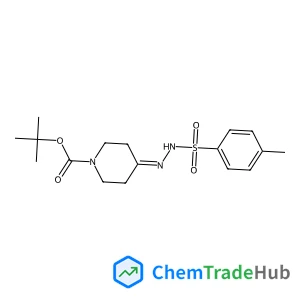
tert-Butyl 4-(2-(p-Tolylsulfonyl)hydrazono)piperidine-1-carboxylate
CAS Number:
1046478-89-0
Molecular Formula:
C17H25N3O4S
Recommended Suppliers






Disclaimer
This page provides academic journal information for reference and research purposes only. We are not affiliated with any journal publishers and do not handle publication submissions. For publication-related inquiries, please contact the respective journal publishers directly.
If you notice any inaccuracies in the information displayed, please contact us at support@chemtradehub.com. We will promptly review and address your concerns.