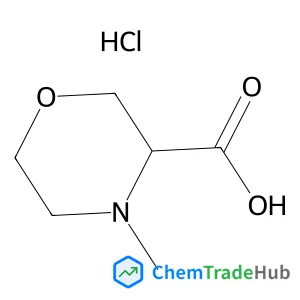
4-Methyl-3-morpholinecarboxylic acid hydrochloride (1:1)
CAS Number:
1240518-90-4
Molecular Formula:
C6H12ClNO3
Paul Pineda Contreras, Seema Agarwal
The successful development of a universal hydrogen bond (H-bond) concept, specific for bi-functional vinylcyclopropane (VCP) ester–amide derivatives is reported here. Thereby, uniformity within the intermolecular hydrogen bond strength as investigated by variable temperature NMR and FT-IR measurements provides an excellent control of high reactivity, nearly regardless of the chosen spacer-unit, offering the system a possible application as a modular construction kit for cross-linked networks with varied properties. Two entirely diversified VCP ester–amide systems were prepared. The performance benchmark of a flexible, high molar mass macro-monomer VCPPPG2000, implementing a polypropyleneglycol Genamine D01/2000 macro-spacer, and two rigid, low molar mass monomers VCP-m-phenyl and VCP-p-phenyl outlined significantly the strength of the system. Extremely low volume shrinkages between 1.4–4.5% and a wide range of E-moduli could be achieved. An easy control of adjusting final characteristics by varying the co-monomer content in co-networks was shown, especially without obtaining any significant disadvantage in the curing behavior. The VCP ester–amides offer the possibility to replace some currently used dimethacrylate resins within several high-end applications, especially where low volume shrinkage and high polymerization efficiency are required.
Ruhi Desai, Weidong Cui, John J. Harrahy, Alexander R. Ivanov
DOI: 10.1039/D2AN01724E
Georgios Antoniou, Justin J. A. Conn, Benjamin R. Smith, Paul M. Brennan
DOI: 10.1039/D2AN02041F
Nasim Shamsvand, Hamzeh Hassanaki
DOI: 10.1039/D3AN00176H
Qian Zhang, Zhenglin Liu, Hengchang Zhang, Caiqin Han, Ying Wu, Changchun Yan, Ying Liu, Bin Wu, Guohai Yang
DOI: 10.1039/D2AN01817A
Chenhui Hao, Jinxiu Wei, Shenfei Zong, Zhuyuan Wang, Hong Wang, Yiping Cui
DOI: 10.1039/D2AN01662A
Rong Deng, Xiaoxin Chao, Haiqin Li, Xiaochun Li, Zehua Yang
DOI: 10.1039/D2AN01571D
Jun-Hee Park, Zhiquan Song, Ji-Hong Bong, Hong-Rae Kim, Min-Jung Kang, Jae-Chul Pyun
DOI: 10.1039/D2AN01648F
Seongyong Park, Abdul Wahab
DOI: 10.1039/D2AN01569B
Shang-Ting Tsai, Hsu-Chen Hsu
DOI: 10.1039/D3AN00068K
Kexuan Chen, Nan Ma, Haobo Sun, Xueji Zhang, Jinming Kong
DOI: 10.1039/D3AN00213F
4-Nitrophenyl phosphate disodium salt hexahydrate is primarily used as a substra...
2-(Trifluoromethyl)-1,3-oxazole-4-carboxylic Acid (CAS: 1060816-01-4) is widely ...
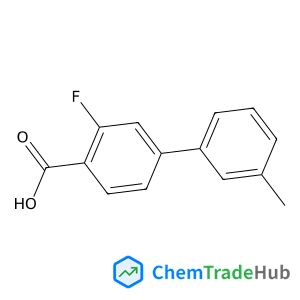
2-Fluoro-4-biphenylcarboxylic acid should be stored in a cool, dry place at room...
Prednisolone-21-Carboxylic Acid is primarily used in the pharmaceutical industry...
4-(Hydrazinomethyl)-1,2,3-benzenetriol (CAS: 3614-72-0) should be stored in a co...
4-Amino-1-methyl-1H-pyrazole-5-carboxylic acid hydrochloride (CAS: 92534-70-8) i...
Dehydropachymic acid (CAS: 77012-31-8) is regulated by various agencies. It fall...
The market and research trends for 6-[(2,2-Dimethylpropanoyl)amino]nicotinic aci...
1,10-Phenanthroline-2,9-dicarbaldehyde should be stored in a cool, dry place awa...
5-Carbamoyl-11-oxo-10,11-dihydro-5H-dibenzo[b,f]azepin-10-yl acetate can be synt...

Polymer Chemistry welcomes submissions in all areas of polymer science that have a strong focus on macromolecular chemistry. Manuscripts may cover a broad range of fields, yet no direct application focus is required.
![[(1S,2S,3R,4S,7R,9S,10S,12R,15S)-4,12-Diacetyloxy-15-[(2R,3S)-3-benzamido-3-phenyl-2-(2,2,2-trichloroethoxycarbonyloxy)propanoyl]oxy-1,9-dihydroxy-10,14,17,17-tetramethyl-11-oxo-6-oxatetracyclo[11.3.1.03,10.04,7]heptadec-13-en-2-yl] benzoate structure](https://static.chemtradehub.com/structs/100/100431-55-8-7104.webp "[(1S,2S,3R,4S,7R,9S,10S,12R,15S)-4,12-Diacetyloxy-15-[(2R,3S)-3-benzamido-3-phenyl-2-(2,2,2-trichloroethoxycarbonyloxy)propanoyl]oxy-1,9-dihydroxy-10,14,17,17-tetramethyl-11-oxo-6-oxatetracyclo[11.3.1.03,10.04,7]heptadec-13-en-2-yl] benzoate structure")