













Synthesis of poly(spirosilabifluorene) copolymers and their improved stability in blue emitting polymer LEDs over non-spiro analogs
Literature Information
Publication Date
2015-04-01
DOI
10.1039/C4PY01418A
Impact Factor
5.582
Authors
Jeffrey J. McDowell, Dong Gao, Dwight S. Seferos, Geoffrey Ozin
View Original
Abstract
We report herein a unique deep blue emitting copolymer, poly(3,6-dimethoxy-9.9′-dihexylsilafluorene-co-3.6-dimethoxy-2′,3′,6′,7′-tetrahexyloxy-9,9-spiro-9-silabifluorene) (PHSSF-co-PDHSF), which exhibits brilliant solid state blue luminescence, high quantum efficiency, excellent solubility and thermal stability. We have found that using PHSSF-co-PDHSF copolymers with large volume fractions of spirosilabifluorene as the emissive layer in OLEDs correlates to more stable EL intensity and have improved lifetimes over non-spiro poly(silafluorene) devices. The HSSF monomer is prepared via a two-part procedure, with each part resulting in one of two biphenyl segments which combines in a final cyclization step involving tetrachlorosilane. One segment possesses two bromide groups necessary for the polymerization. We utilized an efficient nickel catalyzed polymerization based on diarylmagnesate monomers to create PHSSF-co-PDHSF in good yield with number average molecular weights exceeding 50 kg mol−1 with a PDI = 1.8. The polymerization was complete in less than 30 min. For PHSSF-co-PDHSF OLED devices, the maximum irradiance of the device was 40 W m−2 at a current density of 60 mA cm−2 and EL maximum centered at 410 nm. The maximum device external quantum efficiency was 2.9% when operating at 38 mA cm−2. To measure OLED stability, we monitored normalized EL intensity for both PHSSF-co-PDHSF and PDHSF devices. Over the course of 10 h, the EL intensity of the PDHSF device drops 20% more than the PHSSF-co-PDHSF device when operating at 6 mA cm−2
Related Literature
“Lighting up” fluoride: cellular imaging and zebrafish model interrogations using a simple ESIPT-based mycophenolic acid precursor-based probe
Neha Jain, Prasad M. Sonawane, Haoyan Liu, Arkaprava Roychaudhury, Youngseob Lee, Jongkeol An, Donghyeon Kim, Dongwook Kim, Yunsu Kim, Yeu-Chun Kim, Kyung-Bin Cho, Hee-Sung Park, Cheol-Hee Kim
2023-05-15
Paper
DOI: 10.1039/D3AN00646H
Light controlled reversible Michael addition of cysteine: a new tool for dynamic site-specific labeling of proteins
Soham Maity, Courtney Bingham, Wei Sheng, Nona Ehyaei, Debarshi Chakraborty, Setare Tahmasebi-Nick, Thomas E. Kimmel, Chrysoula Vasileiou, James H. Geiger, Babak Borhan
2023-01-25
Paper
DOI: 10.1039/D2AN01395A
A high-frequency QCM biosensing platform for label-free detection of the SARS-CoV-2 spike receptor-binding domain: an aptasensor and an immunosensor
Qingqing Zhang, Shuping Liu, Xiaohua Zhang, Cuicui Du, Shihui Si, Jinhua Chen
2023-01-20
Communication
DOI: 10.1039/D3AN00008G
A dichromatic plasmonic ELISA CD81 protein sensor for ultrasensitive detection of preeclampsia
Kexuan Chen, Nan Ma, Haobo Sun, Xueji Zhang, Jinming Kong
2023-02-21
Paper
DOI: 10.1039/D3AN00213F
Highly sensitive AuNSs@AgNR SERS substrates for rapid determination of aromatic amines
Qian Zhang, Zhenglin Liu, Hengchang Zhang, Caiqin Han, Ying Wu, Changchun Yan, Ying Liu, Bin Wu, Guohai Yang
2023-01-12
Paper
DOI: 10.1039/D2AN01817A
Solvent effects of N,N-dimethylformamide and methanol on mass spectrometry imaging by tapping-mode scanning probe electrospray ionization
Nijiho Ote, Mengze Sun, Shuichi Shimma, Osamu Urakawa, Shinichi Yamaguchi, Tomoya Kudo
2023-02-20
Paper
DOI: 10.1039/D2AN01953A
A DNA walker triggered isothermal amplification method based on freezing construction of AuNP probes and its application in ricin detection
Xuan Sun, Weiya Wang, Yanyan Chai, Zhou Zheng, Yu Wang, Jing Bi, Qian Wang, Yonggang Hu, Zhixian Gao
2022-12-29
Paper
DOI: 10.1039/D2AN01793H
Mobile multi-configuration clinical translational Raman system for oral cancer application
Siddra Maryam, Sanathana Konugolu Venkata Sekar, M. Daniyal Ghauri, Edward Fahy, Marcelo Saito Nogueira, Huihui Lu, Flavien Beffara, Georges Humbert, Patrick Sheahan, Ray Burke, Kiang Wei Kho, Rekha Gautam, Stefan Andersson-Engels
2023-03-06
Paper
DOI: 10.1039/D2AN01921C
A machine learning based approach for quantitative evaluation of cell migration in Transwell assays based on deformation characteristics
Fei Zhang, Rongbiao Zhang, Mingji Wei, Guoxiao Li
2023-02-14
Paper
DOI: 10.1039/D2AN01882A
Molecular simulation-guided aptasensor design of robust and sensitive lateral flow strip for cadmium ion detection
Muhammad Irfan, Ghulam Murtaza, Shangnan Fu, Ailiang Chen, Feng Qu, Xin Su
2023-03-20
Paper
DOI: 10.1039/D3AN00202K
You might also like
Compound Q&A
What are the main uses of 4-Nitrophenyl phosphate disodium salt hexahydrate (CAS: 333338-18-4)?
4-Nitrophenyl phosphate disodium salt hexahydrate is primarily used as a substra...
333338-18-44-Nitrophenyl phosph...
Compound Q&A
What are the main uses of 2-(Trifluoromethyl)-1,3-oxazole-4-carboxylic Acid (CAS: 1060816-01-4)?
2-(Trifluoromethyl)-1,3-oxazole-4-carboxylic Acid (CAS: 1060816-01-4) is widely ...
1060816-01-42-(Trifluoromethyl)-...
Compound Q&A
How should 2-Fluoro-4-biphenylcarboxylic acid (CAS: 137045-30-8) be stored?
2-Fluoro-4-biphenylcarboxylic acid should be stored in a cool, dry place at room...
137045-30-82-Fluoro-4-biphenylc...
Compound Q&A
What industries use Prednisolone-21-Carboxylic Acid (CAS: 61549-70-0)?
Prednisolone-21-Carboxylic Acid is primarily used in the pharmaceutical industry...
61549-70-0Prednisolone-21-Carb...
Compound Q&A
How should 4-(Hydrazinomethyl)-1,2,3-benzenetriol (CAS: 3614-72-0) be stored?
4-(Hydrazinomethyl)-1,2,3-benzenetriol (CAS: 3614-72-0) should be stored in a co...
3614-72-04-(Hydrazinomethyl)-...
Compound Q&A
What industries use 4-Amino-1-methyl-1H-pyrazole-5-carboxylic acid hydrochloride (CAS: 92534-70-8)?
4-Amino-1-methyl-1H-pyrazole-5-carboxylic acid hydrochloride (CAS: 92534-70-8) i...
92534-70-84-Amino-1-methyl-1H-...
Compound Q&A
What regulatory guidelines apply to dehydropachymic acid (CAS: 77012-31-8)?
Dehydropachymic acid (CAS: 77012-31-8) is regulated by various agencies. It fall...
77012-31-8Dehydropachymic acid
Compound Q&A
What is the market or research trend for 6-[(2,2-Dimethylpropanoyl)amino]nicotinic acid (CAS: 898561-66-5)?
The market and research trends for 6-[(2,2-Dimethylpropanoyl)amino]nicotinic aci...
898561-66-56-[(2,2-Dimethylprop...
Compound Q&A
How should 1,10-Phenanthroline-2,9-dicarbaldehyde (CAS: 57709-62-3) be stored?
1,10-Phenanthroline-2,9-dicarbaldehyde should be stored in a cool, dry place awa...
57709-62-31,10-Phenanthroline-...
Compound Q&A
How is 5-Carbamoyl-11-oxo-10,11-dihydro-5H-dibenzo[b,f]azepin-10-yl acetate (CAS: 113952-21-9) typically synthesized?
5-Carbamoyl-11-oxo-10,11-dihydro-5H-dibenzo[b,f]azepin-10-yl acetate can be synt...
113952-21-95-Carbamoyl-11-oxo-1...
Source Journal
Polymer Chemistry

CiteScore:
8.6
Self-citation Rate:
7.3%
Articles per Year:
457
Polymer Chemistry welcomes submissions in all areas of polymer science that have a strong focus on macromolecular chemistry. Manuscripts may cover a broad range of fields, yet no direct application focus is required.
Recommended Compounds

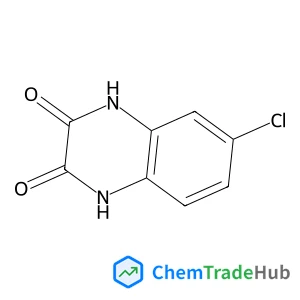
6-CHLORO-2,3-DIOXO-1,2,3,4-TETRAHYDROQUINOXALINE, 97
CAS Number:
169-14-2
Molecular Formula:
C8H5ClN2O2
Recommended Suppliers






Disclaimer
This page provides academic journal information for reference and research purposes only. We are not affiliated with any journal publishers and do not handle publication submissions. For publication-related inquiries, please contact the respective journal publishers directly.
If you notice any inaccuracies in the information displayed, please contact us at support@chemtradehub.com. We will promptly review and address your concerns.