












Transition-metal-free hydroamination/defluorination/cyclization of perfluoroalkyl alkynes with amidines
Literature Information
Publication Date
2021-11-16
DOI
10.1039/D1QO01439K
Impact Factor
5.281
Authors
Li-Wen Sun, Zi-Lun Yu, Xin-Long Luo, Mengtao Ma, Zhi-Liang Shen, Xue-Qiang Chu
View Original
Abstract
An efficient defluorinative net-[3 + 3]-cyclization strategy for the construction of perfluoroalkyl-substituted pyrimidine derivatives by using a series of perfluoroalkyl alkynes and amidines as starting materials was developed. The present reaction proceeded successfully under transition-metal-free conditions to form two new C–N bonds and a new heterocyclic ring through a sequence of hydroamination, defluorination, and annulation. The desired pyrimidines could be obtained with good functional group tolerance and moderate to good yields. Moreover, the distinctive fluorine effects of perfluoroalkyl substituents are vital for tuning the reactivity of alkynes for the anticipated defluorinative annulation. The pendant π system would lower associated bond dissociation energy significantly compared to that of a nonactivated C(sp3)–F bond.
Related Literature
Reflecting on the successes of the first full year of RSC Sustainability
2023-12-12
Editorial
DOI: 10.1039/D3SU90059B
Comparative study of different particle sizes of added olive leaves for the content of target polyphenols in virgin olive oil
2023-09-25
Paper
DOI: 10.1039/D3FB00108C
Sustainability-driven photocatalysis: oxygen-doped g-C3N4 for organic contaminant degradation
Soumya Ranjan Mishra, Vishal Gadore, Md. Ahmaruzzaman
2023-12-04
Tutorial Review
DOI: 10.1039/D3SU00384A
Optimization of Pavlova gyrans biomass production and the fatty acid profile using a two-step approach
Filipe Maciel, Hugo Pereira, Joana Silva
2023-09-25
Paper
DOI: 10.1039/D3FB00110E
Al(iii)-based MOF for the selective adsorption of phosphate and arsenate from aqueous solutions
Herlys Viltres, Valeria B. López-Cervantes, Camilo Serrano-Fuentes, Amin Reza Rajabzadeh, Seshasai Srinivasan, Ricardo A. Peralta, Carolina Leyva
2023-09-25
Paper
DOI: 10.1039/D3LF00061C
Alkali and alkaline earth metals in liquid salts for supercapatteries
Peiying Fan, Yuhan Zhang, Li Guan, Han Wang, George Zheng Chen
2023-11-29
Tutorial Review
DOI: 10.1039/D3SU00197K
Effects of different microwave power on the drying kinetics and physicochemical quality of brown shrimp (Metapenaeus dobsoni)
Sumit Kumar Verma, Remya Sasikala, Pankaj Kishore, C. O. Mohan, P. Ganesan, Pandurengan Padmavathy, Nagarajan Muralidharan, Bindu Jaganath, Soottawat Benjakul
2023-10-17
Paper
DOI: 10.1039/D3FB00144J
Cholinium-based ionic liquid catalysts for polyethylene terephthalate glycolysis: understanding the role of solvent and a reappraisal of the cation contribution
Diana Bura, Lorenzo Pedrini, Stephen J. Connon
2023-10-19
Communication
DOI: 10.1039/D3SU00336A
Assessing weight loss control strategies in pomegranate (Punica granatum L.) fruit: plastic packaging and surface waxing
Alemayehu Ambaw
2023-09-30
Paper
DOI: 10.1039/D3FB00089C
Sulfonyldibenzoate coordination polymers as bioactive dopants for polysaccharide films with antibacterial and antibiofilm properties
Filipa Macedo, Telma Guiu, Chris H. J. Franco, Vânia André, Alexander M. Kirillov
2023-11-02
Paper
DOI: 10.1039/D3LF00123G
You might also like
Compound Q&A
What industries use (1R,3S)-1,3-Cyclopentanediol (CAS: 16326-97-9)?
(1R,3S)-1,3-Cyclopentanediol finds applications in various industries. In the ph...
16326-97-9(1R,3S)-1,3-Cyclopen...
Compound Q&A
What precautions should be taken when handling N'-[4-(Dimethylamino)phenyl]-N,N-dimethyl-1,4-benzenediamine (CAS: 637-31-0)?
When handling N'-[4-(Dimethylamino)phenyl]-N,N-dimethyl-1,4-benzenediamine, it i...
637-31-0N'-[4-(Dimethylamino...
Compound Q&A
Are there alternatives to 5-(2,4-Difluorophenyl)-2-methoxypyrimidine (CAS: 1352318-16-1) in synthesis?
There are several alternatives to 5-(2,4-Difluorophenyl)-2-methoxypyrimidine in ...
1352318-16-15-(2,4-Difluoropheny...
Compound Q&A
What regulatory guidelines apply to 1-(3-Methoxyphenoxy)propan-2-ol (CAS: 382141-68-6)?
1-(3-Methoxyphenoxy)propan-2-ol (CAS: 382141-68-6) must comply with the Globally...
382141-68-61-(3-Methoxyphenoxy)...
Compound Q&A
Is Tetrodotoxin Citrate (CAS: 18660-81-6) safe?
Tetrodotoxin Citrate is extremely dangerous and should be handled with extreme c...
18660-81-6Tetrodotoxin Citrate
Compound Q&A
What are the main uses of 2-Methyl-2-propanyl [(1R,3S)-3-hydroxycyclopentyl]carbamate (CAS: 225641-84-9)?
2-Methyl-2-propanyl [(1R,3S)-3-hydroxycyclopentyl]carbamate (CAS: 225641-84-9) i...
225641-84-92-Methyl-2-propanyl ...
Compound Q&A
How should waste containing 4-(2-Hydroxyhexafluoroisopropyl)Benzoic Acid (CAS: 16261-80-6) be handled?
Waste containing 4-(2-Hydroxyhexafluoroisopropyl)Benzoic Acid (CAS: 16261-80-6) ...
16261-80-64-(2-Hydroxyhexafluo...
Compound Q&A
How is 2-Methyl-2-proanyl {(2S)-1-[(benzyloxy)amino]-3-hydroxy-3-methyl-1-oxo-2-butanyl}carbamate (CAS: 102507-19-7) typically synthesized?
2-Methyl-2-proanyl {(2S)-1-[(benzyloxy)amino]-3-hydroxy-3-methyl-1-oxo-2-butanyl...
102507-19-72-Methyl-2-propanyl ...
Compound Q&A
What is Benzeneethanamine, α-ethyl-, hydrochloride (1:1) (CAS: 20735-15-3)?
Benzeneethanamine, α-ethyl-, hydrochloride (1:1) is an organic compound with the...
20735-15-3Benzeneethanamine, α...
Compound Q&A
Are there alternatives to 3-{(E)-[4-(Dimethylamino)phenyl]diazenyl}benzoic acid (CAS: 20691-84-3) in synthesis?
In the synthesis of compounds similar to 3-{(E)-[4-(Dimethylamino)phenyl]diazeny...
20691-84-33-{(E)-[4-(Dimethyla...
Source Journal
Organic Chemistry Frontiers

CiteScore:
7.8
Self-citation Rate:
8.7%
Articles per Year:
724
Organic Chemistry Frontiers publishes high-quality research from across organic chemistry. Emphases are placed on studies that make significant contributions to the field of organic chemistry by reporting either new or significantly improved protocols or methodologies. Topics include, but are not limited to the following: Organic synthesis Development of synthetic methodologies Catalysis Natural products Functional organic materials Supramolecular and macromolecular chemistry Physical and computational organic chemistry
Recommended Compounds
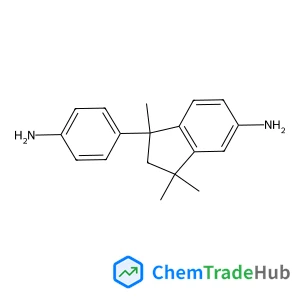
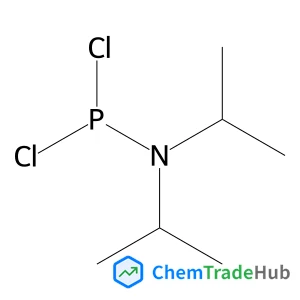
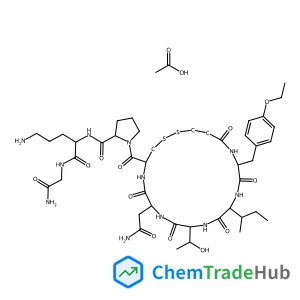
Recommended Suppliers




Disclaimer
This page provides academic journal information for reference and research purposes only. We are not affiliated with any journal publishers and do not handle publication submissions. For publication-related inquiries, please contact the respective journal publishers directly.
If you notice any inaccuracies in the information displayed, please contact us at support@chemtradehub.com. We will promptly review and address your concerns.