


Hydrogen purification performance of a nanoporous hexagonal boron nitride membrane: molecular dynamics and first-principle simulations
Literature Information
Publication Date
2017-04-11
DOI
10.1039/C7CP01665D
Impact Factor
3.676
Authors
Masoud Darvish Ganji, Razieh Dodangeh
View Original
Abstract
Membranes have attracted much attention for the efficient separation of gas mixtures, due to their specific structural and unique properties. In this work, density functional theory (DFT) and molecular dynamic (MD) simulations have been employed to evaluate the performance of nanoporous hexagonal boron nitride (h-BN) monolayers for hydrogen purification. Various porous membranes were designed, and full structural relaxation was carried out by using DFT calculations and then MD simulations to investigate the H2 purification performance of the nanoporous h-BN membranes. It was found that the selectivity for H2 gas over N2 gas was highly sensitive to the type and width of the pores. The h-BN membrane containing pores with short and long sides both of about 3 Å (pore 1B-3N) demonstrated optimal selectivity for H2 molecules, while the permeability of the pore 5B-5N + 4H membrane (short side of about 4.4 Å) was much higher than that of other counterparts. Furthermore, DFT calculations were performed to validate the MD simulation observations as well as to explain the selectivity performance of the most desirable pore membrane. We demonstrated that the 1B-3N pore is a far superior membrane to other counterparts and exhibits an excellent potential for applications in hydrogen purification, clean energy combustion, and the design of novel membranes for gas separation.
Recommended Journals

Electroanalysis

Acta Metallurgica Sinica-English Letters

Journal of Chemical Sciences

Heteroatom Chemistry

Critical Reviews in Solid State and Materials Sciences

Journal of Asian Natural Products Research

Chinese Journal of Chemistry

Atomization and Sprays

Biocatalysis and Biotransformation

Medicinal Chemistry Research
Related Literature
Chitosan functionalized gold nanostars as a theranostic platform for intracellular microRNA detection and photothermal therapy
Xiaoxue Dong, Zongwei Zhu, Qian Sun, Hongqian Zhang, Chuanxu Yang
2023-11-02
Paper
DOI: 10.1039/D3TB02029K
Biomass-derived 2D carbon materials: structure, fabrication, and application in electrochemical sensors
Xuanyu Xiao, Lei Li, Hui Deng, Yuting Zhong, Wei Deng, Yuanyuan Xu, Zhiyu Chen, Jieyu Zhang, Xuefeng Hu, Yunbing Wang
2023-10-31
Review Article
DOI: 10.1039/D3TB01910A
Co–MnO/C nanoparticles derived from MOFs with improved conductivity and reduced volume change for lithium-ion batteries
Yiting Wang, Jie Zheng, Changjian He, Xiaochun Li, Yichuan Rui, Bohejin Tang
2023-11-21
Paper
DOI: 10.1039/D3NJ04872A
Synthesis of a water-based TEOS–PDMS sol–gel coating for hydrophobic cotton and polyester fabrics
Nurul Hidayah Abu Bakar, Wan Norfazilah Wan Ismail, Hartina Mohd Yusop, Noreen Farzuhana Mohd Zulkifli
2023-12-15
Paper
DOI: 10.1039/D3NJ03206J
A dual organelle-targeting photosensitizer based on curcumin for enhanced photodynamic therapy
Wenjun Zhang, Chun-Sing Lee
2023-10-26
Paper
DOI: 10.1039/D3TB01648J
Correction: Injectable organo-hydrogels influenced by click chemistry as a paramount stratagem in the conveyor belt of pharmaceutical revolution
Misba Majood, Radhika Chaurasia, Rupesh, Akanksha Singh, Tapan Dey, Omnarayan Agrawal, Yogesh Kumar Verma, Monalisa Mukherjee
2023-10-24
Correction
DOI: 10.1039/D3TB90198J
You might also like
Compound Q&A
Is 6-(3-Fluorophenyl)picolinic acid (CAS: 887982-40-3) safe?
6-(3-Fluorophenyl)picolinic acid is generally considered safe for laboratory use...
887982-40-36-(3-Fluorophenyl)pi...
Compound Q&A
What industries use (3R)-3-Pyrrolidinol (CAS: 2799-21-5)?
(3R)-3-Pyrrolidinol is used in the pharmaceutical industry as a precursor for dr...
2799-21-5(3R)-3-Pyrrolidinol
Compound Q&A
What precautions should be taken when handling (4R,5R)-4,5-Diethoxycarbonyl-2,2-dimethyldioxolane (CAS: 59779-75-8)?
When handling (4R,5R)-4,5-Diethoxycarbonyl-2,2-dimethyldioxolane (CAS: 59779-75-...
59779-75-8(4R,5R)-4,5-Diethoxy...
Compound Q&A
How is 1-(6-Chloroimidazo[1,2-b]pyridazin-3-yl)ethanone (CAS: 90734-71-7) typically synthesized?
1-(6-Chloroimidazo[1,2-b]pyridazin-3-yl)ethanone is often synthesized via a mult...
90734-71-71-(6-Chloroimidazo[1...
Compound Q&A
What is the market or research trend for N-Ethyl-3,4-dimethylbenzylamine (CAS: 39180-83-1)?
The market for N-Ethyl-3,4-dimethylbenzylamine (CAS: 39180-83-1) remains steady,...
39180-83-1N-Ethyl-3,4-dimethyl...
Compound Q&A
What is Tert-butyl 3-(pyrrolidin-1-yl)azetidine-1-carboxylate (CAS: 1019008-21-9)?
Tert-butyl 3-(pyrrolidin-1-yl)azetidine-1-carboxylate is a chemical compound wit...
1019008-21-9Tert-butyl 3-(pyrrol...
Compound Q&A
What regulatory guidelines apply to 1-Bromo-3-chloro-2,4-dimethoxybenzene (CAS: 1228956-93-1)?
1-Bromo-3-chloro-2,4-dimethoxybenzene (CAS: 1228956-93-1) falls under the classi...
1228956-93-11-Bromo-3-chloro-2,4...
Compound Q&A
Is 8-Bromo-2-methyl-3,4-dihydroisoquinolin-1(2H)-one (CAS: 1368622-07-4) safe?
The safety of 8-Bromo-2-methyl-3,4-dihydroisoquinolin-1(2H)-one (CAS: 1368622-07...
1368622-07-48-Bromo-2-methyl-3,4...
Compound Q&A
Is Benzyl [(3S)-2,6-dioxo-3-piperidinyl]carbamate (CAS: 22785-43-9) safe?
Benzyl [(3S)-2,6-dioxo-3-piperidinyl]carbamate is generally safe when handled wi...
22785-43-9Benzyl [(3S)-2,6-dio...
Compound Q&A
How should 1-{[4-(4,4,5,5-Tetramethyl-1,3,2-dioxaborolan-2-yl)phenyl]sulfonyl}pyrrolidine (CAS: 928657-21-0) be stored?
1-{[4-(4,4,5,5-Tetramethyl-1,3,2-dioxaborolan-2-yl)phenyl]sulfonyl}pyrrolidine s...
928657-21-01-{[4-(4,4,5,5-Tetra...
Source Journal
Physical Chemistry Chemical Physics

CiteScore:
5.5
Self-citation Rate:
10.3%
Articles per Year:
3036
Physical Chemistry Chemical Physics (PCCP) is an international journal co-owned by 19 physical chemistry and physics societies from around the world. This journal publishes original, cutting-edge research in physical chemistry, chemical physics and biophysical chemistry. To be suitable for publication in PCCP, articles must include significant innovation and/or insight into physical chemistry; this is the most important criterion that reviewers and Editors will judge against when evaluating submissions. The journal has a broad scope and welcomes contributions spanning experiment, theory, computation and data science. Topical coverage includes spectroscopy, dynamics, kinetics, statistical mechanics, thermodynamics, electrochemistry, catalysis, surface science, quantum mechanics, quantum computing and machine learning. Interdisciplinary research areas such as polymers and soft matter, materials, nanoscience, energy, surfaces/interfaces, and biophysical chemistry are welcomed if they demonstrate significant innovation and/or insight into physical chemistry. Joined experimental/theoretical studies are particularly appreciated when complementary and based on up-to-date approaches.
Recommended Compounds
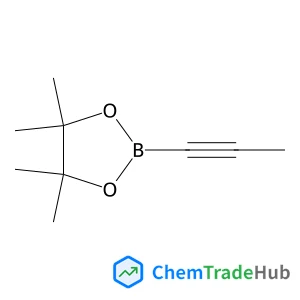
4,4,5,5-Tetramethyl-2-(1-propyn-1-YL)-1,3,2-dioxaborolane
CAS Number:
347389-75-7
Molecular Formula:
C9H15BO2
Recommended Suppliers






Disclaimer
This page provides academic journal information for reference and research purposes only. We are not affiliated with any journal publishers and do not handle publication submissions. For publication-related inquiries, please contact the respective journal publishers directly.
If you notice any inaccuracies in the information displayed, please contact us at support@chemtradehub.com. We will promptly review and address your concerns.