












Femtosecond time-resolved photoelectron spectroscopy of the benzyl radical
Literature Information
Publication Date
2017-04-12
DOI
10.1039/C7CP01437F
Impact Factor
3.676
Authors
L. Poisson
View Original
Abstract
We present a joint experimental and computational study of the nonradiative deactivation of the benzyl radical, C7H7, after UV excitation. Femtosecond time-resolved photoelectron imaging was applied to investigate the photodynamics of the radical. The experiments were accompanied by excited state dynamics simulations using surface hopping. Benzyl has been excited at 265 nm into the D-band (ππ*) and the dynamics was probed using probe wavelengths of 398 nm or 798 nm. At a probe wavelength of 398 nm a single time constant of around 70–80 fs was observed. When the dynamics was probed at 798 nm, a second time constant τ2 = 1.5 ps was visible, which can be attributed to further non-radiative deactivation to the lower-lying D1/D2 states.
Recommended Journals
Related Literature
Iodine-catalyzed efficient 2-arylsulfanylphenol formation from thiols and cyclohexanones
Pengcheng Jiang, Shanping Chen, Hongrui Qi, Guo-Jun Deng
2013-09-16
Communication
DOI: 10.1039/C3GC41671B
New mechanistic insight into the oxygen reduction reaction on Ruddlesden–Popper cathodes for intermediate-temperature solid oxide fuel cells
Wenyuan Li, Bo Guan, Xinxin Zhang, Jianhua Yan, Yue Zhou, Xingbo Liu
2016-02-25
Paper
DOI: 10.1039/C6CP00056H
A gene-activating skin substitute comprising PLLA/POSS nanofibers and plasmid DNA encoding ANG and bFGF promotes in vivo revascularization and epidermalization
Dongwei Wu, Jianwang Tan, Zhibin Liu
2018-09-28
Paper
DOI: 10.1039/C8TB02006J
Measuring oxygen surface exchange kinetics on mixed-conducting composites by electrical conductivity relaxation
Bobing Hu, Yunlong Wang, Zhuoying Zhu, Changrong Xia
2015-04-15
Paper
DOI: 10.1039/C5TA00510H
Barrierless photoisomerisation of the “simplest cyanine”: Joining computational and femtosecond optical spectroscopies to trace the full reaction path
Alexander Weigel, Matthias Pfaffe, Mohsen Sajadi, Rainer Mahrwald, Roberto Improta, Vincenzo Barone, Dario Polli, Giulio Cerullo, Nikolaus P. Ernsting, Fabrizio Santoro
2012-07-17
Paper
DOI: 10.1039/C2CP41522D
Zinc oxide heterostructures: advances in devices from self-powered photodetectors to self-charging supercapacitors
Sukanta Nandi, Sumana Kumar, Abha Misra
2021-09-09
Review Article
DOI: 10.1039/D1MA00670C
Porous nanoMoC@graphite shell derived from a MOFs-directed strategy: an efficient electrocatalyst for the hydrogen evolution reaction
Zhangping Shi, Yangxia Wang, Huanlei Lin, Hongbin Zhang, Meikun Shen, Songhai Xie, Yahong Zhang, Qingsheng Gao, Yi Tang
2016-03-17
Paper
DOI: 10.1039/C6TA01900E
Light-induced reactivity of gold and hybrid perovskite as a new possible degradation mechanism in perovskite solar cells
Natalia N. Shlenskaya, Nikolai A. Belich, Michael Grätzel
2017-12-20
Paper
DOI: 10.1039/C7TA10217H
The structure of chromophore-grafted amyloid-β12–28 dimers in the gas-phase: FRET-experiment guided modelling
2016-02-19
Paper
DOI: 10.1039/C6CP00263C
You might also like
Compound Q&A
Are there alternatives to 1-(4-Chlorophenyl)-N-hydroxymethanimine (CAS: 3848-36-0) in synthesis?
When considering alternatives to 1-(4-Chlorophenyl)-N-hydroxymethanimine (CAS: 3...
3848-36-01-(4-Chlorophenyl)-N...
Compound Q&A
How should (1R,9S,10S,12S,14E,16S,19R,20R,21S,22R)-3,9,21-Trihydroxy-5,10,12,14,16,20,22-heptamethyl-23,24-dioxatetracyclo[17.3.1.1~6,9~.0~2,7~]tetracosa-2,5,7,14-tetraen-4-one (CAS: 183202-73-5) be stored?
This compound should be stored in a cool, dry place away from direct sunlight. I...
183202-73-5(1R,9S,10S,12S,14E,1...
Compound Q&A
How is 3-(4-Bromophenyl)-5-(2-fluorophenyl)-1,2,4-oxadiazole (CAS: 419553-16-5) typically synthesized?
3-(4-Bromophenyl)-5-(2-fluorophenyl)-1,2,4-oxadiazole is synthesized through a m...
419553-16-53-(4-Bromophenyl)-5-...
Compound Q&A
How is 5-Chloro-2-(4-chlorophenyl)-4-methyl-6-[3-(1-piperidinyl)propoxy]pyrimidine (CAS: 1639220-19-1) typically synthesized?
5-Chloro-2-(4-chlorophenyl)-4-methyl-6-[3-(1-piperidinyl)propoxy]pyrimidine (CAS...
1639220-19-15-Chloro-2-(4-chloro...
Compound Q&A
What industries use 2-Chloro-4-(difluoromethoxy)pyridine (CAS: 1206978-15-5)?
2-Chloro-4-(difluoromethoxy)pyridine is used in the pharmaceutical industry for ...
1206978-15-52-Chloro-4-(difluoro...
Compound Q&A
What regulatory guidelines apply to 3-Chloro-6-methylpyridazine (CAS: 1121-79-5)?
3-Chloro-6-methylpyridazine (CAS: 1121-79-5) is classified under the Globally Ha...
1121-79-53-Chloro-6-methylpyr...
Compound Q&A
Are there alternatives to Methyl 4,5-dimethyl-2-nitrobenzoate in synthesis?
Several alternatives can be used in the synthesis of Methyl 4,5-dimethyl-2-nitro...
90922-74-0Methyl 4,5-dimethyl-...
Compound Q&A
Are there alternatives to (2E,2'E)-3,3'-(1,4-Phenylene)bisacrylaldehyde in synthesis?
Alternatives to (2E,2'E)-3,3'-(1,4-Phenylene)bisacrylaldehyde include other acry...
63405-68-5(2E,2'E)-3,3'-(1,4-P...
Compound Q&A
What is 3-Amino-5-chloropyridin-2-ol hydrochloride (CAS: 1261906-29-9)?
3-Amino-5-chloropyridin-2-ol hydrochloride is an organic compound with the CAS n...
1261906-29-93-Amino-5-chloropyri...
Compound Q&A
What precautions should be taken when handling 6,7-Difluoro-2,3-dihydro-4H-chromen-4-one (CAS: 1092349-93-3)?
When handling 6,7-Difluoro-2,3-dihydro-4H-chromen-4-one, it is essential to wear...
1092349-93-36,7-Difluoro-2,3-dih...
Source Journal
Physical Chemistry Chemical Physics

CiteScore:
5.5
Self-citation Rate:
10.3%
Articles per Year:
3036
Physical Chemistry Chemical Physics (PCCP) is an international journal co-owned by 19 physical chemistry and physics societies from around the world. This journal publishes original, cutting-edge research in physical chemistry, chemical physics and biophysical chemistry. To be suitable for publication in PCCP, articles must include significant innovation and/or insight into physical chemistry; this is the most important criterion that reviewers and Editors will judge against when evaluating submissions. The journal has a broad scope and welcomes contributions spanning experiment, theory, computation and data science. Topical coverage includes spectroscopy, dynamics, kinetics, statistical mechanics, thermodynamics, electrochemistry, catalysis, surface science, quantum mechanics, quantum computing and machine learning. Interdisciplinary research areas such as polymers and soft matter, materials, nanoscience, energy, surfaces/interfaces, and biophysical chemistry are welcomed if they demonstrate significant innovation and/or insight into physical chemistry. Joined experimental/theoretical studies are particularly appreciated when complementary and based on up-to-date approaches.
Recommended Compounds
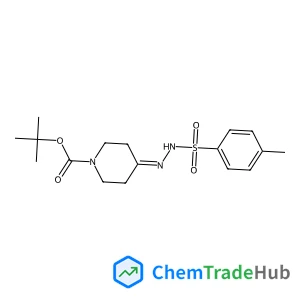
tert-Butyl 4-(2-(p-Tolylsulfonyl)hydrazono)piperidine-1-carboxylate
CAS Number:
1046478-89-0
Molecular Formula:
C17H25N3O4S
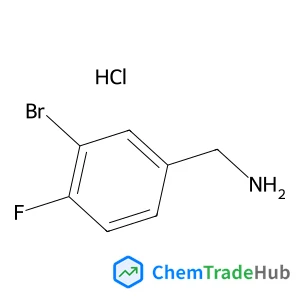
1-(3-Bromo-4-fluorophenyl)methanamine hydrochloride (1:1)
CAS Number:
202865-68-7
Molecular Formula:
C7H8BrClFN
Recommended Suppliers





Disclaimer
This page provides academic journal information for reference and research purposes only. We are not affiliated with any journal publishers and do not handle publication submissions. For publication-related inquiries, please contact the respective journal publishers directly.
If you notice any inaccuracies in the information displayed, please contact us at support@chemtradehub.com. We will promptly review and address your concerns.