


Measuring oxygen surface exchange kinetics on mixed-conducting composites by electrical conductivity relaxation
Literature Information
Publication Date
2015-04-15
DOI
10.1039/C5TA00510H
Impact Factor
12.732
Authors
Bobing Hu, Yunlong Wang, Zhuoying Zhu, Changrong Xia
View Original
Abstract
The oxygen release kinetics of mixed-conducting Sr2Fe1.5Mo0.5O6−δ–Sm0.2Ce0.8O2−δ (SFM–SDC) dual-phase composites has been investigated, at 750 °C, as a function of the SDC phase volume fraction using electrical conductivity relaxation (ECR) under reducing atmospheres, extending our previous work on the oxygen incorporation kinetics of these composites under oxidizing conditions. Gas mixtures of H2/H2O and CO/CO2 were used to control step changes in the oxygen partial pressure (pO2) in the range 10−24 to 10−20 atm. At the conditions of the experiments, oxygen re-equilibration is entirely controlled by the surface exchange kinetics. A model is developed which allows deconvolution of the effective time constant of the relaxation process in terms of the intrinsic contributions of the components to oxygen surface exchange and synergetic contributions caused by heterogeneous interfaces. The oxygen surface exchange kinetics under H2/H2O atmosphere is found to be a weighted average of the intrinsic contributions of SFM and SDC phases. No evidence is found for an enhanced exchange rate at the SFM–SDC–gas triple phase boundaries (TPB). Synergetic contributions arise under CO/CO2 atmosphere, enhancing the rate of oxygen surface exchange up to a factor of 2.4. The obtained results are discussed in terms of the surface microstructure of the composites from image analysis. Overall, the results of this and our previous study confirm that the triple phase boundaries in SFM–SDC composites significantly accelerate the oxygen incorporation kinetics under oxidizing conditions, but only modestly, or even negligibly, influence the oxygen release kinetics under reducing conditions.
Recommended Journals

Pharmacological Reviews

Science

Planta Medica

Proceedings of the National Academy of Sciences of the United States of America

Organic Preparations and Procedures International

Fibre Chemistry

European Journal of Wood and Wood Products

Journal of Catalysis

Kinetics and Catalysis

Journal of Medicinal Chemistry
Related Literature
Diffusion NMR for the characterization, in solution, of supramolecular systems based on calixarenes, resorcinarenes, and other macrocyclic arenes
Yoram Cohen, Sarit Slovak
2019-04-17
Review Article
DOI: 10.1039/C9QO00329K
An unexpected reaction of aryldiazonium tetrafluoroborates, sodium metabisulfite, and thiourea under photoinduced conditions
Xiaofang Li, Wenlin Xie, Shengqing Ye
2019-04-11
Research Article
DOI: 10.1039/C9QO00410F
Chemoselective N-arylation of aminobenzene sulfonamides via copper catalysed Chan–Evans–Lam reactions
Weisai Zu, Shuai Liu, Xin Jia, Liang Xu
2019-01-17
Research Article
DOI: 10.1039/C8QO01313F
A AgOAc/quinine-derived aminophosphine complex as an efficient catalyst for diastereo- and enantioselective 1,3-dipolar cycloaddition of α,β-unsaturated 7-azaindoline amides and azomethine ylides
Yong You, Jian-Qiang Zhao
2019-04-15
Research Article
DOI: 10.1039/C9QO00347A
A copper-catalyzed radical coupling/fragmentation reaction: efficient access to β-oxophosphine oxides
Shangbiao Feng, Jinlai Li, Feifei He, Tao Li, Huilin Li, Xiaolei Wang, Xingang Xie, Xuegong She
2019-02-12
Research Article
DOI: 10.1039/C9QO00006B
Organoiodine reagent-promoted intermolecular oxidative amination: synthesis of cyclopropyl spirooxindoles
Zhiguo Zhang, Yongchao Zhang, Guoqing Huang, Guisheng Zhang
2017-04-18
Research Article
DOI: 10.1039/C7QO00156H
You might also like
Compound Q&A
Are there alternatives to 1-(4-Chlorophenyl)-N-hydroxymethanimine (CAS: 3848-36-0) in synthesis?
When considering alternatives to 1-(4-Chlorophenyl)-N-hydroxymethanimine (CAS: 3...
3848-36-01-(4-Chlorophenyl)-N...
Compound Q&A
How should (1R,9S,10S,12S,14E,16S,19R,20R,21S,22R)-3,9,21-Trihydroxy-5,10,12,14,16,20,22-heptamethyl-23,24-dioxatetracyclo[17.3.1.1~6,9~.0~2,7~]tetracosa-2,5,7,14-tetraen-4-one (CAS: 183202-73-5) be stored?
This compound should be stored in a cool, dry place away from direct sunlight. I...
183202-73-5(1R,9S,10S,12S,14E,1...
Compound Q&A
How is 3-(4-Bromophenyl)-5-(2-fluorophenyl)-1,2,4-oxadiazole (CAS: 419553-16-5) typically synthesized?
3-(4-Bromophenyl)-5-(2-fluorophenyl)-1,2,4-oxadiazole is synthesized through a m...
419553-16-53-(4-Bromophenyl)-5-...
Compound Q&A
How is 5-Chloro-2-(4-chlorophenyl)-4-methyl-6-[3-(1-piperidinyl)propoxy]pyrimidine (CAS: 1639220-19-1) typically synthesized?
5-Chloro-2-(4-chlorophenyl)-4-methyl-6-[3-(1-piperidinyl)propoxy]pyrimidine (CAS...
1639220-19-15-Chloro-2-(4-chloro...
Compound Q&A
What industries use 2-Chloro-4-(difluoromethoxy)pyridine (CAS: 1206978-15-5)?
2-Chloro-4-(difluoromethoxy)pyridine is used in the pharmaceutical industry for ...
1206978-15-52-Chloro-4-(difluoro...
Compound Q&A
What regulatory guidelines apply to 3-Chloro-6-methylpyridazine (CAS: 1121-79-5)?
3-Chloro-6-methylpyridazine (CAS: 1121-79-5) is classified under the Globally Ha...
1121-79-53-Chloro-6-methylpyr...
Compound Q&A
Are there alternatives to Methyl 4,5-dimethyl-2-nitrobenzoate in synthesis?
Several alternatives can be used in the synthesis of Methyl 4,5-dimethyl-2-nitro...
90922-74-0Methyl 4,5-dimethyl-...
Compound Q&A
Are there alternatives to (2E,2'E)-3,3'-(1,4-Phenylene)bisacrylaldehyde in synthesis?
Alternatives to (2E,2'E)-3,3'-(1,4-Phenylene)bisacrylaldehyde include other acry...
63405-68-5(2E,2'E)-3,3'-(1,4-P...
Compound Q&A
What is 3-Amino-5-chloropyridin-2-ol hydrochloride (CAS: 1261906-29-9)?
3-Amino-5-chloropyridin-2-ol hydrochloride is an organic compound with the CAS n...
1261906-29-93-Amino-5-chloropyri...
Compound Q&A
What precautions should be taken when handling 6,7-Difluoro-2,3-dihydro-4H-chromen-4-one (CAS: 1092349-93-3)?
When handling 6,7-Difluoro-2,3-dihydro-4H-chromen-4-one, it is essential to wear...
1092349-93-36,7-Difluoro-2,3-dih...
Source Journal
Journal of Materials Chemistry A

CiteScore:
19.5
Self-citation Rate:
4.7%
Articles per Year:
2211
Journal of Materials Chemistry A, B & C cover high quality studies across all fields of materials chemistry. The journals focus on those theoretical or experimental studies that report new understanding, applications, properties and synthesis of materials. The journals have a strong history of publishing quality reports of interest to interdisciplinary communities and providing an efficient and rigorous service through peer review and publication. The journals are led by an international team of Editors-in-Chief and Associate Editors who are all active researchers in their fields. Journal of Materials Chemistry A, B & C are separated by the intended application of the material studied. Broadly, applications in energy and sustainability are of interest to Journal of Materials Chemistry A, applications in biology and medicine are of interest to Journal of Materials Chemistry B, and applications in optical, magnetic and electronic devices are of interest to Journal of Materials Chemistry C. More than one Journal of Materials Chemistry journal may be suitable for certain fields and researchers are encouraged to submit their paper to the journal that they feel best fits for their particular article. Example topic areas within the scope of Journal of Materials Chemistry A are listed below. This list is neither exhaustive nor exclusive. Artificial photosynthesis Batteries Carbon dioxide conversion Catalysis Fuel cells Gas capture/separation/storage Green/sustainable materials Hydrogen generation Hydrogen storage Photocatalysis Photovoltaics Self-cleaning materials Self-healing materials Sensors Supercapacitors Thermoelectrics Water splitting Water treatment
Recommended Compounds
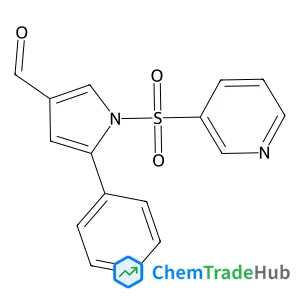
5-Phenyl-1-(pyridin-3-ylsulfonyl)-1H-pyrrole-3-carbaldehyde
CAS Number:
881676-90-0
Molecular Formula:
C16H12N2O3S
Recommended Suppliers






Disclaimer
This page provides academic journal information for reference and research purposes only. We are not affiliated with any journal publishers and do not handle publication submissions. For publication-related inquiries, please contact the respective journal publishers directly.
If you notice any inaccuracies in the information displayed, please contact us at support@chemtradehub.com. We will promptly review and address your concerns.