












Identification of the smallest peptide with a zwitterion as the global minimum: a first-principles study on arginine-containing peptides
Literature Information
Publication Date
2017-04-06
DOI
10.1039/C7CP01380A
Impact Factor
3.676
Authors
Hongbao Li, Jun Jiang
View Original
Abstract
Zwitterions are believed to play an important role in determining the structures, properties and functions of peptides and proteins. However, the smallest peptide with a zwitterionic structure as the global minimum in the gas phase is still not yet identified. In this study, an effective step-by-step strategy has been used to characterize the stable conformers of arginine-containing peptides arginylalanine (ArgAla) and arginylserine (ArgSer). Energy calculations at the DSD-PBEP86-D3BJ/aug-cc-pVTZ level and further extrapolation to the complete basis set (CBS) limit have confirmed, for the first time, that ArgSer appears to be a promising candidate as the smallest peptide with a zwitterionic global minimum structure. First-principles simulations have been performed for near-edge X-ray absorption fine-structure (NEXAFS) spectra and X-ray photoelectron spectra (XPS) at C, N and O K-edges, as well as for infrared (IR) spectra of these arginine-containing peptides. Notable spectral differences were found which enable the unambiguous identification of different neutral forms in future experiments. Our study thus provides valuable insights into the structural stability of zwitterions with the increase of molecular size and illustrates the competition between the canonical and zwitterionic isomers.
Related Literature
Practical applications of small-angle neutron scattering
Martin J. Hollamby
2013-03-25
Perspective
DOI: 10.1039/C3CP50293G
Superior power density solid oxidefuel cells by enlarging the three-phase boundary region of a NiO–Ce0.8Gd0.2O1.9 composite anode through optimized surface structure
Daeil Yoon, Qing Su, Haiyan Wang, Arumugam Manthiram
2013-07-09
Paper
DOI: 10.1039/C3CP52679H
Interactions of platinum clusters with a graphite substrate
G. Ramos-Sanchez, P. B. Balbuena
2013-05-31
Paper
DOI: 10.1039/C3CP51791H
Mg composition dependent band offsets of Zn1−xMgxO/ZnO heterojunctions
H. H. Zhang, X. H. Pan, B. Lu, J. Y. Huang, P. Ding, W. Chen, H. P. He, J. G. Lu, S. S. Chen, Z. Z. Ye
2013-05-22
Communication
DOI: 10.1039/C3CP51156A
Grain boundaries at the surface of consolidated MgO nanocrystals and acid–base functionality
Dima Vingurt, David Fuks, Miron V. Landau, Roxana Vidruk, Moti Herskowitz
2013-07-09
Paper
DOI: 10.1039/C3CP51086G
Rapid self-healable poly(ethylene glycol) hydrogels formed by selective metal–phosphate interactions
Mitsuhiro Ebara, Shinji Tanaka, Taka-Aki Asoh, Akihiko Kikuchi
2013-04-03
Paper
DOI: 10.1039/C3CP50165E
Enantiotopic discrimination and director organization in the twist-bend nematic phase
Cristina Greco, Geoffrey R. Luckhurst, Alberta Ferrarini
2013-07-18
Communication
DOI: 10.1039/C3CP52222A
Chemically synthesised atomically precise gold clusters deposited and activated on titania. Part II
David P. Anderson, Jason F. Alvino, Oliver Shipper, Baira Donoeva, Jan-Yves Ruzicka, Hassan Al Qahtani, Hugh H. Harris, Bruce Cowie, Jade B. Aitken, Vladimir B. Golovko, Gregory F. Metha, Gunther G. Andersson
2013-07-24
Paper
DOI: 10.1039/C3CP52497C
Plant protein interactions studied using AFM force spectroscopy: nanomechanical and adhesion properties
Ahmad Fahs, Guy Louarn
2013-06-04
Paper
DOI: 10.1039/C3CP51007G
You might also like
Compound Q&A
How should waste containing N-Methoxy-N-methyl-1,3-thiazole-5-carboxamide (CAS: 898825-89-3) be handled?
Waste containing N-Methoxy-N-methyl-1,3-thiazole-5-carboxamide (CAS: 898825-89-3...
898825-89-3N-Methoxy-N-methyl-1...
Compound Q&A
How should N-(4-Biphenylyl)dibenzo[b,d]furan-4-amine (CAS: 1318338-47-4) be stored?
N-(4-Biphenylyl)dibenzo[b,d]furan-4-amine should be stored in a tightly sealed c...
1318338-47-4N-(4-Biphenylyl)dibe...
Compound Q&A
What is the market or research trend for 3-Acetamido-5-amino-2,4,6-triiodobenzoic acid (CAS: 1713-07-1)?
The market for 3-Acetamido-5-amino-2,4,6-triiodobenzoic acid (CAS: 1713-07-1) is...
1713-07-13-Acetamido-5-amino-...
Compound Q&A
How should Benzyl 2-O-acetyl-3,4,6-tri-O-benzyl-beta-D-galactopyranoside (CAS: 61820-03-9) be stored?
Benzyl 2-O-acetyl-3,4,6-tri-O-benzyl-beta-D-galactopyranoside (CAS: 61820-03-9) ...
61820-03-9Benzyl 2-O-acetyl-3,...
Compound Q&A
What regulatory guidelines apply to 2-Ethylpiperazine dihydrochloride (CAS: 438050-52-3)?
2-Ethylpiperazine dihydrochloride (CAS: 438050-52-3) is regulated under the Glob...
438050-52-32-Ethylpiperazine di...
Compound Q&A
What regulatory guidelines apply to 1,1'-[1,3-Phenylenebis(methylene)]bis(3-methyl-1H-pyrrole-2,5-dione) (CAS: 119462-56-5)?
1,1'-[1,3-Phenylenebis(methylene)]bis(3-methyl-1H-pyrrole-2,5-dione) (CAS: 11946...
119462-56-51,1'-[1,3-Phenyleneb...
Compound Q&A
Are there alternatives to 5-Fluoro-2-(1-pyrrolidinyl)pyridine (CAS: 1287217-79-1) in synthesis?
Several alternatives can be used in the synthesis of 5-Fluoro-2-(1-pyrrolidinyl)...
1287217-79-15-Fluoro-2-(1-pyrrol...
Compound Q&A
What precautions should be taken when handling 1-((2R,3R,4R,5R)-5-((bis(4-methoxyphenyl)(phenyl)methoxy)methyl)-4-hydroxy-3-methoxytetrahydrofuran-2-yl)-5-methylpyrimidine-2,4(1H,3H)-dione (CAS: 153631-19-7)?
Proper personal protective equipment (PPE) must be worn when handling this compo...
153631-19-71-((2R,3R,4R,5R)-5-(...
Compound Q&A
What precautions should be taken when handling 6-Bromoimidazo[1,2-a]pyridin-8-amine (CAS: 676371-00-9)?
When handling 6-Bromoimidazo[1,2-a]pyridin-8-amine, it is important to wear appr...
676371-00-96-Bromoimidazo[1,2-a...
Compound Q&A
Are there alternatives to (2S,4R)-4-(4-Nitrobenzyl)pyrrolidine-2-carboxylic acid hydrochloride (CAS: 1049740-22-8) in synthesis?
Alternatives to (2S,4R)-4-(4-Nitrobenzyl)pyrrolidine-2-carboxylic acid hydrochlo...
1049740-22-8(2S,4R)-4-(4-Nitrobe...
Source Journal
Physical Chemistry Chemical Physics

CiteScore:
5.5
Self-citation Rate:
10.3%
Articles per Year:
3036
Physical Chemistry Chemical Physics (PCCP) is an international journal co-owned by 19 physical chemistry and physics societies from around the world. This journal publishes original, cutting-edge research in physical chemistry, chemical physics and biophysical chemistry. To be suitable for publication in PCCP, articles must include significant innovation and/or insight into physical chemistry; this is the most important criterion that reviewers and Editors will judge against when evaluating submissions. The journal has a broad scope and welcomes contributions spanning experiment, theory, computation and data science. Topical coverage includes spectroscopy, dynamics, kinetics, statistical mechanics, thermodynamics, electrochemistry, catalysis, surface science, quantum mechanics, quantum computing and machine learning. Interdisciplinary research areas such as polymers and soft matter, materials, nanoscience, energy, surfaces/interfaces, and biophysical chemistry are welcomed if they demonstrate significant innovation and/or insight into physical chemistry. Joined experimental/theoretical studies are particularly appreciated when complementary and based on up-to-date approaches.
Recommended Compounds

(1H-Benzotriazol-1-yloxy)(di-1-pyrrolidinyl)methylium hexafluorophosphate
CAS Number:
105379-24-6
Molecular Formula:
C15H21F6N5OP
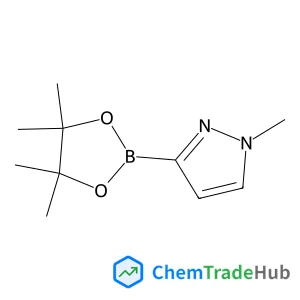
1-Methyl-3-(4,4,5,5-tetramethyl-1,3,2-dioxaborolan-2-yl)-1H-pyrazole
CAS Number:
1020174-04-2
Molecular Formula:
C10H17BN2O2
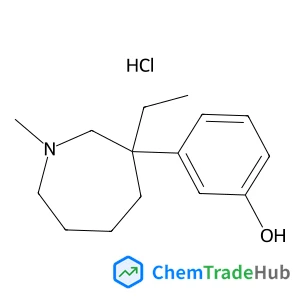
3-(3-Ethyl-1-methyl-3-azepanyl)phenol hydrochloride (1:1)
CAS Number:
59263-76-2
Molecular Formula:
C15H24ClNO

Methyl 2-cyano-3,12-dioxooleana-1,9(11)-dien-28-oate
CAS Number:
218600-53-4
Molecular Formula:
C32H43NO4
Recommended Suppliers



Disclaimer
This page provides academic journal information for reference and research purposes only. We are not affiliated with any journal publishers and do not handle publication submissions. For publication-related inquiries, please contact the respective journal publishers directly.
If you notice any inaccuracies in the information displayed, please contact us at support@chemtradehub.com. We will promptly review and address your concerns.