













Grain boundaries at the surface of consolidated MgO nanocrystals and acid–base functionality
Literature Information
Publication Date
2013-07-09
DOI
10.1039/C3CP51086G
Impact Factor
3.676
Authors
Dima Vingurt, David Fuks, Miron V. Landau, Roxana Vidruk, Moti Herskowitz
View Original
Abstract
The increase of the surface basicity–acidity of MgO material by factors of 1.8–3.0 due to consolidation of its nanocrystals was demonstrated by the indicator titration. It was shown that the parallel increase of surface acidity and basicity is attributed to the formation of grain boundaries (GB) after MgO aerogel densification. A simple model predicting the increase of surface acidity–basicity of MgO that correlates with the results of direct measurements was proposed. The model is based on the study of the fine atomic structure at GB surface areas in consolidated MgO nanocrystals in the framework of Density Functional Theory. It is found that the displacements of coordinatively unsaturated surface ions near the GB are significant at the distances ∼3–4 atomic layers from the geometrical contact plane between nanocrystals. The detailed analysis of atomic positions inside GB demonstrated the coordination deficiency of surface atoms at the GB areas leading to the formation of stretched bonds and to creation of low coordinated surface ions due to splitting of coordination numbers of surface atoms belonging to GB areas. Density of states for electrons shows the existence of additional states in the band gap close to the bottom of the conduction band. The adsorption energy of CO2 molecules atop oxygen atoms exposed at surface GB areas is of the same order of magnitude as that reported for oxygen atoms at crystallographic edges and corners of MgO crystals. It provides additional options for bonding of molecules at the surface of nanocrystalline MgO increasing the adsorption capacity and catalytic activity.
Related Literature
Development of a novel test for the identification of hereditary erythrocyte membrane defects by TGA/Chemometrics
Stefano Materazzi, Patrizia Caprari, Giuseppina Gullifa, Sara Massimi, Elena Carcassi, Roberta Risoluti
2020-05-27
Paper
DOI: 10.1039/D0AN00649A
Carbon dot-based colorimetric sensor array for the discrimination of different water samples
Masoud Shariati-Rad, Zahra Ghorbani
2019-10-11
Paper
DOI: 10.1039/C9AY01439J
A novel aptamer-based competition strategy for ultrasensitive electrochemical detection of leukemia cells
Jia-Ju Fu, Tingting Zheng, Jun-Jie Zhu
2013-08-05
Paper
DOI: 10.1039/C3AN01255G
A practical method for rapid screening and quantitative analysis of 130 pesticide residues in herbal medicines based on the Kovats retention index principle: an exemplary study using Panacis quinquefolii radix
Xichuan Wei, Haizhu Zhang, Ming Niu, Dingkun Zhang
2019-08-02
Paper
DOI: 10.1039/C9AY01310E
The effect of anticancer drugs on seven cell lines monitored by FTIR spectroscopy
Allison Derenne, Magali Verdonck, Erik Goormaghtigh
2012-05-03
Paper
DOI: 10.1039/C2AN35116A
Micromachined multigroove silicon ATR FT-IR internal reflection elements for chemical imaging of microfluidic devices
Stuart T. Read, Garth Wells, Michael Jacobs, Scott M. Rosendahl, Sven Achenbach, Ian J. Burgess
2019-10-24
Paper
DOI: 10.1039/C9AY02248A
A metal ion-regulated colorimetric sensor array: discriminating Chinese Baijiu from other beverages
Jiawei Li, Ping Yang, Jing Zhang, Zhengfan Shui, Danqun Huo, Changjun Hou
2019-09-19
Paper
DOI: 10.1039/C9AY01804B
You might also like
Compound Q&A
Are there alternatives to 1-(4-Chlorophenyl)-N-hydroxymethanimine (CAS: 3848-36-0) in synthesis?
When considering alternatives to 1-(4-Chlorophenyl)-N-hydroxymethanimine (CAS: 3...
3848-36-01-(4-Chlorophenyl)-N...
Compound Q&A
How should (1R,9S,10S,12S,14E,16S,19R,20R,21S,22R)-3,9,21-Trihydroxy-5,10,12,14,16,20,22-heptamethyl-23,24-dioxatetracyclo[17.3.1.1~6,9~.0~2,7~]tetracosa-2,5,7,14-tetraen-4-one (CAS: 183202-73-5) be stored?
This compound should be stored in a cool, dry place away from direct sunlight. I...
183202-73-5(1R,9S,10S,12S,14E,1...
Compound Q&A
How is 3-(4-Bromophenyl)-5-(2-fluorophenyl)-1,2,4-oxadiazole (CAS: 419553-16-5) typically synthesized?
3-(4-Bromophenyl)-5-(2-fluorophenyl)-1,2,4-oxadiazole is synthesized through a m...
419553-16-53-(4-Bromophenyl)-5-...
Compound Q&A
How is 5-Chloro-2-(4-chlorophenyl)-4-methyl-6-[3-(1-piperidinyl)propoxy]pyrimidine (CAS: 1639220-19-1) typically synthesized?
5-Chloro-2-(4-chlorophenyl)-4-methyl-6-[3-(1-piperidinyl)propoxy]pyrimidine (CAS...
1639220-19-15-Chloro-2-(4-chloro...
Compound Q&A
What industries use 2-Chloro-4-(difluoromethoxy)pyridine (CAS: 1206978-15-5)?
2-Chloro-4-(difluoromethoxy)pyridine is used in the pharmaceutical industry for ...
1206978-15-52-Chloro-4-(difluoro...
Compound Q&A
What regulatory guidelines apply to 3-Chloro-6-methylpyridazine (CAS: 1121-79-5)?
3-Chloro-6-methylpyridazine (CAS: 1121-79-5) is classified under the Globally Ha...
1121-79-53-Chloro-6-methylpyr...
Compound Q&A
Are there alternatives to Methyl 4,5-dimethyl-2-nitrobenzoate in synthesis?
Several alternatives can be used in the synthesis of Methyl 4,5-dimethyl-2-nitro...
90922-74-0Methyl 4,5-dimethyl-...
Compound Q&A
Are there alternatives to (2E,2'E)-3,3'-(1,4-Phenylene)bisacrylaldehyde in synthesis?
Alternatives to (2E,2'E)-3,3'-(1,4-Phenylene)bisacrylaldehyde include other acry...
63405-68-5(2E,2'E)-3,3'-(1,4-P...
Compound Q&A
What is 3-Amino-5-chloropyridin-2-ol hydrochloride (CAS: 1261906-29-9)?
3-Amino-5-chloropyridin-2-ol hydrochloride is an organic compound with the CAS n...
1261906-29-93-Amino-5-chloropyri...
Compound Q&A
What precautions should be taken when handling 6,7-Difluoro-2,3-dihydro-4H-chromen-4-one (CAS: 1092349-93-3)?
When handling 6,7-Difluoro-2,3-dihydro-4H-chromen-4-one, it is essential to wear...
1092349-93-36,7-Difluoro-2,3-dih...
Source Journal
Physical Chemistry Chemical Physics

CiteScore:
5.5
Self-citation Rate:
10.3%
Articles per Year:
3036
Physical Chemistry Chemical Physics (PCCP) is an international journal co-owned by 19 physical chemistry and physics societies from around the world. This journal publishes original, cutting-edge research in physical chemistry, chemical physics and biophysical chemistry. To be suitable for publication in PCCP, articles must include significant innovation and/or insight into physical chemistry; this is the most important criterion that reviewers and Editors will judge against when evaluating submissions. The journal has a broad scope and welcomes contributions spanning experiment, theory, computation and data science. Topical coverage includes spectroscopy, dynamics, kinetics, statistical mechanics, thermodynamics, electrochemistry, catalysis, surface science, quantum mechanics, quantum computing and machine learning. Interdisciplinary research areas such as polymers and soft matter, materials, nanoscience, energy, surfaces/interfaces, and biophysical chemistry are welcomed if they demonstrate significant innovation and/or insight into physical chemistry. Joined experimental/theoretical studies are particularly appreciated when complementary and based on up-to-date approaches.
Recommended Compounds
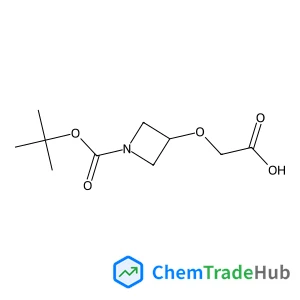
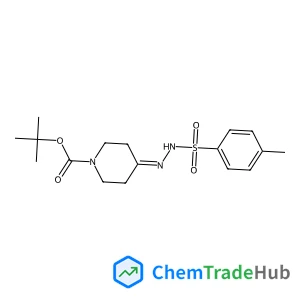
tert-Butyl 4-(2-(p-Tolylsulfonyl)hydrazono)piperidine-1-carboxylate
CAS Number:
1046478-89-0
Molecular Formula:
C17H25N3O4S
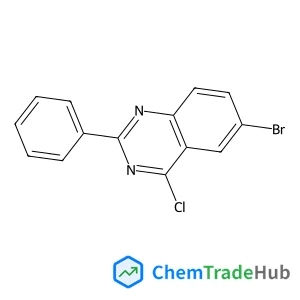
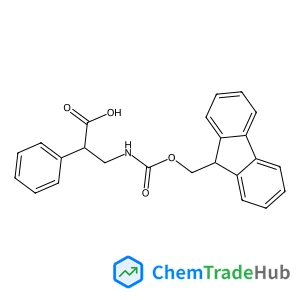
(S)-3-((((9H-Fluoren-9-yl)methoxy)carbonyl)amino)-2-phenylpropanoic acid
CAS Number:
1217663-60-9
Molecular Formula:
C24H21NO4
Recommended Suppliers




Disclaimer
This page provides academic journal information for reference and research purposes only. We are not affiliated with any journal publishers and do not handle publication submissions. For publication-related inquiries, please contact the respective journal publishers directly.
If you notice any inaccuracies in the information displayed, please contact us at support@chemtradehub.com. We will promptly review and address your concerns.