












Interactions of platinum clusters with a graphite substrate
Literature Information
Publication Date
2013-05-31
DOI
10.1039/C3CP51791H
Impact Factor
3.676
Authors
G. Ramos-Sanchez, P. B. Balbuena
View Original
Abstract
Density functional theory calculations are used to elucidate the interactions of platinum clusters with graphite; the results are analyzed in terms of geometry, and energetic and electronic properties. Adsorption of platinum clusters from 1 to 38 atoms is evaluated on a 3-layer graphite model structure. The approach includes van der Waals interactions, which have proved to be essential to describe relatively weak interactions. The results show that when interacting with graphite, the clusters tend to slightly wetting the surface. Although the effect is more pronounced in the larger clusters investigated, the energy difference among total, partial, and non-wetting structures in small clusters is very low and may be easily overcome by thermal effects. The van der Waals energy contributes to enhance the graphite-cluster strength and is proportional to the number of interacting atoms at the interface. Small charge transfer takes place from the metallic cluster to the graphite surface and the cluster becomes polarized, with positive values at the interface, and negative values in the top. The interaction with graphite enhances the metallic character of the cluster as shown by density of states analyses. New states resulting from the interaction between graphite and the metal cluster may modify its catalytic behavior.
Related Literature
Optimization of sensors based on encapsulated algae for pesticide detection in water
Víctor Oestreicher, Mercedes Perullini, Sara A. Bilmes, Matías Jobbágy, Sophie Dulhoste, Rémy Bayard, Claude Durrieu
2019-11-15
Paper
DOI: 10.1039/C9AY02145K
A novel calibration procedure for trace analytical measurements: application to the analysis of polybrominated diphenyl ethers by GC–MS
Andrew S. Brown, Richard J. C. Brown, Rod A. Robinson
2007-07-11
Paper
DOI: 10.1039/B707924A
An integrating strategy for serum metabolomics and microarray analysis to expand the understanding of diet-induced obesity
Wuping Liu, Jingjing Xu, Tao Dai, Guiping Shen, Jianghua Feng
2021-06-15
Paper
DOI: 10.1039/D1AY00821H
A low-cost sensor based on silver nanoparticles for determining chemical oxygen demand in wastewater via image processing analysis
Eryka Thamyris Damascena Nóbrega, Iagê Terra Guedes de Oliveira, Anderson Dias Viana, Luiz Henrique da Silva Gasparotto, Edgar Perin Moraes
2019-09-25
Paper
DOI: 10.1039/C9AY01755K
An enhanced capillary electrophoresis method for characterizing natural organic matter
Barbara A. Cottrell, Wei Ran Cheng, Buuan Lam, William J. Cooper, Andre J. Simpson
2012-12-18
Paper
DOI: 10.1039/C2AN36144B
A practical method for rapid screening and quantitative analysis of 130 pesticide residues in herbal medicines based on the Kovats retention index principle: an exemplary study using Panacis quinquefolii radix
Xichuan Wei, Haizhu Zhang, Ming Niu, Dingkun Zhang
2019-08-02
Paper
DOI: 10.1039/C9AY01310E
Highly sensitive determination of aminoglycoside residues in food by sheathless CE-ESI-MS/MS
Yue Yu, Ying Liu, Wentao Wang, Yanbo Jia, Guiping Zhao, Xinxiang Zhang, Hongxu Chen, Yinglin Zhou
2019-09-13
Technical Note
DOI: 10.1039/C9AY01728C
You might also like
Compound Q&A
Are there alternatives to 1-(4-Chlorophenyl)-N-hydroxymethanimine (CAS: 3848-36-0) in synthesis?
When considering alternatives to 1-(4-Chlorophenyl)-N-hydroxymethanimine (CAS: 3...
3848-36-01-(4-Chlorophenyl)-N...
Compound Q&A
How should (1R,9S,10S,12S,14E,16S,19R,20R,21S,22R)-3,9,21-Trihydroxy-5,10,12,14,16,20,22-heptamethyl-23,24-dioxatetracyclo[17.3.1.1~6,9~.0~2,7~]tetracosa-2,5,7,14-tetraen-4-one (CAS: 183202-73-5) be stored?
This compound should be stored in a cool, dry place away from direct sunlight. I...
183202-73-5(1R,9S,10S,12S,14E,1...
Compound Q&A
How is 3-(4-Bromophenyl)-5-(2-fluorophenyl)-1,2,4-oxadiazole (CAS: 419553-16-5) typically synthesized?
3-(4-Bromophenyl)-5-(2-fluorophenyl)-1,2,4-oxadiazole is synthesized through a m...
419553-16-53-(4-Bromophenyl)-5-...
Compound Q&A
How is 5-Chloro-2-(4-chlorophenyl)-4-methyl-6-[3-(1-piperidinyl)propoxy]pyrimidine (CAS: 1639220-19-1) typically synthesized?
5-Chloro-2-(4-chlorophenyl)-4-methyl-6-[3-(1-piperidinyl)propoxy]pyrimidine (CAS...
1639220-19-15-Chloro-2-(4-chloro...
Compound Q&A
What industries use 2-Chloro-4-(difluoromethoxy)pyridine (CAS: 1206978-15-5)?
2-Chloro-4-(difluoromethoxy)pyridine is used in the pharmaceutical industry for ...
1206978-15-52-Chloro-4-(difluoro...
Compound Q&A
What regulatory guidelines apply to 3-Chloro-6-methylpyridazine (CAS: 1121-79-5)?
3-Chloro-6-methylpyridazine (CAS: 1121-79-5) is classified under the Globally Ha...
1121-79-53-Chloro-6-methylpyr...
Compound Q&A
Are there alternatives to Methyl 4,5-dimethyl-2-nitrobenzoate in synthesis?
Several alternatives can be used in the synthesis of Methyl 4,5-dimethyl-2-nitro...
90922-74-0Methyl 4,5-dimethyl-...
Compound Q&A
Are there alternatives to (2E,2'E)-3,3'-(1,4-Phenylene)bisacrylaldehyde in synthesis?
Alternatives to (2E,2'E)-3,3'-(1,4-Phenylene)bisacrylaldehyde include other acry...
63405-68-5(2E,2'E)-3,3'-(1,4-P...
Compound Q&A
What is 3-Amino-5-chloropyridin-2-ol hydrochloride (CAS: 1261906-29-9)?
3-Amino-5-chloropyridin-2-ol hydrochloride is an organic compound with the CAS n...
1261906-29-93-Amino-5-chloropyri...
Compound Q&A
What precautions should be taken when handling 6,7-Difluoro-2,3-dihydro-4H-chromen-4-one (CAS: 1092349-93-3)?
When handling 6,7-Difluoro-2,3-dihydro-4H-chromen-4-one, it is essential to wear...
1092349-93-36,7-Difluoro-2,3-dih...
Source Journal
Physical Chemistry Chemical Physics

CiteScore:
5.5
Self-citation Rate:
10.3%
Articles per Year:
3036
Physical Chemistry Chemical Physics (PCCP) is an international journal co-owned by 19 physical chemistry and physics societies from around the world. This journal publishes original, cutting-edge research in physical chemistry, chemical physics and biophysical chemistry. To be suitable for publication in PCCP, articles must include significant innovation and/or insight into physical chemistry; this is the most important criterion that reviewers and Editors will judge against when evaluating submissions. The journal has a broad scope and welcomes contributions spanning experiment, theory, computation and data science. Topical coverage includes spectroscopy, dynamics, kinetics, statistical mechanics, thermodynamics, electrochemistry, catalysis, surface science, quantum mechanics, quantum computing and machine learning. Interdisciplinary research areas such as polymers and soft matter, materials, nanoscience, energy, surfaces/interfaces, and biophysical chemistry are welcomed if they demonstrate significant innovation and/or insight into physical chemistry. Joined experimental/theoretical studies are particularly appreciated when complementary and based on up-to-date approaches.
Recommended Compounds
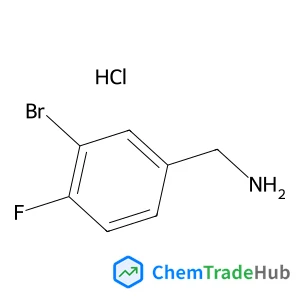
1-(3-Bromo-4-fluorophenyl)methanamine hydrochloride (1:1)
CAS Number:
202865-68-7
Molecular Formula:
C7H8BrClFN

tert-Butyl 4-(2-(p-Tolylsulfonyl)hydrazono)piperidine-1-carboxylate
CAS Number:
1046478-89-0
Molecular Formula:
C17H25N3O4S
![(2S)-2-{[(9H-Fluoren-9-ylmethoxy)carbonyl]amino}-4-(methylselanyl)butanoic acid structure](https://static.chemtradehub.com/structs/121/1217852-49-7-f252.webp "(2S)-2-{[(9H-Fluoren-9-ylmethoxy)carbonyl]amino}-4-(methylselanyl)butanoic acid structure")
(2S)-2-{[(9H-Fluoren-9-ylmethoxy)carbonyl]amino}-4-(methylselanyl)butanoic acid
CAS Number:
1217852-49-7
Molecular Formula:
C20H21NO4Se
Recommended Suppliers





Disclaimer
This page provides academic journal information for reference and research purposes only. We are not affiliated with any journal publishers and do not handle publication submissions. For publication-related inquiries, please contact the respective journal publishers directly.
If you notice any inaccuracies in the information displayed, please contact us at support@chemtradehub.com. We will promptly review and address your concerns.