












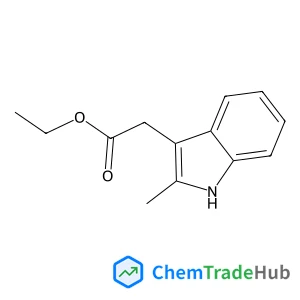
Inside front cover
Literature Information
Publication Date
DOI
10.1039/C3CP90085A
Impact Factor
3.676
Authors
View Original
Abstract
A graphical abstract is available for this content
Recommended Journals
Related Literature
Applications of 1,3,5-trimethoxybenzene as a derivatizing agent for quantifying free chlorine, free bromine, bromamines, and bromide in aqueous systems
Ryan P. Dias, Marella H. Schammel, Keith P. Reber
2019-10-01
Paper
DOI: 10.1039/C9AY01443H
Fingerprinting and aging of ink by easy ambient sonic-spray ionization mass spectrometry
Priscila M. Lalli, Gustavo B. Sanvido, Jerusa S. Garcia, Renato Haddad, Ricardo G. Cosso, Denison R. J. Maia, Jorge J. Zacca, Adriano O. Maldaner, Marcos N. Eberlin
2010-02-02
Paper
DOI: 10.1039/B923398A
Ultrasensitive immunochromatographic strip for the detection of cyhalothrin in foods
Lu Lin, Shanshan Song, Xiaoling Wu, Liqiang Liu, Hua Kuang, Chuanlai Xu
2021-05-17
Paper
DOI: 10.1039/D1AY00609F
A practical method for rapid screening and quantitative analysis of 130 pesticide residues in herbal medicines based on the Kovats retention index principle: an exemplary study using Panacis quinquefolii radix
Xichuan Wei, Haizhu Zhang, Ming Niu, Dingkun Zhang
2019-08-02
Paper
DOI: 10.1039/C9AY01310E
Comprehensive screening of multiclass illegal adulterants in herbal supplements and Spice-type drugs using specific MS/MS fragmentations by UHPLC-Q/TOF-MS
Jisu Hur, Wonwoong Lee, Beom Hee Kim, Hyun Ji Kim, Do Hee Lee, Ji Hyun Lee, Yong Moon Lee, Han Bin Oh, Jongki Hong
2019-09-16
Paper
DOI: 10.1039/C9AY01517E
An integrating strategy for serum metabolomics and microarray analysis to expand the understanding of diet-induced obesity
Wuping Liu, Jingjing Xu, Tao Dai, Guiping Shen, Jianghua Feng
2021-06-15
Paper
DOI: 10.1039/D1AY00821H
NMR-based metabolomics and fluxomics: developments and future prospects
2020-03-02
Critical Review
DOI: 10.1039/D0AN00142B
You might also like
Compound Q&A
Are there alternatives to 1-(4-Chlorophenyl)-N-hydroxymethanimine (CAS: 3848-36-0) in synthesis?
When considering alternatives to 1-(4-Chlorophenyl)-N-hydroxymethanimine (CAS: 3...
3848-36-01-(4-Chlorophenyl)-N...
Compound Q&A
How should (1R,9S,10S,12S,14E,16S,19R,20R,21S,22R)-3,9,21-Trihydroxy-5,10,12,14,16,20,22-heptamethyl-23,24-dioxatetracyclo[17.3.1.1~6,9~.0~2,7~]tetracosa-2,5,7,14-tetraen-4-one (CAS: 183202-73-5) be stored?
This compound should be stored in a cool, dry place away from direct sunlight. I...
183202-73-5(1R,9S,10S,12S,14E,1...
Compound Q&A
How is 3-(4-Bromophenyl)-5-(2-fluorophenyl)-1,2,4-oxadiazole (CAS: 419553-16-5) typically synthesized?
3-(4-Bromophenyl)-5-(2-fluorophenyl)-1,2,4-oxadiazole is synthesized through a m...
419553-16-53-(4-Bromophenyl)-5-...
Compound Q&A
How is 5-Chloro-2-(4-chlorophenyl)-4-methyl-6-[3-(1-piperidinyl)propoxy]pyrimidine (CAS: 1639220-19-1) typically synthesized?
5-Chloro-2-(4-chlorophenyl)-4-methyl-6-[3-(1-piperidinyl)propoxy]pyrimidine (CAS...
1639220-19-15-Chloro-2-(4-chloro...
Compound Q&A
What industries use 2-Chloro-4-(difluoromethoxy)pyridine (CAS: 1206978-15-5)?
2-Chloro-4-(difluoromethoxy)pyridine is used in the pharmaceutical industry for ...
1206978-15-52-Chloro-4-(difluoro...
Compound Q&A
What regulatory guidelines apply to 3-Chloro-6-methylpyridazine (CAS: 1121-79-5)?
3-Chloro-6-methylpyridazine (CAS: 1121-79-5) is classified under the Globally Ha...
1121-79-53-Chloro-6-methylpyr...
Compound Q&A
Are there alternatives to Methyl 4,5-dimethyl-2-nitrobenzoate in synthesis?
Several alternatives can be used in the synthesis of Methyl 4,5-dimethyl-2-nitro...
90922-74-0Methyl 4,5-dimethyl-...
Compound Q&A
Are there alternatives to (2E,2'E)-3,3'-(1,4-Phenylene)bisacrylaldehyde in synthesis?
Alternatives to (2E,2'E)-3,3'-(1,4-Phenylene)bisacrylaldehyde include other acry...
63405-68-5(2E,2'E)-3,3'-(1,4-P...
Compound Q&A
What is 3-Amino-5-chloropyridin-2-ol hydrochloride (CAS: 1261906-29-9)?
3-Amino-5-chloropyridin-2-ol hydrochloride is an organic compound with the CAS n...
1261906-29-93-Amino-5-chloropyri...
Compound Q&A
What precautions should be taken when handling 6,7-Difluoro-2,3-dihydro-4H-chromen-4-one (CAS: 1092349-93-3)?
When handling 6,7-Difluoro-2,3-dihydro-4H-chromen-4-one, it is essential to wear...
1092349-93-36,7-Difluoro-2,3-dih...
Source Journal
Physical Chemistry Chemical Physics

CiteScore:
5.5
Self-citation Rate:
10.3%
Articles per Year:
3036
Physical Chemistry Chemical Physics (PCCP) is an international journal co-owned by 19 physical chemistry and physics societies from around the world. This journal publishes original, cutting-edge research in physical chemistry, chemical physics and biophysical chemistry. To be suitable for publication in PCCP, articles must include significant innovation and/or insight into physical chemistry; this is the most important criterion that reviewers and Editors will judge against when evaluating submissions. The journal has a broad scope and welcomes contributions spanning experiment, theory, computation and data science. Topical coverage includes spectroscopy, dynamics, kinetics, statistical mechanics, thermodynamics, electrochemistry, catalysis, surface science, quantum mechanics, quantum computing and machine learning. Interdisciplinary research areas such as polymers and soft matter, materials, nanoscience, energy, surfaces/interfaces, and biophysical chemistry are welcomed if they demonstrate significant innovation and/or insight into physical chemistry. Joined experimental/theoretical studies are particularly appreciated when complementary and based on up-to-date approaches.
Recommended Compounds
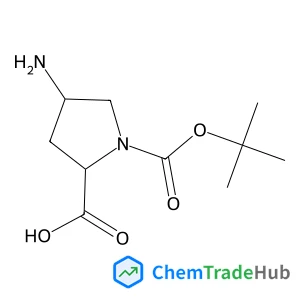
(2R,4R)-1-Boc-4-Aminopyrrolidine-2-carboxylic acid
CAS Number:
132622-98-1
Molecular Formula:
C10H18N2O4
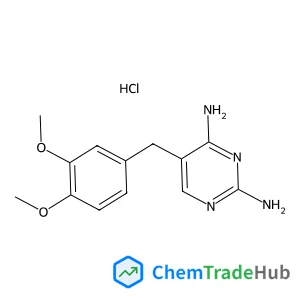
5-(3,4-Dimethoxybenzyl)-2,4-pyrimidinediamine hydrochloride (1:1)
CAS Number:
2507-23-5
Molecular Formula:
C13H17ClN4O2
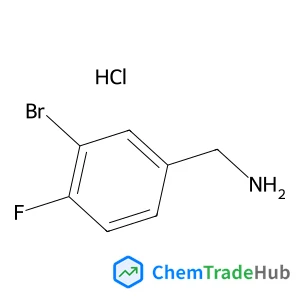
1-(3-Bromo-4-fluorophenyl)methanamine hydrochloride (1:1)
CAS Number:
202865-68-7
Molecular Formula:
C7H8BrClFN
Recommended Suppliers





Disclaimer
This page provides academic journal information for reference and research purposes only. We are not affiliated with any journal publishers and do not handle publication submissions. For publication-related inquiries, please contact the respective journal publishers directly.
If you notice any inaccuracies in the information displayed, please contact us at support@chemtradehub.com. We will promptly review and address your concerns.