












Protocol for disentangling the thermally activated contribution to the tunneling-assisted charge transport. Analytical results and experimental relevance
Literature Information
Publication Date
2017-04-06
DOI
10.1039/C7CP01103B
Impact Factor
3.676
Authors
View Original
Abstract
In this paper we present results demonstrating that the charge transport by tunneling in molecular junctions can exhibit a substantial temperature dependence. We deduce an accurate analytical interpolation formula for the low bias conductance G enabling disentangling into a temperature independent contribution and a thermally activated contribution. The latter is found to have a temperature dependence more general than the ubiquitous Arrhenius form, which it recovers as a limiting case, and permits to extract the energy offset of the molecular orbital that dominates the charge transport. Importantly, the interpolation formula is general; it can be utilized for fitting experimental conductance data for any form of transmission (e.g., Lorentzian, Gaussian, generalized exponential or else). Furthermore, from the fitting parameters thus obtained, valuable information on the energy dependence of the transmission function can be gathered, which is hard to obtain from other methods. For illustration, available experimental transport data at variable temperature for molecular junctions are analyzed within the present theoretical framework. From a more general perspective, the results reported here are important because they attempt to give a constructive answer to the question of discriminating between the (single-step) tunneling and (two-step) hopping mechanisms based on the temperature dependence of the conductance. Namely, they suggest performing variable temperature G-measurements on nanojunctions fabricated by contacting a given molecular species to different electrodes and monitoring the metal dependence of the activation energy.
Related Literature
Direct C–H arylation: a “Greener” approach towards facile synthesis of organic semiconducting molecules and polymers
Hassan Bohra, Mingfeng Wang
2017-05-02
Review Article
DOI: 10.1039/C7TA00617A
New mechanistic insight into the oxygen reduction reaction on Ruddlesden–Popper cathodes for intermediate-temperature solid oxide fuel cells
Wenyuan Li, Bo Guan, Xinxin Zhang, Jianhua Yan, Yue Zhou, Xingbo Liu
2016-02-25
Paper
DOI: 10.1039/C6CP00056H
Measuring oxygen surface exchange kinetics on mixed-conducting composites by electrical conductivity relaxation
Bobing Hu, Yunlong Wang, Zhuoying Zhu, Changrong Xia
2015-04-15
Paper
DOI: 10.1039/C5TA00510H
Facile preparation of long-chain aliphatic polycarbonates containing block copolycarbonates via one-pot sequential organic catalyzed polymerization of macrocyclic carbonates and trimethylene carbonates
Bingkun Yan, Jiaqian Hou, Chao Wei, Yan Xiao, Meidong Lang, Farong Huang
2020-02-12
Paper
DOI: 10.1039/D0PY00031K
Evaluation and development of novel photoinitiator complexes for photoinitiating the copper-catalyzed azide–alkyne cycloaddition reaction
Abeer A. Alzahrani, Annette H. Erbse, Christopher N. Bowman
2013-12-13
Paper
DOI: 10.1039/C3PY01064C
Practical metal- and additive-free methods for radical-mediated reduction and cyclization reactions
Hao Jiang, Jesper R. Bak, Francisco Javier López-Delgado, Karl Anker Jørgensen
2013-10-29
Paper
DOI: 10.1039/C3GC41520A
Effect of pressure on ion transport in amorphous and semi-crystalline polymer electrolytes
Z. Stoeva, C. T. Imrie, M. D. Ingram
2002-11-29
Paper
DOI: 10.1039/B208552F
Application of tailored silica microspheres in coatings: synthesis, characterization, thermal and hydrophobic properties
Meng Wang, Qiqi Zeng, Bin Zhao
2013-07-29
Paper
DOI: 10.1039/C3TA12024D
Isoreticular zirconium-based metal–organic frameworks: discovering mechanical trends and elastic anomalies controlling chemical structure stability
Matthew R. Ryder, Bartolomeo Civalleri, Jin-Chong Tan
2016-03-04
Paper
DOI: 10.1039/C6CP00864J
You might also like
Compound Q&A
Are there alternatives to 1-(4-Chlorophenyl)-N-hydroxymethanimine (CAS: 3848-36-0) in synthesis?
When considering alternatives to 1-(4-Chlorophenyl)-N-hydroxymethanimine (CAS: 3...
3848-36-01-(4-Chlorophenyl)-N...
Compound Q&A
How should (1R,9S,10S,12S,14E,16S,19R,20R,21S,22R)-3,9,21-Trihydroxy-5,10,12,14,16,20,22-heptamethyl-23,24-dioxatetracyclo[17.3.1.1~6,9~.0~2,7~]tetracosa-2,5,7,14-tetraen-4-one (CAS: 183202-73-5) be stored?
This compound should be stored in a cool, dry place away from direct sunlight. I...
183202-73-5(1R,9S,10S,12S,14E,1...
Compound Q&A
How is 3-(4-Bromophenyl)-5-(2-fluorophenyl)-1,2,4-oxadiazole (CAS: 419553-16-5) typically synthesized?
3-(4-Bromophenyl)-5-(2-fluorophenyl)-1,2,4-oxadiazole is synthesized through a m...
419553-16-53-(4-Bromophenyl)-5-...
Compound Q&A
How is 5-Chloro-2-(4-chlorophenyl)-4-methyl-6-[3-(1-piperidinyl)propoxy]pyrimidine (CAS: 1639220-19-1) typically synthesized?
5-Chloro-2-(4-chlorophenyl)-4-methyl-6-[3-(1-piperidinyl)propoxy]pyrimidine (CAS...
1639220-19-15-Chloro-2-(4-chloro...
Compound Q&A
What industries use 2-Chloro-4-(difluoromethoxy)pyridine (CAS: 1206978-15-5)?
2-Chloro-4-(difluoromethoxy)pyridine is used in the pharmaceutical industry for ...
1206978-15-52-Chloro-4-(difluoro...
Compound Q&A
What regulatory guidelines apply to 3-Chloro-6-methylpyridazine (CAS: 1121-79-5)?
3-Chloro-6-methylpyridazine (CAS: 1121-79-5) is classified under the Globally Ha...
1121-79-53-Chloro-6-methylpyr...
Compound Q&A
Are there alternatives to Methyl 4,5-dimethyl-2-nitrobenzoate in synthesis?
Several alternatives can be used in the synthesis of Methyl 4,5-dimethyl-2-nitro...
90922-74-0Methyl 4,5-dimethyl-...
Compound Q&A
Are there alternatives to (2E,2'E)-3,3'-(1,4-Phenylene)bisacrylaldehyde in synthesis?
Alternatives to (2E,2'E)-3,3'-(1,4-Phenylene)bisacrylaldehyde include other acry...
63405-68-5(2E,2'E)-3,3'-(1,4-P...
Compound Q&A
What is 3-Amino-5-chloropyridin-2-ol hydrochloride (CAS: 1261906-29-9)?
3-Amino-5-chloropyridin-2-ol hydrochloride is an organic compound with the CAS n...
1261906-29-93-Amino-5-chloropyri...
Compound Q&A
What precautions should be taken when handling 6,7-Difluoro-2,3-dihydro-4H-chromen-4-one (CAS: 1092349-93-3)?
When handling 6,7-Difluoro-2,3-dihydro-4H-chromen-4-one, it is essential to wear...
1092349-93-36,7-Difluoro-2,3-dih...
Source Journal
Physical Chemistry Chemical Physics

CiteScore:
5.5
Self-citation Rate:
10.3%
Articles per Year:
3036
Physical Chemistry Chemical Physics (PCCP) is an international journal co-owned by 19 physical chemistry and physics societies from around the world. This journal publishes original, cutting-edge research in physical chemistry, chemical physics and biophysical chemistry. To be suitable for publication in PCCP, articles must include significant innovation and/or insight into physical chemistry; this is the most important criterion that reviewers and Editors will judge against when evaluating submissions. The journal has a broad scope and welcomes contributions spanning experiment, theory, computation and data science. Topical coverage includes spectroscopy, dynamics, kinetics, statistical mechanics, thermodynamics, electrochemistry, catalysis, surface science, quantum mechanics, quantum computing and machine learning. Interdisciplinary research areas such as polymers and soft matter, materials, nanoscience, energy, surfaces/interfaces, and biophysical chemistry are welcomed if they demonstrate significant innovation and/or insight into physical chemistry. Joined experimental/theoretical studies are particularly appreciated when complementary and based on up-to-date approaches.
Recommended Compounds
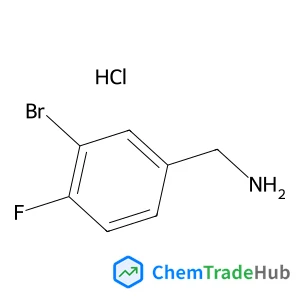
1-(3-Bromo-4-fluorophenyl)methanamine hydrochloride (1:1)
CAS Number:
202865-68-7
Molecular Formula:
C7H8BrClFN
Recommended Suppliers





Disclaimer
This page provides academic journal information for reference and research purposes only. We are not affiliated with any journal publishers and do not handle publication submissions. For publication-related inquiries, please contact the respective journal publishers directly.
If you notice any inaccuracies in the information displayed, please contact us at support@chemtradehub.com. We will promptly review and address your concerns.