


Direct C–H arylation: a “Greener” approach towards facile synthesis of organic semiconducting molecules and polymers
Literature Information
Publication Date
2017-05-02
DOI
10.1039/C7TA00617A
Impact Factor
12.732
Authors
Hassan Bohra, Mingfeng Wang
View Original
Abstract
Organic π-conjugated small molecules and polymers, owing to their light weight, solution processability, mechanical flexibility, and large synthetic variety of finely tunable structures and properties, are promising semiconducting materials for a new generation of optoelectronic devices such as light-emitting diodes (LEDs), field-effect transistors (FETs), photovoltaic devices and sensors. A vast library of π-conjugated systems have been synthesized through conventional tools of coupling (e.g. Suzuki coupling, Stille coupling) and have been used in the fabrication of organic optoelectronic devices. In recent years an emerging synthetic technique called direct C–H arylation has been extensively studied as a facile, atom-efficient and environmentally benign pathway for the synthesis of conjugated polymers and small molecules. C–C bond formation between two heteroaryls can be carried out via the activation of C–H bonds in a transition-metal catalytic cycle, thereby overcoming additional pre-functionalization steps involving toxic reagents. Direct arylation has been applied to a broad range of monomers and its reaction conditions have been optimized to produce defect-free polymers as well as small molecules that exhibit performances comparable with those made from conventional reactions. In this review, we summarize the recent progress in the synthesis of conjugated small molecules, linear polymers and porous polymers by direct C–H arylation. In particular, small molecules and linear polymers based on benzothiadiazole (BT), diketopyrrolopyrrole (DPP), napththalenediimide (NDI), isoindigo (IG), thienoisoindigo (TIIG) and thienothiadiazole (TTD) are discussed in detail. Device performances of some representative polymers synthesized via direct arylation polymerization (DAP) in FETs and bulk heterojunction solar cells are summarized. We finally discuss the present challenges and perspectives of DAP towards future “greener” and more industrially scalable synthesis of π-conjugated semiconducting polymers for a variety of applications.
Recommended Journals

Main Group Chemistry

Electroanalysis

Acta Metallurgica Sinica-English Letters

Journal of Chemical Sciences

Bioorganic & Medicinal Chemistry Letters

Biocatalysis and Biotransformation

Journal of Asian Natural Products Research

Herald of the Russian Academy of Sciences

Cellulose

Critical Reviews in Solid State and Materials Sciences
Related Literature
A new polyfluorene bearing pyridine moieties: a sensitive fluorescent chemosensor for metal ions and cyanide
Xiaoding Lou, Yi Zhang, Shuang Li, Daxin Ou, Zhaomin Wan, Jingui Qin, Zhen Li
2012-04-03
Paper
DOI: 10.1039/C2PY20022H
2-(2,3,4,5,6-Pentafluorophenyl)-1H-benzo[d]imidazole, a fluorine-rich building block for the preparation of conjugated polymer donors for organic solar cell applications
Marios Neophytou, Heraklidia A. Ioannidou, Christos L. Chochos, Solon P. Economopoulos, Panayiotis A. Koutentis, Grigorios Itskos, Stelios A. Choulis
2012-06-01
Paper
DOI: 10.1039/C2PY20198D
Polymeric vesicles mimicking glycocalyx (PV-Gx) for studying carbohydrate–protein interactions in solution
Lu Su, Yu Zhao, Guosong Chen, Ming Jiang
2012-04-13
Paper
DOI: 10.1039/C2PY20110K
Thermally reversible Diels–Alder-based polymerization: an experimental and theoretical assessment
Jiawen Zhou, Nathalie K. Guimard, Andrew J. Inglis, Mansoor Namazian, Ching Y. Lin, Michelle L. Coote, Emmanouil Spyrou, Stefan Hilf, Friedrich Georg Schmidt, Christopher Barner-Kowollik
2011-10-26
Paper
DOI: 10.1039/C1PY00356A
Solution-processable triarylamine-based electroactive high performance polymers for anodically electrochromic applications
Hung-Ju Yen, Guey-Sheng Liou
2011-10-03
Review Article
DOI: 10.1039/C1PY00346A
Glycopolymer–peptidebioconjugates with antioxidant activity via RAFT polymerization
Haiting Shi, Li Liu, Xiaobei Wang, Jingyi Li
2012-02-29
Paper
DOI: 10.1039/C2PY20021J
Functional block copolymernanoparticles: toward the next generation of delivery vehicles
Maxwell J. Robb, Luke A. Connal, Bongjae F. Lee, Nathaniel A. Lynd
2012-04-18
Paper
DOI: 10.1039/C2PY20131C
You might also like
Compound Q&A
Are there alternatives to 1-(4-Chlorophenyl)-N-hydroxymethanimine (CAS: 3848-36-0) in synthesis?
When considering alternatives to 1-(4-Chlorophenyl)-N-hydroxymethanimine (CAS: 3...
3848-36-01-(4-Chlorophenyl)-N...
Compound Q&A
How should (1R,9S,10S,12S,14E,16S,19R,20R,21S,22R)-3,9,21-Trihydroxy-5,10,12,14,16,20,22-heptamethyl-23,24-dioxatetracyclo[17.3.1.1~6,9~.0~2,7~]tetracosa-2,5,7,14-tetraen-4-one (CAS: 183202-73-5) be stored?
This compound should be stored in a cool, dry place away from direct sunlight. I...
183202-73-5(1R,9S,10S,12S,14E,1...
Compound Q&A
How is 3-(4-Bromophenyl)-5-(2-fluorophenyl)-1,2,4-oxadiazole (CAS: 419553-16-5) typically synthesized?
3-(4-Bromophenyl)-5-(2-fluorophenyl)-1,2,4-oxadiazole is synthesized through a m...
419553-16-53-(4-Bromophenyl)-5-...
Compound Q&A
How is 5-Chloro-2-(4-chlorophenyl)-4-methyl-6-[3-(1-piperidinyl)propoxy]pyrimidine (CAS: 1639220-19-1) typically synthesized?
5-Chloro-2-(4-chlorophenyl)-4-methyl-6-[3-(1-piperidinyl)propoxy]pyrimidine (CAS...
1639220-19-15-Chloro-2-(4-chloro...
Compound Q&A
What industries use 2-Chloro-4-(difluoromethoxy)pyridine (CAS: 1206978-15-5)?
2-Chloro-4-(difluoromethoxy)pyridine is used in the pharmaceutical industry for ...
1206978-15-52-Chloro-4-(difluoro...
Compound Q&A
What regulatory guidelines apply to 3-Chloro-6-methylpyridazine (CAS: 1121-79-5)?
3-Chloro-6-methylpyridazine (CAS: 1121-79-5) is classified under the Globally Ha...
1121-79-53-Chloro-6-methylpyr...
Compound Q&A
Are there alternatives to Methyl 4,5-dimethyl-2-nitrobenzoate in synthesis?
Several alternatives can be used in the synthesis of Methyl 4,5-dimethyl-2-nitro...
90922-74-0Methyl 4,5-dimethyl-...
Compound Q&A
Are there alternatives to (2E,2'E)-3,3'-(1,4-Phenylene)bisacrylaldehyde in synthesis?
Alternatives to (2E,2'E)-3,3'-(1,4-Phenylene)bisacrylaldehyde include other acry...
63405-68-5(2E,2'E)-3,3'-(1,4-P...
Compound Q&A
What is 3-Amino-5-chloropyridin-2-ol hydrochloride (CAS: 1261906-29-9)?
3-Amino-5-chloropyridin-2-ol hydrochloride is an organic compound with the CAS n...
1261906-29-93-Amino-5-chloropyri...
Compound Q&A
What precautions should be taken when handling 6,7-Difluoro-2,3-dihydro-4H-chromen-4-one (CAS: 1092349-93-3)?
When handling 6,7-Difluoro-2,3-dihydro-4H-chromen-4-one, it is essential to wear...
1092349-93-36,7-Difluoro-2,3-dih...
Source Journal
Journal of Materials Chemistry A

CiteScore:
19.5
Self-citation Rate:
4.7%
Articles per Year:
2211
Journal of Materials Chemistry A, B & C cover high quality studies across all fields of materials chemistry. The journals focus on those theoretical or experimental studies that report new understanding, applications, properties and synthesis of materials. The journals have a strong history of publishing quality reports of interest to interdisciplinary communities and providing an efficient and rigorous service through peer review and publication. The journals are led by an international team of Editors-in-Chief and Associate Editors who are all active researchers in their fields. Journal of Materials Chemistry A, B & C are separated by the intended application of the material studied. Broadly, applications in energy and sustainability are of interest to Journal of Materials Chemistry A, applications in biology and medicine are of interest to Journal of Materials Chemistry B, and applications in optical, magnetic and electronic devices are of interest to Journal of Materials Chemistry C. More than one Journal of Materials Chemistry journal may be suitable for certain fields and researchers are encouraged to submit their paper to the journal that they feel best fits for their particular article. Example topic areas within the scope of Journal of Materials Chemistry A are listed below. This list is neither exhaustive nor exclusive. Artificial photosynthesis Batteries Carbon dioxide conversion Catalysis Fuel cells Gas capture/separation/storage Green/sustainable materials Hydrogen generation Hydrogen storage Photocatalysis Photovoltaics Self-cleaning materials Self-healing materials Sensors Supercapacitors Thermoelectrics Water splitting Water treatment
Recommended Compounds
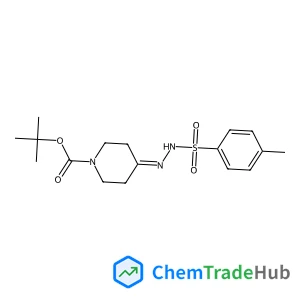
tert-Butyl 4-(2-(p-Tolylsulfonyl)hydrazono)piperidine-1-carboxylate
CAS Number:
1046478-89-0
Molecular Formula:
C17H25N3O4S
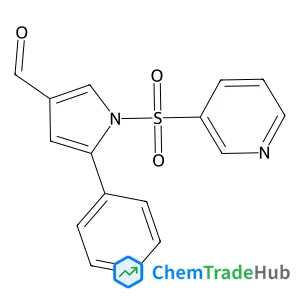
5-Phenyl-1-(pyridin-3-ylsulfonyl)-1H-pyrrole-3-carbaldehyde
CAS Number:
881676-90-0
Molecular Formula:
C16H12N2O3S
![[4-(Isobutyrylamino)phenyl]boronic acid structure](https://static.chemtradehub.com/structs/874/874219-50-8-6ab5.webp "[4-(Isobutyrylamino)phenyl]boronic acid structure")
Recommended Suppliers





Disclaimer
This page provides academic journal information for reference and research purposes only. We are not affiliated with any journal publishers and do not handle publication submissions. For publication-related inquiries, please contact the respective journal publishers directly.
If you notice any inaccuracies in the information displayed, please contact us at support@chemtradehub.com. We will promptly review and address your concerns.