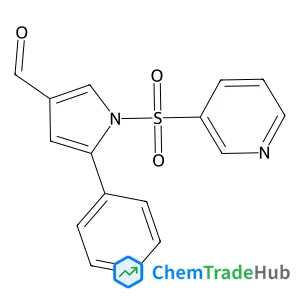
5-Phenyl-1-(pyridin-3-ylsulfonyl)-1H-pyrrole-3-carbaldehyde
CAS Number:
881676-90-0
Molecular Formula:
C16H12N2O3S
Z. Stoeva, C. T. Imrie, M. D. Ingram
Ionic conductivities of polyethylene oxide (PEO) complexes with LiClO4 have been measured at pressures up to 200 MPa over the temperature range 303–353 K. Two systems differing in phase morphology are compared by reference to their temperature-dependent activation energies and volumes. For an amorphous complex of composition PEO ∶ LiClO4(6 ∶ 1), Vogel–Tammann–Fulcher (VTF) behaviour is found, enabling activation energies to be calculated as a function of temperature from the best fit equation, while activation volumes are obtained directly from the isothermal pressure dependence of the conductivity. While the behaviour of the amorphous complex is adequately described by the free volume model, the corresponding data for a polycrystalline material of overall 20 ∶ 1 stoichiometry suggests the prevalence of surface conduction at lower temperatures. Such variable-pressure, variable-temperature (VPVT) data may in future provide new insights into the behaviour of more complex polymer electrolyte systems.

Medicinal Chemistry Research

Colloid Journal

Electroanalysis

Bioorganic & Medicinal Chemistry Letters

Acta Metallurgica Sinica-English Letters

Journal of Chemical Sciences

Bioorganic & Medicinal Chemistry

NDT & E International

Herald of the Russian Academy of Sciences

Journal of Asian Natural Products Research
DOI: 10.1039/C2PY00512C
Shaojie Chen, Qiuyu Zhang, Hepeng Zhang, Junwei Gu, Mingliang Ma, Tiejun Xin, Yanyang Zhou, Jian Zhou, Qing Liu
DOI: 10.1039/C2PY20122D
Denis Damiron, Jérôme Mazzolini, Fabrice Cousin, Christophe Boisson, Franck D'Agosto, Eric Drockenmuller
DOI: 10.1039/C1PY00459J
Nicky Chan, Michael F. Cunningham, Robin A. Hutchinson
DOI: 10.1039/C2PY20065A
Jin Han, Bo Zhao, Aijin Tang, Yanqin Gao, Chao Gao
DOI: 10.1039/C1PY00367D
Arulraj Arulkashmir, Rajashree Y. Mahale, Satej S. Dharmapurikar, Manoj K. Jangid, Kothandam Krishnamoorthy
DOI: 10.1039/C2PY20146A
Christophe Detrembleur, Yasmine Piette, Marie Hurtgen, Christine Jérôme, Jacques Lalevée, Antoine Debuigne
DOI: 10.1039/C1PY00443C
Li Qun Xu, Hua Jiang, Koon-Gee Neoh, En-Tang Kang, Guo Dong Fu
DOI: 10.1039/C2PY00552B
Daisuke Abe, Yuji Sasanuma
DOI: 10.1039/C2PY20118F
Myriam Pire, Cédric Lorthioir, Evdokia K. Oikonomou, Sophie Norvez, Ilias Iliopoulos, Benoît Le Rossignol, Ludwik Leibler
DOI: 10.1039/C2PY00591C
When considering alternatives to 1-(4-Chlorophenyl)-N-hydroxymethanimine (CAS: 3...
This compound should be stored in a cool, dry place away from direct sunlight. I...
3-(4-Bromophenyl)-5-(2-fluorophenyl)-1,2,4-oxadiazole is synthesized through a m...
5-Chloro-2-(4-chlorophenyl)-4-methyl-6-[3-(1-piperidinyl)propoxy]pyrimidine (CAS...
2-Chloro-4-(difluoromethoxy)pyridine is used in the pharmaceutical industry for ...
3-Chloro-6-methylpyridazine (CAS: 1121-79-5) is classified under the Globally Ha...
Several alternatives can be used in the synthesis of Methyl 4,5-dimethyl-2-nitro...
Alternatives to (2E,2'E)-3,3'-(1,4-Phenylene)bisacrylaldehyde include other acry...
3-Amino-5-chloropyridin-2-ol hydrochloride is an organic compound with the CAS n...
When handling 6,7-Difluoro-2,3-dihydro-4H-chromen-4-one, it is essential to wear...

Physical Chemistry Chemical Physics (PCCP) is an international journal co-owned by 19 physical chemistry and physics societies from around the world. This journal publishes original, cutting-edge research in physical chemistry, chemical physics and biophysical chemistry. To be suitable for publication in PCCP, articles must include significant innovation and/or insight into physical chemistry; this is the most important criterion that reviewers and Editors will judge against when evaluating submissions. The journal has a broad scope and welcomes contributions spanning experiment, theory, computation and data science. Topical coverage includes spectroscopy, dynamics, kinetics, statistical mechanics, thermodynamics, electrochemistry, catalysis, surface science, quantum mechanics, quantum computing and machine learning. Interdisciplinary research areas such as polymers and soft matter, materials, nanoscience, energy, surfaces/interfaces, and biophysical chemistry are welcomed if they demonstrate significant innovation and/or insight into physical chemistry. Joined experimental/theoretical studies are particularly appreciated when complementary and based on up-to-date approaches.
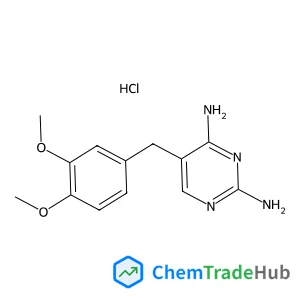
![6-Bromo-2,3-dihydro-1H-pyrido[2,3-b][1,4]oxazine structure](https://static.chemtradehub.com/structs/120/1203499-17-5-b4d1.webp "6-Bromo-2,3-dihydro-1H-pyrido[2,3-b][1,4]oxazine structure")