












Application of tailored silica microspheres in coatings: synthesis, characterization, thermal and hydrophobic properties
Literature Information
Publication Date
2013-07-29
DOI
10.1039/C3TA12024D
Impact Factor
12.732
Authors
Meng Wang, Qiqi Zeng, Bin Zhao
View Original
Abstract
Tailored silica microspheres were synthesized using CTAB as a soft template, e.g. solid, mesoporous silica microspheres, solid silica core/mesoporous silica shell (sSiO2@mSiO2) microspheres and hollow silica microspheres. The prepared samples were characterized by SEM, TEM, XRD, and BET. The mechanism of morphological evolution was also proposed based on the experimental results, which reveals the formation processes of solid, mesoporous silica microspheres, solid silica core/mesoporous silica shell (sSiO2@mSiO2) microspheres and hollow silica microspheres. Then silica/silicon resin coatings consisting of the four representative silica particles were prepared. The corresponding FT-IR, UV-Vis spectra and surface water wettability test showed better performance for coatings comprised of the other three silica particles than that of solid SiO2 microspheres. Coatings comprised of mesoporous SiO2 had the best performance of heat insulation and heat preservation and hydrophobic property. The top-view and cross-sectional SEM images and the AFM images of the coatings were also analyzed to explain the relationship between factors such as surface morphology, film thickness, surface roughness of the coating and its related properties.
Related Literature
Metal-free click polymerization of propiolates and azides: facile synthesis of functional poly(aroxycarbonyltriazole)s
Hongkun Li, Jian Wang, Jing Zhi Sun, Rongrong Hu, Anjun Qin
2012-02-17
Paper
DOI: 10.1039/C2PY00586G
Double modular modification of thiolactone-containing polymers: towards polythiols and derived structures
Pieter Espeel, Fabienne Goethals, Milan M. Stamenović, Lionel Petton, Filip E. Du Prez
2012-02-03
Paper
DOI: 10.1039/C2PY00565D
Functional conjugated microporous polymers: from 1,3,5-benzene to 1,3,5-triazine
Shijie Ren, Robert Dawson, Andrea Laybourn, Jia-xing Jiang, Yaroslav Khimyak, Dave J. Adams, Andrew I. Cooper
2012-01-30
Paper
DOI: 10.1039/C2PY00585A
Electrochemical investigations on anticorrosive and electrochromic properties of electroactive polyurea
Tzu-Chun Yeh, Tsao-Cheng Huang, Hsiu-Ying Huang, Yu-Pei Huang, Yu-Ting Cai, Shih-Ting Lin, Yen Wei, Jui-Ming Yeh
2012-05-28
Paper
DOI: 10.1039/C2PY20061A
Amphiphilic diblock copolymers based on ethylene oxide and epoxides bearing aliphatic side chains
Stergios Pispas
2012-04-24
Paper
DOI: 10.1039/C2PY20189E
Poly(ethylene) brushes grafted to silicon substrates
Denis Damiron, Jérôme Mazzolini, Fabrice Cousin, Christophe Boisson, Franck D'Agosto, Eric Drockenmuller
2011-11-24
Paper
DOI: 10.1039/C1PY00459J
Molecular design, synthesis and characterization of aromatic polythioester and polydithioester
Daisuke Abe, Yuji Sasanuma
2012-04-03
Paper
DOI: 10.1039/C2PY20118F
Synthesis and water sorption of standard and end-capped polylactides: the effect of morphology
Donghun Koo, An Du, Giuseppe R. Palmese, Richard A. Cairncross
2012-01-04
Paper
DOI: 10.1039/C2PY00549B
You might also like
Compound Q&A
Are there alternatives to 1-(4-Chlorophenyl)-N-hydroxymethanimine (CAS: 3848-36-0) in synthesis?
When considering alternatives to 1-(4-Chlorophenyl)-N-hydroxymethanimine (CAS: 3...
3848-36-01-(4-Chlorophenyl)-N...
Compound Q&A
How should (1R,9S,10S,12S,14E,16S,19R,20R,21S,22R)-3,9,21-Trihydroxy-5,10,12,14,16,20,22-heptamethyl-23,24-dioxatetracyclo[17.3.1.1~6,9~.0~2,7~]tetracosa-2,5,7,14-tetraen-4-one (CAS: 183202-73-5) be stored?
This compound should be stored in a cool, dry place away from direct sunlight. I...
183202-73-5(1R,9S,10S,12S,14E,1...
Compound Q&A
How is 3-(4-Bromophenyl)-5-(2-fluorophenyl)-1,2,4-oxadiazole (CAS: 419553-16-5) typically synthesized?
3-(4-Bromophenyl)-5-(2-fluorophenyl)-1,2,4-oxadiazole is synthesized through a m...
419553-16-53-(4-Bromophenyl)-5-...
Compound Q&A
How is 5-Chloro-2-(4-chlorophenyl)-4-methyl-6-[3-(1-piperidinyl)propoxy]pyrimidine (CAS: 1639220-19-1) typically synthesized?
5-Chloro-2-(4-chlorophenyl)-4-methyl-6-[3-(1-piperidinyl)propoxy]pyrimidine (CAS...
1639220-19-15-Chloro-2-(4-chloro...
Compound Q&A
What industries use 2-Chloro-4-(difluoromethoxy)pyridine (CAS: 1206978-15-5)?
2-Chloro-4-(difluoromethoxy)pyridine is used in the pharmaceutical industry for ...
1206978-15-52-Chloro-4-(difluoro...
Compound Q&A
What regulatory guidelines apply to 3-Chloro-6-methylpyridazine (CAS: 1121-79-5)?
3-Chloro-6-methylpyridazine (CAS: 1121-79-5) is classified under the Globally Ha...
1121-79-53-Chloro-6-methylpyr...
Compound Q&A
Are there alternatives to Methyl 4,5-dimethyl-2-nitrobenzoate in synthesis?
Several alternatives can be used in the synthesis of Methyl 4,5-dimethyl-2-nitro...
90922-74-0Methyl 4,5-dimethyl-...
Compound Q&A
Are there alternatives to (2E,2'E)-3,3'-(1,4-Phenylene)bisacrylaldehyde in synthesis?
Alternatives to (2E,2'E)-3,3'-(1,4-Phenylene)bisacrylaldehyde include other acry...
63405-68-5(2E,2'E)-3,3'-(1,4-P...
Compound Q&A
What is 3-Amino-5-chloropyridin-2-ol hydrochloride (CAS: 1261906-29-9)?
3-Amino-5-chloropyridin-2-ol hydrochloride is an organic compound with the CAS n...
1261906-29-93-Amino-5-chloropyri...
Compound Q&A
What precautions should be taken when handling 6,7-Difluoro-2,3-dihydro-4H-chromen-4-one (CAS: 1092349-93-3)?
When handling 6,7-Difluoro-2,3-dihydro-4H-chromen-4-one, it is essential to wear...
1092349-93-36,7-Difluoro-2,3-dih...
Source Journal
Journal of Materials Chemistry A

CiteScore:
19.5
Self-citation Rate:
4.7%
Articles per Year:
2211
Journal of Materials Chemistry A, B & C cover high quality studies across all fields of materials chemistry. The journals focus on those theoretical or experimental studies that report new understanding, applications, properties and synthesis of materials. The journals have a strong history of publishing quality reports of interest to interdisciplinary communities and providing an efficient and rigorous service through peer review and publication. The journals are led by an international team of Editors-in-Chief and Associate Editors who are all active researchers in their fields. Journal of Materials Chemistry A, B & C are separated by the intended application of the material studied. Broadly, applications in energy and sustainability are of interest to Journal of Materials Chemistry A, applications in biology and medicine are of interest to Journal of Materials Chemistry B, and applications in optical, magnetic and electronic devices are of interest to Journal of Materials Chemistry C. More than one Journal of Materials Chemistry journal may be suitable for certain fields and researchers are encouraged to submit their paper to the journal that they feel best fits for their particular article. Example topic areas within the scope of Journal of Materials Chemistry A are listed below. This list is neither exhaustive nor exclusive. Artificial photosynthesis Batteries Carbon dioxide conversion Catalysis Fuel cells Gas capture/separation/storage Green/sustainable materials Hydrogen generation Hydrogen storage Photocatalysis Photovoltaics Self-cleaning materials Self-healing materials Sensors Supercapacitors Thermoelectrics Water splitting Water treatment
Recommended Compounds
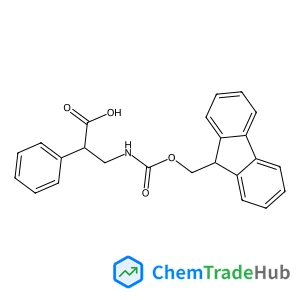
(S)-3-((((9H-Fluoren-9-yl)methoxy)carbonyl)amino)-2-phenylpropanoic acid
CAS Number:
1217663-60-9
Molecular Formula:
C24H21NO4
Recommended Suppliers




Disclaimer
This page provides academic journal information for reference and research purposes only. We are not affiliated with any journal publishers and do not handle publication submissions. For publication-related inquiries, please contact the respective journal publishers directly.
If you notice any inaccuracies in the information displayed, please contact us at support@chemtradehub.com. We will promptly review and address your concerns.