












Catalytic enantioselective bromohydroxylation of aryl olefins with flexible functionalities
Literature Information
Publication Date
2017-02-22
DOI
10.1039/C6QO00636A
Impact Factor
5.281
Authors
View Original
Abstract
A highly enantioselective bromohydroxylation of aryl olefins with flexible functionalities has been achieved with (DHQD)2PHAL as a catalyst and H2O as a nucleophile, giving a variety of optically active bromohydrins with up to 98% ee. An acid additive has been found to be beneficial for the reactivity and enantioselectivity.
Related Literature
The curing procedure for a benzoxazine–cyanate–epoxy system and the properties of the terpolymer
Xiaodan Li, Yiqing Xia, Wenli Xu, Qichao Ran, Yi Gu
2012-04-25
Paper
DOI: 10.1039/C2PY20133J
Thermally reversible Diels–Alder-based polymerization: an experimental and theoretical assessment
Jiawen Zhou, Nathalie K. Guimard, Andrew J. Inglis, Mansoor Namazian, Ching Y. Lin, Michelle L. Coote, Emmanouil Spyrou, Stefan Hilf, Friedrich Georg Schmidt, Christopher Barner-Kowollik
2011-10-26
Paper
DOI: 10.1039/C1PY00356A
Three new conjugated polymers based on benzo[2,1-b:3,4-b′]dithiophene: synthesis, characterization, photoinduced charge transfer and theoretical calculation studies
Shaojie Chen, Qiuyu Zhang, Hepeng Zhang, Junwei Gu, Mingliang Ma, Tiejun Xin, Yanyang Zhou, Jian Zhou, Qing Liu
2012-06-07
Paper
DOI: 10.1039/C2PY20122D
Molecular imaging with polymers
Nathan R. B. Boase, Idriss Blakey, Kristofer J. Thurecht
2012-03-26
Minireview
DOI: 10.1039/C2PY20132A
Poly(dopamine acrylamide)-co-poly(propargyl acrylamide)-modified titanium surfaces for ‘click’ functionalization
Li Qun Xu, Hua Jiang, Koon-Gee Neoh, En-Tang Kang, Guo Dong Fu
2012-01-30
Paper
DOI: 10.1039/C2PY00552B
Synthesis and charge-transporting properties of electron-deficient CN2–fluorene based D–A copolymers
Yan Zhao, Xunlei Ding, Hui Jia, Bo Jiang, Zhiguo Zhang, Chuanlang Zhan, Shenggui He, Qibing Pei, Yongfang Li, Yunqi Liu, Jiannian Yao
2012-04-30
Paper
DOI: 10.1039/C2PY20184D
Substituent effects on the stabilities of polymeric and small molecule bis-terpyridine complexes
Ian M. Henderson, Ryan C. Hayward
2012-03-13
Paper
DOI: 10.1039/C2PY20042B
Emulsifier-free, organotellurium-mediated living radical emulsion polymerization (emulsion TERP) of methyl methacrylate with dimethyl ditelluride as the catalyst
Yukiya Kitayama, Hirotaka Moribe, Kazuya Kishida
2012-03-30
Paper
DOI: 10.1039/C2PY20105D
You might also like
Compound Q&A
Are there alternatives to 1-(4-Chlorophenyl)-N-hydroxymethanimine (CAS: 3848-36-0) in synthesis?
When considering alternatives to 1-(4-Chlorophenyl)-N-hydroxymethanimine (CAS: 3...
3848-36-01-(4-Chlorophenyl)-N...
Compound Q&A
How should (1R,9S,10S,12S,14E,16S,19R,20R,21S,22R)-3,9,21-Trihydroxy-5,10,12,14,16,20,22-heptamethyl-23,24-dioxatetracyclo[17.3.1.1~6,9~.0~2,7~]tetracosa-2,5,7,14-tetraen-4-one (CAS: 183202-73-5) be stored?
This compound should be stored in a cool, dry place away from direct sunlight. I...
183202-73-5(1R,9S,10S,12S,14E,1...
Compound Q&A
How is 3-(4-Bromophenyl)-5-(2-fluorophenyl)-1,2,4-oxadiazole (CAS: 419553-16-5) typically synthesized?
3-(4-Bromophenyl)-5-(2-fluorophenyl)-1,2,4-oxadiazole is synthesized through a m...
419553-16-53-(4-Bromophenyl)-5-...
Compound Q&A
How is 5-Chloro-2-(4-chlorophenyl)-4-methyl-6-[3-(1-piperidinyl)propoxy]pyrimidine (CAS: 1639220-19-1) typically synthesized?
5-Chloro-2-(4-chlorophenyl)-4-methyl-6-[3-(1-piperidinyl)propoxy]pyrimidine (CAS...
1639220-19-15-Chloro-2-(4-chloro...
Compound Q&A
What industries use 2-Chloro-4-(difluoromethoxy)pyridine (CAS: 1206978-15-5)?
2-Chloro-4-(difluoromethoxy)pyridine is used in the pharmaceutical industry for ...
1206978-15-52-Chloro-4-(difluoro...
Compound Q&A
What regulatory guidelines apply to 3-Chloro-6-methylpyridazine (CAS: 1121-79-5)?
3-Chloro-6-methylpyridazine (CAS: 1121-79-5) is classified under the Globally Ha...
1121-79-53-Chloro-6-methylpyr...
Compound Q&A
Are there alternatives to Methyl 4,5-dimethyl-2-nitrobenzoate in synthesis?
Several alternatives can be used in the synthesis of Methyl 4,5-dimethyl-2-nitro...
90922-74-0Methyl 4,5-dimethyl-...
Compound Q&A
Are there alternatives to (2E,2'E)-3,3'-(1,4-Phenylene)bisacrylaldehyde in synthesis?
Alternatives to (2E,2'E)-3,3'-(1,4-Phenylene)bisacrylaldehyde include other acry...
63405-68-5(2E,2'E)-3,3'-(1,4-P...
Compound Q&A
What is 3-Amino-5-chloropyridin-2-ol hydrochloride (CAS: 1261906-29-9)?
3-Amino-5-chloropyridin-2-ol hydrochloride is an organic compound with the CAS n...
1261906-29-93-Amino-5-chloropyri...
Compound Q&A
What precautions should be taken when handling 6,7-Difluoro-2,3-dihydro-4H-chromen-4-one (CAS: 1092349-93-3)?
When handling 6,7-Difluoro-2,3-dihydro-4H-chromen-4-one, it is essential to wear...
1092349-93-36,7-Difluoro-2,3-dih...
Source Journal
Organic Chemistry Frontiers

CiteScore:
7.8
Self-citation Rate:
8.7%
Articles per Year:
724
Organic Chemistry Frontiers publishes high-quality research from across organic chemistry. Emphases are placed on studies that make significant contributions to the field of organic chemistry by reporting either new or significantly improved protocols or methodologies. Topics include, but are not limited to the following: Organic synthesis Development of synthetic methodologies Catalysis Natural products Functional organic materials Supramolecular and macromolecular chemistry Physical and computational organic chemistry
Recommended Compounds
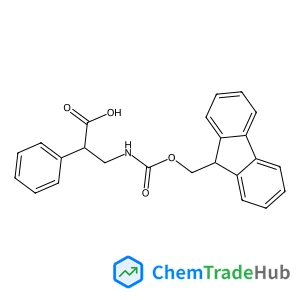
(S)-3-((((9H-Fluoren-9-yl)methoxy)carbonyl)amino)-2-phenylpropanoic acid
CAS Number:
1217663-60-9
Molecular Formula:
C24H21NO4
Recommended Suppliers




Disclaimer
This page provides academic journal information for reference and research purposes only. We are not affiliated with any journal publishers and do not handle publication submissions. For publication-related inquiries, please contact the respective journal publishers directly.
If you notice any inaccuracies in the information displayed, please contact us at support@chemtradehub.com. We will promptly review and address your concerns.