












Thermally reversible Diels–Alder-based polymerization: an experimental and theoretical assessment
Literature Information
Publication Date
2011-10-26
DOI
10.1039/C1PY00356A
Impact Factor
5.582
Authors
Jiawen Zhou, Nathalie K. Guimard, Andrew J. Inglis, Mansoor Namazian, Ching Y. Lin, Michelle L. Coote, Emmanouil Spyrou, Stefan Hilf, Friedrich Georg Schmidt, Christopher Barner-Kowollik
View Original
Abstract
A pair of monomers capable of undergoing reversible polymerization—based on reversible Diels–Alder (DA) chemistry—as a function of the applied reaction temperature is presented. Specifically, the reaction of isophorone bis(sorbic carbamate), a difunctional diene, with 1,4-phenylenebis(methylene)bis((diethoxyphosphoryl)methanedithioformate), a difunctional dithioester, was studied in detail. Various factors, including the monomer concentration, the type of solvent, and the presence of a Lewis acid, that influence this step-growth polymerization were evaluated. The solvent type was found to have a significant effect on the DA reaction rate. Under the optimized conditions, which are 1.8 g mol−1 of each monomer in acetonitrile with 1.1 equivalents of zinc chloride at 50 °C for 4 h, a polymer with a peak molecular weight of 9600 g mol−1 (relative to poly(styrene) standards) was obtained. The resulting polymer was employed to investigate the correlation between time, temperature, and percentage of debonded monomers achieved during the retro DA (rDA) reaction. In addition, theoretical predictions of the rDA temperature were obtained via ab initio quantum chemical calculations. The monomeric diene and dienophile system was employed for the calculations of the equilibrium constants at various rDA reaction temperatures to correlate the percentage of bonded molecules with the applied temperature. It was calculated that 60% of the polymer becomes debonded at a temperature (Tqc) of around 220 °C, a result that agrees well with that obtained experimentally (Texp = 219 °C).
Related Literature
Self-healable polymer gels with multi-responsiveness of gel–sol–gel transition and degradability
Ruixue Chang, Heng An, Xu Li, Ruyi Zhou, Jianglei Qin, Yuelan Tian, Kuilin Deng
2017-01-10
Paper
DOI: 10.1039/C6PY02122K
Control over the assembly and rheology of supramolecular networks via multi-responsive double hydrophilic copolymers
Jérémy Brassinne, Charles-André Fustin, Jean-François Gohy
2017-01-30
Paper
DOI: 10.1039/C6PY02143C
Vesicles of double hydrophilic pullulan and poly(acrylamide) block copolymers: a combination of synthetic- and bio-derived blocks
Jochen Willersinn, Anna Bogomolova, Marc Brunet Cabré, Bernhard V. K. J. Schmidt
2017-01-09
Paper
DOI: 10.1039/C6PY02212J
Photocrosslinked PVDF-based star polymer coatings: an all-in-one alternative to PVDF/PMMA blends for outdoor applications
Gérald Lopez, Marc Guerre, Bruno Améduri, Jean-Pierre Habas, Vincent Ladmiral
2017-04-26
Communication
DOI: 10.1039/C7PY00580F
Boron difluoride formazanate copolymers with 9,9-di-n-hexylfluorene prepared by copper-catalyzed alkyne–azide cycloaddition chemistry
Stephanie M. Barbon, Joe B. Gilroy
2016-05-05
Paper
DOI: 10.1039/C6PY00441E
Catch and release: photocleavable cationic diblock copolymers as a potential platform for nucleic acid delivery
Matthew D. Green, Abbygail A. Foster, Chad T. Greco, Raghunath Roy, Rachel M. Lehr, Thomas H. Epps, III, Millicent O. Sullivan
2014-06-05
Communication
DOI: 10.1039/C4PY00638K
A tumor-targeting dextran–apoprotein conjugate integrated with enediyne chromophore shows highly potent antitumor efficacy
Bin Li, Xiu-jun Liu, Liang Li, Sheng-hua Zhang, Yi Li, Dian-dong Li, Yong-su Zhen
2014-05-20
Paper
DOI: 10.1039/C4PY00532E
Correction: Amphiphilic and double hydrophilic block copolymers containing a polydehydroalanine block
Peter Bellstedt
2017-01-17
Correction
DOI: 10.1039/C7PY90013A
Controlled polymerization of isoprene promoted by a type of hemilabile XPN3 (X = O, S) ligand supported cobalt(ii) complexes: the role of a hemilabile donor on the level of control
Huafeng Chen, Weijing Pan, Kuo-Wei Huang, Xuequan Zhang, Dirong Gong
2017-02-20
Paper
DOI: 10.1039/C7PY00252A
You might also like
Compound Q&A
Are there alternatives to 1-(4-Chlorophenyl)-N-hydroxymethanimine (CAS: 3848-36-0) in synthesis?
When considering alternatives to 1-(4-Chlorophenyl)-N-hydroxymethanimine (CAS: 3...
3848-36-01-(4-Chlorophenyl)-N...
Compound Q&A
How should (1R,9S,10S,12S,14E,16S,19R,20R,21S,22R)-3,9,21-Trihydroxy-5,10,12,14,16,20,22-heptamethyl-23,24-dioxatetracyclo[17.3.1.1~6,9~.0~2,7~]tetracosa-2,5,7,14-tetraen-4-one (CAS: 183202-73-5) be stored?
This compound should be stored in a cool, dry place away from direct sunlight. I...
183202-73-5(1R,9S,10S,12S,14E,1...
Compound Q&A
How is 3-(4-Bromophenyl)-5-(2-fluorophenyl)-1,2,4-oxadiazole (CAS: 419553-16-5) typically synthesized?
3-(4-Bromophenyl)-5-(2-fluorophenyl)-1,2,4-oxadiazole is synthesized through a m...
419553-16-53-(4-Bromophenyl)-5-...
Compound Q&A
How is 5-Chloro-2-(4-chlorophenyl)-4-methyl-6-[3-(1-piperidinyl)propoxy]pyrimidine (CAS: 1639220-19-1) typically synthesized?
5-Chloro-2-(4-chlorophenyl)-4-methyl-6-[3-(1-piperidinyl)propoxy]pyrimidine (CAS...
1639220-19-15-Chloro-2-(4-chloro...
Compound Q&A
What industries use 2-Chloro-4-(difluoromethoxy)pyridine (CAS: 1206978-15-5)?
2-Chloro-4-(difluoromethoxy)pyridine is used in the pharmaceutical industry for ...
1206978-15-52-Chloro-4-(difluoro...
Compound Q&A
What regulatory guidelines apply to 3-Chloro-6-methylpyridazine (CAS: 1121-79-5)?
3-Chloro-6-methylpyridazine (CAS: 1121-79-5) is classified under the Globally Ha...
1121-79-53-Chloro-6-methylpyr...
Compound Q&A
Are there alternatives to Methyl 4,5-dimethyl-2-nitrobenzoate in synthesis?
Several alternatives can be used in the synthesis of Methyl 4,5-dimethyl-2-nitro...
90922-74-0Methyl 4,5-dimethyl-...
Compound Q&A
Are there alternatives to (2E,2'E)-3,3'-(1,4-Phenylene)bisacrylaldehyde in synthesis?
Alternatives to (2E,2'E)-3,3'-(1,4-Phenylene)bisacrylaldehyde include other acry...
63405-68-5(2E,2'E)-3,3'-(1,4-P...
Compound Q&A
What is 3-Amino-5-chloropyridin-2-ol hydrochloride (CAS: 1261906-29-9)?
3-Amino-5-chloropyridin-2-ol hydrochloride is an organic compound with the CAS n...
1261906-29-93-Amino-5-chloropyri...
Compound Q&A
What precautions should be taken when handling 6,7-Difluoro-2,3-dihydro-4H-chromen-4-one (CAS: 1092349-93-3)?
When handling 6,7-Difluoro-2,3-dihydro-4H-chromen-4-one, it is essential to wear...
1092349-93-36,7-Difluoro-2,3-dih...
Source Journal
Polymer Chemistry

CiteScore:
8.6
Self-citation Rate:
7.3%
Articles per Year:
457
Polymer Chemistry welcomes submissions in all areas of polymer science that have a strong focus on macromolecular chemistry. Manuscripts may cover a broad range of fields, yet no direct application focus is required.
Recommended Compounds
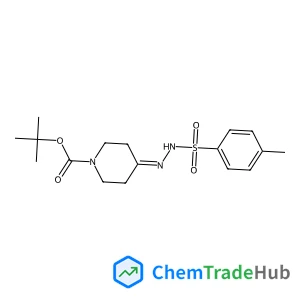
tert-Butyl 4-(2-(p-Tolylsulfonyl)hydrazono)piperidine-1-carboxylate
CAS Number:
1046478-89-0
Molecular Formula:
C17H25N3O4S
![6-Bromo-2,3-dihydro-1H-pyrido[2,3-b][1,4]oxazine structure](https://static.chemtradehub.com/structs/120/1203499-17-5-b4d1.webp "6-Bromo-2,3-dihydro-1H-pyrido[2,3-b][1,4]oxazine structure")
6-Bromo-2,3-dihydro-1H-pyrido[2,3-b][1,4]oxazine
CAS Number:
1203499-17-5
Molecular Formula:
C7H7BrN2O
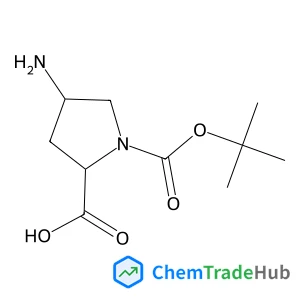
(2R,4R)-1-Boc-4-Aminopyrrolidine-2-carboxylic acid
CAS Number:
132622-98-1
Molecular Formula:
C10H18N2O4
Recommended Suppliers






Disclaimer
This page provides academic journal information for reference and research purposes only. We are not affiliated with any journal publishers and do not handle publication submissions. For publication-related inquiries, please contact the respective journal publishers directly.
If you notice any inaccuracies in the information displayed, please contact us at support@chemtradehub.com. We will promptly review and address your concerns.