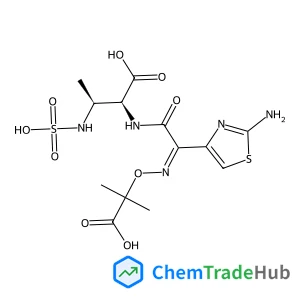
Aztreonam USP Related Compound A (Open-ring Aztreonam)
CAS Number:
87500-74-1
Molecular Formula:
C13H19N5O9S2
E. Cassette, S. Pedetti, B. Mahler, S. Ithurria, B. Dubertret, G. D. Scholes
In this article we study the ultrafast dynamics of excitons and charge carriers photogenerated in two-dimensional in-plane heterostructures, namely, CdSe–CdTe nanoplatelets. We combine transient absorption and two-dimensional electronic spectroscopy to study charge transfer and delocalization from a few tens of femtoseconds to several nanoseconds. In contrast with spherical nanocrystals, the relative alignment of the electron and hole states of CdSe and CdTe in thin 2D nanoplatelets does not lead to a type-II heterostructure. Following the excitation in CdSe or CdTe materials, the electron preferentially delocalises instantaneously over the whole heterostructure. In addition, depending on the crown material (CdTe versus CdTeSe), the hole transfers either to trap states or to the crown, within a few hundreds of femtoseconds. We conclude that the photoluminescence band, at lower energy than the CdSe and CdTe first exciton transition, does not result from the recombination of the charge carriers at the charge transfer state but involves localised hole states.
Andrew J. Inglis, Christopher Barner-Kowollik
DOI: 10.1039/C0PY00189A
Tetsu Mitsumata, Suguru Ohori
DOI: 10.1039/C1PY00033K
M. Baklar, S. Barard, D. Sparrowe, R. M. Wilson, T. Kreouzis
DOI: 10.1039/C0PY00056F
Marc A. Gauthier, Harm-Anton Klok
DOI: 10.1039/C0PY90001J
Rungsima Chollakup, Wirasak Smitthipong, Arkadiusz Chworos
DOI: 10.1039/B9PY00290A
Han Wang, Rui Guo, Xueyan Cao, Jinglong Zhao, Yu Luo, Mingwu Shen, Guixiang Zhang
DOI: 10.1039/C0PY00218F
Johannes Pall Magnusson, Aram Omer Saeed, Francisco Fernández-Trillo, Cameron Alexander
DOI: 10.1039/C0PY00210K
DOI: 10.1039/C0PY00116C
Andrew J. D. Magenau, Justin W. Chan, Charles E. Hoyle, Robson F. Storey
DOI: 10.1039/C0PY00094A
Leena Nurmi, Hui Peng, Jukka Seppälä, David M. Haddleton, Idriss Blakey, Andrew K. Whittaker
DOI: 10.1039/C0PY00035C
6-(3-Fluorophenyl)picolinic acid is generally considered safe for laboratory use...
(3R)-3-Pyrrolidinol is used in the pharmaceutical industry as a precursor for dr...
When handling (4R,5R)-4,5-Diethoxycarbonyl-2,2-dimethyldioxolane (CAS: 59779-75-...
1-(6-Chloroimidazo[1,2-b]pyridazin-3-yl)ethanone is often synthesized via a mult...
The market for N-Ethyl-3,4-dimethylbenzylamine (CAS: 39180-83-1) remains steady,...
Tert-butyl 3-(pyrrolidin-1-yl)azetidine-1-carboxylate is a chemical compound wit...
1-Bromo-3-chloro-2,4-dimethoxybenzene (CAS: 1228956-93-1) falls under the classi...
The safety of 8-Bromo-2-methyl-3,4-dihydroisoquinolin-1(2H)-one (CAS: 1368622-07...
Benzyl [(3S)-2,6-dioxo-3-piperidinyl]carbamate is generally safe when handled wi...
1-{[4-(4,4,5,5-Tetramethyl-1,3,2-dioxaborolan-2-yl)phenyl]sulfonyl}pyrrolidine s...

Physical Chemistry Chemical Physics (PCCP) is an international journal co-owned by 19 physical chemistry and physics societies from around the world. This journal publishes original, cutting-edge research in physical chemistry, chemical physics and biophysical chemistry. To be suitable for publication in PCCP, articles must include significant innovation and/or insight into physical chemistry; this is the most important criterion that reviewers and Editors will judge against when evaluating submissions. The journal has a broad scope and welcomes contributions spanning experiment, theory, computation and data science. Topical coverage includes spectroscopy, dynamics, kinetics, statistical mechanics, thermodynamics, electrochemistry, catalysis, surface science, quantum mechanics, quantum computing and machine learning. Interdisciplinary research areas such as polymers and soft matter, materials, nanoscience, energy, surfaces/interfaces, and biophysical chemistry are welcomed if they demonstrate significant innovation and/or insight into physical chemistry. Joined experimental/theoretical studies are particularly appreciated when complementary and based on up-to-date approaches.
![4-[(2,4-Dihydroxyphenyl)diazenyl]-5-hydroxy-2,7-naphthalenedisulfonic acid structure](https://static.chemtradehub.com/structs/362/3627-01-8-79ac.webp "4-[(2,4-Dihydroxyphenyl)diazenyl]-5-hydroxy-2,7-naphthalenedisulfonic acid structure")