












Size-controlled synthesis of dendrimer-stabilized silver nanoparticles for X-ray computed tomography imaging applications
Literature Information
Publication Date
2010-09-22
DOI
10.1039/C0PY00218F
Impact Factor
5.582
Authors
Han Wang, Rui Guo, Xueyan Cao, Jinglong Zhao, Yu Luo, Mingwu Shen, Guixiang Zhang
View Original
Abstract
We report a facile size-controlled synthesis of dendrimer-stabilized silver nanoparticles (Ag DSNPs) for X-ray computed tomography (CT) imaging applications. Amine-terminated generation 5 poly(amidoamine) dendrimers were used as templates to complex Ag(I) ions for subsequent reductive formation of dendrimer-entrapped Ag nanoparticles. Following a one-step acetylation reaction to transform dendrimer terminal amine to acetyl groups, Ag DSNPs can be formed. The formed Ag DSNPs were characterized using 1H NMR, UV-Vis spectrometry, transmission electron microscopy, and ζ-potential measurements. We show that through the variation of the dendrimer/Ag salt molar ratio, the size of Ag DSNPs can be controlled at the range of 8.8–23.2 nm. The formed Ag DSNPs are stable not only in water, PBS buffer, and fetal bovine serum, but also at different pH conditions (pH 5–8) and temperatures (20–50 °C). X-Ray absorption coefficient measurements show that the attenuation of Ag DSNPs is size-dependent, and the Ag DSNPs with a diameter of 16.1 nm display an X-ray attenuation intensity close to that of a clinically used iodine-based contrast agent (Omnipaque) at the same molar concentration of the active element (Ag versus iodine). This suggests that Ag DSNPs with an appropriate size have a great potential to be used as a CT imaging contrast agent, although the atomic number of Ag is lower than that of iodine. Furthermore, CT scanning showed prolonged enhancement at the point of mice injected subcutaneously with Ag DSNPs, rendering them as a promising contrast agent in CT imaging applications.
Related Literature
A detailed insight into the catalytic reduction of NO operated by Cr–Cu nanostructures embedded in a CeO2 surface
Mauro Boero, Kazuki Tamai
2018-08-08
Paper
DOI: 10.1039/C8CP04314K
The role of the dihedral angle and excited cation states in ionization and dissociation of mono-halogenated biphenyls; a combined experimental and theoretical coupled cluster study
Michael Barclay, Ragnar Bjornsson, Maicol Cipriani, Andreas Terfort, D. Howard Fairbrother, Oddur Ingólfsson
2019-02-01
Paper
DOI: 10.1039/C8CP07785A
An ab initio study of sensing applications of MoB2 monolayer: a potential gas sensor
Amreen Bano, Jyoti Krishna, Devendra K. Pandey, N. K. Gaur
2019-01-29
Paper
DOI: 10.1039/C8CP07038E
Molecular and dissociative O2 adsorption on the Cu2O(111) surface
Xiaohu Yu, Caibin Zhao, Tianlei Zhang, Zhong Liu
2018-05-23
Paper
DOI: 10.1039/C8CP03035A
Fluctuation correlations as major determinants of structure- and dynamics-driven allosteric effects
Miao Yu, Yixin Chen, Zi-Le Wang
2019-02-09
Paper
DOI: 10.1039/C8CP07859A
Electrical conductivity and oxygen diffusion behaviour of the (La0.8Sr0.2)0.95CrxFe1−xO3−δ (x = 0.3, 0.5 and 0.7) A-site deficient perovskites
Zonghao Shen, John A. Kilner, Stephen J. Skinner
2018-06-21
Paper
DOI: 10.1039/C8CP02797H
The role of solvation models on the computed absorption and emission spectra: the case of fireflies oxyluciferin
Cristina García-Iriepa, Madjid Zemmouche, Isabelle Navizet
2019-02-04
Paper
DOI: 10.1039/C8CP07352J
UPS and UV spectroscopies combined to position the energy levels of TiO2 anatase and rutile nanopowders
Clément Maheu, Luis Cardenas, Eric Puzenat, Pavel Afanasiev, Christophe Geantet
2018-09-17
Paper
DOI: 10.1039/C8CP04614J
Oxygen-functionalized TlTe buckled honeycomb from first-principles study
Qing Lu, Yi-Ming Wen, Zhao-Yi Zeng, Xiang-Rong Chen, Qi-Feng Chen
2019-02-12
Paper
DOI: 10.1039/C8CP07246A
Bismuth oxysulfide film electrodes with giant incident photon-to-current conversion efficiency: the dynamics of properties with deposition time
Evgeny A. Bondarenko, Eugene A. Streltsov, Alexander V. Mazanik, Anatoly I. Kulak, Vytautas Grivickas, Patrik Ščajev, Ekaterina V. Skorb
2018-06-22
Paper
DOI: 10.1039/C8CP03225D
You might also like
Compound Q&A
Is 6-(3-Fluorophenyl)picolinic acid (CAS: 887982-40-3) safe?
6-(3-Fluorophenyl)picolinic acid is generally considered safe for laboratory use...
887982-40-36-(3-Fluorophenyl)pi...
Compound Q&A
What industries use (3R)-3-Pyrrolidinol (CAS: 2799-21-5)?
(3R)-3-Pyrrolidinol is used in the pharmaceutical industry as a precursor for dr...
2799-21-5(3R)-3-Pyrrolidinol
Compound Q&A
What precautions should be taken when handling (4R,5R)-4,5-Diethoxycarbonyl-2,2-dimethyldioxolane (CAS: 59779-75-8)?
When handling (4R,5R)-4,5-Diethoxycarbonyl-2,2-dimethyldioxolane (CAS: 59779-75-...
59779-75-8(4R,5R)-4,5-Diethoxy...
Compound Q&A
How is 1-(6-Chloroimidazo[1,2-b]pyridazin-3-yl)ethanone (CAS: 90734-71-7) typically synthesized?
1-(6-Chloroimidazo[1,2-b]pyridazin-3-yl)ethanone is often synthesized via a mult...
90734-71-71-(6-Chloroimidazo[1...
Compound Q&A
What is the market or research trend for N-Ethyl-3,4-dimethylbenzylamine (CAS: 39180-83-1)?
The market for N-Ethyl-3,4-dimethylbenzylamine (CAS: 39180-83-1) remains steady,...
39180-83-1N-Ethyl-3,4-dimethyl...
Compound Q&A
What is Tert-butyl 3-(pyrrolidin-1-yl)azetidine-1-carboxylate (CAS: 1019008-21-9)?
Tert-butyl 3-(pyrrolidin-1-yl)azetidine-1-carboxylate is a chemical compound wit...
1019008-21-9Tert-butyl 3-(pyrrol...
Compound Q&A
What regulatory guidelines apply to 1-Bromo-3-chloro-2,4-dimethoxybenzene (CAS: 1228956-93-1)?
1-Bromo-3-chloro-2,4-dimethoxybenzene (CAS: 1228956-93-1) falls under the classi...
1228956-93-11-Bromo-3-chloro-2,4...
Compound Q&A
Is 8-Bromo-2-methyl-3,4-dihydroisoquinolin-1(2H)-one (CAS: 1368622-07-4) safe?
The safety of 8-Bromo-2-methyl-3,4-dihydroisoquinolin-1(2H)-one (CAS: 1368622-07...
1368622-07-48-Bromo-2-methyl-3,4...
Compound Q&A
Is Benzyl [(3S)-2,6-dioxo-3-piperidinyl]carbamate (CAS: 22785-43-9) safe?
Benzyl [(3S)-2,6-dioxo-3-piperidinyl]carbamate is generally safe when handled wi...
22785-43-9Benzyl [(3S)-2,6-dio...
Compound Q&A
How should 1-{[4-(4,4,5,5-Tetramethyl-1,3,2-dioxaborolan-2-yl)phenyl]sulfonyl}pyrrolidine (CAS: 928657-21-0) be stored?
1-{[4-(4,4,5,5-Tetramethyl-1,3,2-dioxaborolan-2-yl)phenyl]sulfonyl}pyrrolidine s...
928657-21-01-{[4-(4,4,5,5-Tetra...
Source Journal
Polymer Chemistry

CiteScore:
8.6
Self-citation Rate:
7.3%
Articles per Year:
457
Polymer Chemistry welcomes submissions in all areas of polymer science that have a strong focus on macromolecular chemistry. Manuscripts may cover a broad range of fields, yet no direct application focus is required.
Recommended Compounds
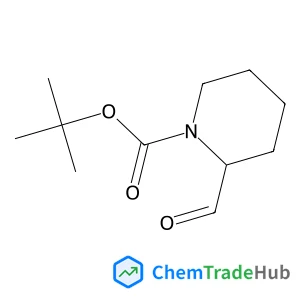
2-Methyl-2-propanyl (2R)-2-formyl-1-piperidinecarboxylate
CAS Number:
134526-69-5
Molecular Formula:
C11H19NO3
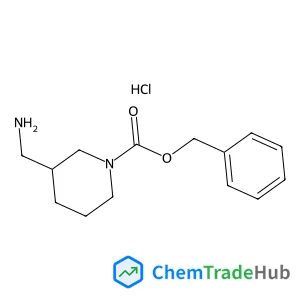
Benzyl 3-(aminomethyl)piperidine-1-carboxylate hydrochloride
CAS Number:
1186663-23-9
Molecular Formula:
C14H21ClN2O2
Recommended Suppliers




Disclaimer
This page provides academic journal information for reference and research purposes only. We are not affiliated with any journal publishers and do not handle publication submissions. For publication-related inquiries, please contact the respective journal publishers directly.
If you notice any inaccuracies in the information displayed, please contact us at support@chemtradehub.com. We will promptly review and address your concerns.