












Visualizing the efficiency of rapid modular block copolymer construction
Literature Information
Publication Date
2010-08-23
DOI
10.1039/C0PY00189A
Impact Factor
5.582
Authors
Andrew J. Inglis, Christopher Barner-Kowollik
View Original
Abstract
The quantification of the efficient ultra-rapid modular synthesis of block copolymersviatwo-dimensional chromatography and a comparably accurate, low-cost deconvolution of size exclusion chromatography traces is reported. Cyclopentadienyl-capped poly(methyl methacrylate) (PMMA, 97% functionality) and a series of pyridin-2-yldithioformate-capped poly(isobornyl acrylate)s (PiBoA, 93–95% functionality) were synthesiszed via atom transfer radical polymerization (ATRP) and reversible addition fragmentation chain transfer (RAFT) polymerization respectively. The corresponding block copolymers were generated by simply stirring a chloroform solution of PMMA, PiBoA and acidic catalyst for 10 min at ambient temperature. The crude block copolymer mixtures were directly analyzed by size exclusion chromatography (SEC), liquid adsorption chromatography at critical conditions (LACCC) and 2D LACCC-SEC to visualize the efficiency of the ultra rapid conjugation reaction. The quantitative analysis via the 2D LACCC-SEC yielded the composition of the block copolymer mixtures which were in excellent agreement with predicted values, thus indicating quantitative conjugation efficiency. In all cases, the crude block copolymer mixtures contained at least 94 wt% block copolymer. Furthermore, a low-cost deconvolution method that may be applied to conventional SEC traces was found to provide comparable composition data.
Related Literature
Infrared photodissociation spectroscopy of cold cationic trimethylamine complexes
Xiangtao Kong, Zhi Zhao, Dongxu Dai, Xueming Yang, Ling Jiang
2018-07-04
Paper
DOI: 10.1039/C8CP03672A
Extending the scope of the carbonyl facilitated triplet excited state towards visible light excitation
Shinaj K. Rajagopal, Nagaraj K., Somadrita Deb, Vinayak Bhat, Devika Sasikumar, Ebin Sebastian, Mahesh Hariharan
2018-06-18
Paper
DOI: 10.1039/C8CP01023D
Computational modelling of atomic layer etching of chlorinated germanium surfaces by argon
Shenli Zhang, Yihan Huang, Gulcin Tetiker, Saravanapriyan Sriraman, Alex Paterson, Roland Faller
2019-02-20
Communication
DOI: 10.1039/C9CP00125E
Effect of an external electric field on capillary filling of water in hydrophilic silica nanochannels
Andres Rojano Crisson, Enrique Wagemann, Harvey A. Zambrano
2018-06-22
Paper
DOI: 10.1039/C8CP03186J
Deep core photoionization of iodine in CH3I and CF3I molecules: how deep down does the chemical shift reach?
Nacer Boudjemia, Kari Jänkälä, Kenji Tamasaku, Marko Huttula, Masaki Oura
2019-02-11
Paper
DOI: 10.1039/C8CP07307D
Temperature-dependent crystalline structure and phase transition of poly(butylene adipate) end-functionalized by multiple hydrogen-bonding groups
Jianna Bao, Huabo Fan, Xiaojia Xue, Qing Xie, Pengju Pan
2018-09-19
Paper
DOI: 10.1039/C8CP05066J
Design and characterization of novel polymorphs of single-layered tin-sulfide for direction-dependent thermoelectric applications using first-principles approaches
Bakhtiar Ul Haq, S. AlFaify, A. Laref
2019-01-28
Paper
DOI: 10.1039/C8CP07645F
The energy level of the Fe2+/3+-transition in BaTiO3 and SrTiO3 single crystals
Issei Suzuki, Leonard Gura, Andreas Klein
2019-02-26
Paper
DOI: 10.1039/C8CP07872F
Vertical vs. adiabatic ionization energies in solution and gas-phase: probing ionization-induced reorganization in conformationally-mobile bichromophoric actuators using photoelectron spectroscopy, electrochemistry and theory
Maxim V. Ivanov, Denan Wang, Depeng Zhang, Rajendra Rathore, Scott A. Reid
2018-09-24
Paper
DOI: 10.1039/C8CP02936A
You might also like
Compound Q&A
Is 6-(3-Fluorophenyl)picolinic acid (CAS: 887982-40-3) safe?
6-(3-Fluorophenyl)picolinic acid is generally considered safe for laboratory use...
887982-40-36-(3-Fluorophenyl)pi...
Compound Q&A
What industries use (3R)-3-Pyrrolidinol (CAS: 2799-21-5)?
(3R)-3-Pyrrolidinol is used in the pharmaceutical industry as a precursor for dr...
2799-21-5(3R)-3-Pyrrolidinol
Compound Q&A
What precautions should be taken when handling (4R,5R)-4,5-Diethoxycarbonyl-2,2-dimethyldioxolane (CAS: 59779-75-8)?
When handling (4R,5R)-4,5-Diethoxycarbonyl-2,2-dimethyldioxolane (CAS: 59779-75-...
59779-75-8(4R,5R)-4,5-Diethoxy...
Compound Q&A
How is 1-(6-Chloroimidazo[1,2-b]pyridazin-3-yl)ethanone (CAS: 90734-71-7) typically synthesized?
1-(6-Chloroimidazo[1,2-b]pyridazin-3-yl)ethanone is often synthesized via a mult...
90734-71-71-(6-Chloroimidazo[1...
Compound Q&A
What is the market or research trend for N-Ethyl-3,4-dimethylbenzylamine (CAS: 39180-83-1)?
The market for N-Ethyl-3,4-dimethylbenzylamine (CAS: 39180-83-1) remains steady,...
39180-83-1N-Ethyl-3,4-dimethyl...
Compound Q&A
What is Tert-butyl 3-(pyrrolidin-1-yl)azetidine-1-carboxylate (CAS: 1019008-21-9)?
Tert-butyl 3-(pyrrolidin-1-yl)azetidine-1-carboxylate is a chemical compound wit...
1019008-21-9Tert-butyl 3-(pyrrol...
Compound Q&A
What regulatory guidelines apply to 1-Bromo-3-chloro-2,4-dimethoxybenzene (CAS: 1228956-93-1)?
1-Bromo-3-chloro-2,4-dimethoxybenzene (CAS: 1228956-93-1) falls under the classi...
1228956-93-11-Bromo-3-chloro-2,4...
Compound Q&A
Is 8-Bromo-2-methyl-3,4-dihydroisoquinolin-1(2H)-one (CAS: 1368622-07-4) safe?
The safety of 8-Bromo-2-methyl-3,4-dihydroisoquinolin-1(2H)-one (CAS: 1368622-07...
1368622-07-48-Bromo-2-methyl-3,4...
Compound Q&A
Is Benzyl [(3S)-2,6-dioxo-3-piperidinyl]carbamate (CAS: 22785-43-9) safe?
Benzyl [(3S)-2,6-dioxo-3-piperidinyl]carbamate is generally safe when handled wi...
22785-43-9Benzyl [(3S)-2,6-dio...
Compound Q&A
How should 1-{[4-(4,4,5,5-Tetramethyl-1,3,2-dioxaborolan-2-yl)phenyl]sulfonyl}pyrrolidine (CAS: 928657-21-0) be stored?
1-{[4-(4,4,5,5-Tetramethyl-1,3,2-dioxaborolan-2-yl)phenyl]sulfonyl}pyrrolidine s...
928657-21-01-{[4-(4,4,5,5-Tetra...
Source Journal
Polymer Chemistry

CiteScore:
8.6
Self-citation Rate:
7.3%
Articles per Year:
457
Polymer Chemistry welcomes submissions in all areas of polymer science that have a strong focus on macromolecular chemistry. Manuscripts may cover a broad range of fields, yet no direct application focus is required.
Recommended Compounds
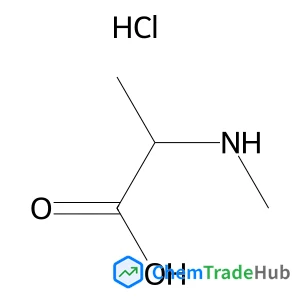
(R)-2-(Methylamino)propanoic acid hydrochloride
CAS Number:
1155878-14-0
Molecular Formula:
C4H10ClNO2
![2-Methyl-2-propanyl [(2S)-1-hydroxy-3-(4-hydroxyphenyl)-2-propanyl]carbamate structure](https://static.chemtradehub.com/structs/833/83345-46-4-eec2.webp "2-Methyl-2-propanyl [(2S)-1-hydroxy-3-(4-hydroxyphenyl)-2-propanyl]carbamate structure")
2-Methyl-2-propanyl [(2S)-1-hydroxy-3-(4-hydroxyphenyl)-2-propanyl]carbamate
CAS Number:
83345-46-4
Molecular Formula:
C14H21NO4
Recommended Suppliers





Disclaimer
This page provides academic journal information for reference and research purposes only. We are not affiliated with any journal publishers and do not handle publication submissions. For publication-related inquiries, please contact the respective journal publishers directly.
If you notice any inaccuracies in the information displayed, please contact us at support@chemtradehub.com. We will promptly review and address your concerns.