












Theoretical studies on FGFR isoform selectivity of FGFR1/FGFR4 inhibitors by molecular dynamics simulations and free energy calculations
Literature Information
Publication Date
2017-01-04
DOI
10.1039/C6CP07964D
Impact Factor
3.676
Authors
Weitao Fu, Lingfeng Chen, Zhe Wang, Chao Wu, Qinqin Xia, Zhiguo Liu, Jianmin Zhou, Guang Liang, Yuepiao Cai
View Original
Abstract
The activation and overexpression of fibroblast growth factor receptors (FGFRs) are highly correlated with a variety of cancers. Most small molecule inhibitors of FGFRs selectively target FGFR1-3, but not FGFR4. Hence, designing highly selective inhibitors towards FGFR4 remains a great challenge because FGFR4 and FGFR1 have a high sequence identity. Recently, two small molecule inhibitors of FGFRs, ponatinib and AZD4547, have attracted huge attention. Ponatinib, a type II inhibitor, has high affinity towards FGFR1/4 isoforms, but AZD4547, a type I inhibitor of FGFR1, displays much reduced inhibition toward FGFR4. In this study, conventional molecular dynamics (MD) simulations, molecular mechanics/generalized Born surface area (MM/GBSA) free energy calculations and umbrella sampling (US) simulations were carried out to reveal the principle of the binding preference of ponatinib and AZD4547 towards FGFR4/FGFR1. The results provided by MM/GBSA illustrate that ponatinib has similar binding affinities to FGFR4 and FGFR1, while AZD4547 has much stronger binding affinity to FGFR1 than to FGFR4. A comparison of the individual energy terms suggests that the selectivity of AZD4547 towards FGFR1 versus FGFR4 is primarily controlled by the variation of the van der Waals interactions. The US simulations reveal that the PMF profile of FGFR1/AZD4547 has more peaks and valleys compared with that of FGFR4/AZD4547, suggesting that the dissociation process of AZD4547 from FGFR1 are easily trapped into local minima. Moreover, it is observed that FGFR1/AZD4547 has much higher PMF depth than FGFR4/AZD4547, implying that it is more difficult for AZD4547 to escape from FGFR1 than from FGFR4. The physical principles provided by this study extend our understanding of the binding mechanisms and provide valuable guidance for the rational design of FGFR isoform selective inhibitors.
Related Literature
Well-controlled reversible addition–fragmentation chain transfer radical polymerisation under ultraviolet radiation at ambient temperature
Lican Lu, Nianfa Yang, Yuanli Cai
2005-10-10
Communication
DOI: 10.1039/B512057H
PNA forms an i-motif
Yamuna Krishnan-Ghosh, Elaine Stephens, Shankar Balasubramanian
2005-09-23
Communication
DOI: 10.1039/B510405J
PAMAM dendrimers for efficient siRNA delivery and potent gene silencing
Jiehua Zhou, Nadia Hafdi, Jean-Paul Behr, Patrick Erbacher
2006-05-10
Communication
DOI: 10.1039/B601381C
Highly diastereoselective amplification from a dynamic combinatorial library of macrocyclic oligoimines
Almudena González-Álvarez, Ignacio Alfonso, Vicente Gotor
2006-04-21
Communication
DOI: 10.1039/B603203F
Selective aerobic oxidation in supercritical carbon dioxide catalyzed by the H5PV2Mo10O40 polyoxometalate
Galia Maayan, Benjamin Ganchegui, Ronny Neumann
2006-04-25
Communication
DOI: 10.1039/B603148J
Insulated conducting polymers: manipulating charge transport using supramolecular complexes
Phoebe H. Kwan, Timothy M. Swager
2005-09-21
Communication
DOI: 10.1039/B508399K
Supramolecular cruciforms
Warren W. Gerhardt, Anthony J. Zucchero, James N. Wilson, Clinton R. South, Uwe H. F. Bunz, Marcus Weck
2006-03-21
Communication
DOI: 10.1039/B602087A
A novel route for in-situ H2O2 generation from selective reduction of O2 by hydrazine using heterogeneous Pd catalyst in an aqueous medium
Vasant R. Choudhary, Chanchal Samanta, Prabhas Jana
2005-10-03
Communication
DOI: 10.1039/B510543A
Biocatalytic deuterium- and hydrogen-transfer using over-expressed ADH-‘A’: enhanced stereoselectivity and 2H-labeled chiral alcohols
Christian C. Gruber, Tina M. Poessl, Frank Niehaus, Juergen Eck, Reinhold Oehrlein, Andreas Hafner
2006-04-11
Communication
DOI: 10.1039/B602487D
You might also like
Compound Q&A
What are the main uses of 1H-Indazole-6-carbonitrile (CAS: 141290-59-7)?
1H-Indazole-6-carbonitrile finds applications in pharmaceuticals, where it serve...
141290-59-71H-Indazole-6-carbon...
Compound Q&A
How should waste containing Dioctyl (2E)-2-butenedioate (CAS: 2997-85-5) be handled?
Waste containing Dioctyl (2E)-2-butenedioate (CAS: 2997-85-5) should be collecte...
2997-85-5Dioctyl (2E)-2-buten...
Compound Q&A
What industries use Sodium [(1,2-benzoxazol-3-ylmethyl)sulfonyl]azanide (CAS: 68291-98-5)?
Sodium [(1,2-benzoxazol-3-ylmethyl)sulfonyl]azanide is primarily used in pharmac...
68291-98-5Sodium [(1,2-benzoxa...
Compound Q&A
Are there alternatives to Dimethyl 4-(4,4,5,5-tetramethyl-1,3,2-dioxaborolan-2-yl)-2,6-pyridinedicarboxylate (CAS: 741709-66-0) in synthesis?
Dimethyl 4-(4,4,5,5-tetramethyl-1,3,2-dioxaborolan-2-yl)-2,6-pyridinedicarboxyla...
741709-66-0Dimethyl 4-(4,4,5,5-...
Compound Q&A
How should waste containing 2-Fluoro-6-hydrazinopyridine (CAS: 80714-39-2) be handled?
Waste containing 2-Fluoro-6-hydrazinopyridine (CAS: 80714-39-2) should be manage...
80714-39-22-Fluoro-6-hydrazino...
Compound Q&A
What is 6-Formyl-2-pyridinecarboxylic acid (CAS: 499214-11-8)?
6-Formyl-2-pyridinecarboxylic acid is an organic compound with the molecular for...
499214-11-86-Formyl-2-pyridinec...
Compound Q&A
What is the market or research trend for 3-(3,4-dimethoxyphenyl)-2,5-dimethyl-N-(2-morpholin-4-ylethyl)pyrazolo[1,5-a]pyrimidin-7-amine (CAS: 900874-91-1)?
Research trends for this compound indicate a focus on its potential applications...
900874-91-13-(3,4-dimethoxyphen...
Compound Q&A
How is 9H-Tribenzo[b,d,f]azepine (CAS: 29875-73-8) typically synthesized?
9H-Tribenzo[b,d,f]azepine is typically synthesized via a multi-step process invo...
29875-73-89H-Tribenzo[b,d,f]az...
Compound Q&A
How is 1-Cyclopropyl-7-ethoxy-6-fluoro-8-methoxy-4-oxo-1,4-dihydro-3-quinolinecarboxylic acid (CAS: 1797982-51-4) typically synthesized?
1-Cyclopropyl-7-ethoxy-6-fluoro-8-methoxy-4-oxo-1,4-dihydro-3-quinolinecarboxyli...
1797982-51-41-Cyclopropyl-7-etho...
Compound Q&A
How should waste containing Methyl 3-oxo-1,2,3,4-tetrahydro-6-quinoxalinecarboxylate (CAS: 671820-52-3) be handled?
Waste containing Methyl 3-oxo-1,2,3,4-tetrahydro-6-quinoxalinecarboxylate (CAS: ...
671820-52-3Methyl 3-oxo-1,2,3,4...
Source Journal
Physical Chemistry Chemical Physics

CiteScore:
5.5
Self-citation Rate:
10.3%
Articles per Year:
3036
Physical Chemistry Chemical Physics (PCCP) is an international journal co-owned by 19 physical chemistry and physics societies from around the world. This journal publishes original, cutting-edge research in physical chemistry, chemical physics and biophysical chemistry. To be suitable for publication in PCCP, articles must include significant innovation and/or insight into physical chemistry; this is the most important criterion that reviewers and Editors will judge against when evaluating submissions. The journal has a broad scope and welcomes contributions spanning experiment, theory, computation and data science. Topical coverage includes spectroscopy, dynamics, kinetics, statistical mechanics, thermodynamics, electrochemistry, catalysis, surface science, quantum mechanics, quantum computing and machine learning. Interdisciplinary research areas such as polymers and soft matter, materials, nanoscience, energy, surfaces/interfaces, and biophysical chemistry are welcomed if they demonstrate significant innovation and/or insight into physical chemistry. Joined experimental/theoretical studies are particularly appreciated when complementary and based on up-to-date approaches.
Recommended Compounds
![(1S)-1,5-Anhydro-1-[3-(1-benzothiophen-2-ylmethyl)-4-fluorophenyl]-D-glucitol structure](https://static.chemtradehub.com/structs/761/761423-87-4-dbeb.webp "(1S)-1,5-Anhydro-1-[3-(1-benzothiophen-2-ylmethyl)-4-fluorophenyl]-D-glucitol structure")
(1S)-1,5-Anhydro-1-[3-(1-benzothiophen-2-ylmethyl)-4-fluorophenyl]-D-glucitol
CAS Number:
761423-87-4
Molecular Formula:
C21H21FO5S
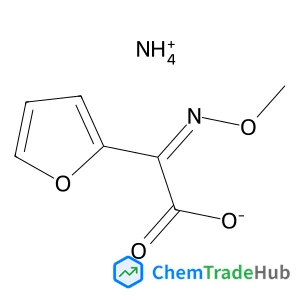
Ammonium (Z)-2-(furan-2-yl)-2-(methoxyimino)acetate
CAS Number:
97148-39-5
Molecular Formula:
C7H10N2O4
Recommended Suppliers





Disclaimer
This page provides academic journal information for reference and research purposes only. We are not affiliated with any journal publishers and do not handle publication submissions. For publication-related inquiries, please contact the respective journal publishers directly.
If you notice any inaccuracies in the information displayed, please contact us at support@chemtradehub.com. We will promptly review and address your concerns.