


Is energy transfer limiting multiphotochromism? answers from ab initio quantifications
Literature Information
Publication Date
2016-12-19
DOI
10.1039/C6CP07458H
Impact Factor
3.676
Authors
Roberto Russo, Lorenzo Cupellini, Benedetta Mennucci
View Original
Abstract
Dithienylethenes (DTEs) can be assembled to form supramolecular multiphotochromic systems that are highly functional molecular architectures of potential interest for building complex optoelectronic devices. Yet even simple DTE dimers relying on an organic linker may suffer from a partial photoactivity, i.e., only one of the two switches does isomerise. Experimentally, this limited photochromism has been attributed to an excited state energy transfer (EET) between the two DTEs of the multimer; this EET taking place instead of the desired photoinduced cyclisation of the DTE. However, no clear evidences of this phenomenon have been provided so far. In this work we propose the first rationalisation of this potential parasite photoinduced event using a computational approach based on Time-Dependent Density Functional Theory (TD-DFT) for the calculation of the electronic coupling in DTE dimers. Besides quantifying EET in several systems, we dissect the role of through-bond and through-space mechanisms on this process and clarify their dependence on both the nature and length of the bridge separating the two photochromes. The theoretical data obtained in this framework are in full agreement with the experimental outcomes and pave the way toward a molecular design of coupled, yet fully functionals, DTE-based multiswitches.
Recommended Journals

Chemical Communications

Nature Medicine

Saudi Pharmaceutical Journal

Russian Journal of Coordination Chemistry

Russian Chemical Bulletin

Acta Materialia

Current Opinion in Colloid & Interface Science

Current Opinion in Solid State & Materials Science

Drug Discovery Today

Chemistry Education Research and Practice
Related Literature
Charge transfer to solvent dynamics in iodide aqueous solution studied at ionization threshold
Alexander Kothe, Martin Wilke, Alexandre Moguilevski, Nicholas Engel, Bernd Winter, Igor Yu. Kiyan
2014-11-27
Paper
DOI: 10.1039/C4CP02482F
Mono- and co-doped NaTaO3 for visible light photocatalysis
Pushkar Kanhere, Prathamesh Shenai, Sudip Chakraborty, Jianwei Zheng
2014-06-09
Paper
DOI: 10.1039/C4CP01000K
Theoretical studies on the effect of a bithiophene bridge with different substituent groups (R = H, CH3, OCH3 and CN) in donor–π–acceptor copolymers for organic solar cell applications
Zhiyong Fu, Wei Shen, Rongxing He, Xiaorui Liu, Huili Sun, Wanqiang Yin, Ming Li
2014-11-26
Paper
DOI: 10.1039/C4CP04103H
Pool-BCGA: a parallelised generation-free genetic algorithm for the ab initio global optimisation of nanoalloy clusters
A. Shayeghi, D. Götz, J. B. A. Davis, R. Schäfer, R. L. Johnston
2014-12-01
Paper
DOI: 10.1039/C4CP04323E
1064 nm SERS of NIR active hollow gold nanotags
H. Kearns, N. C. Shand, W. E. Smith, K. Faulds, D. Graham
2014-11-27
Paper
DOI: 10.1039/C4CP04281F
Plasmonic gold–poly(N-isopropylacrylamide) core–shell colloids with homogeneous density profiles: a small angle scattering study
Martin Dulle, Sarah Jaber, Sabine Rosenfeldt, Aurel Radulescu, Stephan Förster, Paul Mulvaney, Matthias Karg
2014-11-19
Paper
DOI: 10.1039/C4CP04816D
Determination of protein binding affinities within hydrogel-based molecularly imprinted polymers (HydroMIPs)
Hazim F. EL-Sharif, Daniel M. Hawkins, Derek Stevenson, Subrayal M. Reddy
2014-06-16
Paper
DOI: 10.1039/C4CP01798F
Dynamics of photodissociation of XeF2 in organic solvents
Greg T. Dunning, Thomas J. Preston, Andrew J. Orr-Ewing, Stuart J. Greaves, Gregory M. Greetham, Ian P. Clark, Michael Towrie
2014-06-23
Paper
DOI: 10.1039/C4CP01854K
Imidazolium-based ionic liquids with different fatty acid anions: phase behavior, electronic structure and ionic conductivity investigation
Mrinmoy Biswas, Madhab Dule, Pabitra N. Samanta, Sharmistha Ghosh, Tarun K. Mandal
2014-06-20
Paper
DOI: 10.1039/C4CP01324G
Molecular dynamics investigations of liquid–vapor interaction and adsorption of formaldehyde, oxocarbons, and water in graphitic slit pores
Pei-Hsing Huang, Shang-Chao Hung, Ming-Yueh Huang
2014-06-10
Paper
DOI: 10.1039/C4CP01922A
You might also like
Compound Q&A
Is 2-(2-chloroacetamido)-3-phenylpropanoic acid (CAS: 7765-11-9) safe?
2-(2-Chloroacetamido)-3-phenylpropanoic acid (CAS: 7765-11-9) is generally consi...
7765-11-92-(2-chloroacetamido...
Compound Q&A
Is 2-(Benzyloxy)-5-bromobenzoic acid (CAS: 62176-31-2) safe?
2-(Benzyloxy)-5-bromobenzoic acid can be handled safely if appropriate precautio...
62176-31-22-(Benzyloxy)-5-brom...
Compound Q&A
What is (4-Methyl-1,2,5-oxadiazol-3-yl)methanamine hydrochloride (CAS: 1159825-48-5)?
(4-Methyl-1,2,5-oxadiazol-3-yl)methanamine hydrochloride is a chemical compound ...
1159825-48-5(4-Methyl-1,2,5-oxad...
Compound Q&A
What is 2-(5-Hexylthiophen-2-yl)-4,4,5,5-tetramethyl-1,3,2-dioxaborolane (CAS: 917985-54-7)?
2-(5-Hexylthiophen-2-yl)-4,4,5,5-tetramethyl-1,3,2-dioxaborolane (CAS: 917985-54...
917985-54-72-(5-Hexylthiophen-2...
Compound Q&A
Are there alternatives to 4-(8-Methyl-9H-1,3-dioxolo[4,5-h][2,3]benzodiazepin-5-yl)benzenamine (CAS: 102771-26-6) in synthesis?
While 4-(8-Methyl-9H-1,3-dioxolo[4,5-h][2,3]benzodiazepin-5-yl)benzenamine (CAS:...
102771-26-64-(8-Methyl-9H-1,3-d...
Compound Q&A
What is the market or research trend for tert-butyl 3-hydroxy-4,5,7,8-tetrahydro-2H-pyrazolo[3,4-d]azepine-6-carboxylate (CAS: 851376-80-2)?
The market for tert-butyl 3-hydroxy-4,5,7,8-tetrahydro-2H-pyrazolo[3,4-d]azepine...
851376-80-2tert-butyl 3-hydroxy...
Compound Q&A
How should waste containing 3,5-Diamino-1H-pyrazole-4-carbonitrile (CAS: 6844-58-2) be handled?
Waste containing 3,5-Diamino-1H-pyrazole-4-carbonitrile (CAS: 6844-58-2) should ...
6844-58-23,5-Diamino-1H-pyraz...
Compound Q&A
How is (6-Fluoro-3-pyridinyl)boronic acid (CAS: 351019-18-6) typically synthesized?
(6-Fluoro-3-pyridinyl)boronic acid can be synthesized through the reaction of 6-...
351019-18-6(6-Fluoro-3-pyridiny...
Compound Q&A
What industries use Dibenzyl carbonimidoylbiscarbamate (CAS: 10065-79-9)?
Dibenzyl carbonimidoylbiscarbamate (CAS: 10065-79-9) finds applications in vario...
10065-79-9Dibenzyl carbonimido...
Compound Q&A
What is the market or research trend for (beta,beta,2,3,4,5,6-~2~H_7_)Phenylalanine (CAS: 74228-83-4)?
The market for (beta,beta,2,3,4,5,6-~2~H_7_)Phenylalanine (CAS: 74228-83-4) is g...
74228-83-4(beta,beta,2,3,4,5,6...
Source Journal
Physical Chemistry Chemical Physics

CiteScore:
5.5
Self-citation Rate:
10.3%
Articles per Year:
3036
Physical Chemistry Chemical Physics (PCCP) is an international journal co-owned by 19 physical chemistry and physics societies from around the world. This journal publishes original, cutting-edge research in physical chemistry, chemical physics and biophysical chemistry. To be suitable for publication in PCCP, articles must include significant innovation and/or insight into physical chemistry; this is the most important criterion that reviewers and Editors will judge against when evaluating submissions. The journal has a broad scope and welcomes contributions spanning experiment, theory, computation and data science. Topical coverage includes spectroscopy, dynamics, kinetics, statistical mechanics, thermodynamics, electrochemistry, catalysis, surface science, quantum mechanics, quantum computing and machine learning. Interdisciplinary research areas such as polymers and soft matter, materials, nanoscience, energy, surfaces/interfaces, and biophysical chemistry are welcomed if they demonstrate significant innovation and/or insight into physical chemistry. Joined experimental/theoretical studies are particularly appreciated when complementary and based on up-to-date approaches.
Recommended Compounds
![(3S,4aS,8aS)-2-[(2R,3S)-3-Amino-2-hydroxy-4-phenylbutyl]-N-(2-methyl-2-propanyl)decahydro-3-isoquinolinecarboxamide structure](https://static.chemtradehub.com/structs/136/136522-17-3-4d77.webp "(3S,4aS,8aS)-2-[(2R,3S)-3-Amino-2-hydroxy-4-phenylbutyl]-N-(2-methyl-2-propanyl)decahydro-3-isoquinolinecarboxamide structure")
(3S,4aS,8aS)-2-[(2R,3S)-3-Amino-2-hydroxy-4-phenylbutyl]-N-(2-methyl-2-propanyl)decahydro-3-isoquinolinecarboxamide
CAS Number:
136522-17-3
Molecular Formula:
C24H39N3O2
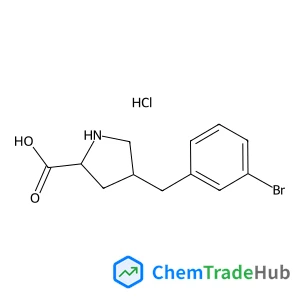
(2S,4R)-4-(3-Bromobenzyl)pyrrolidine-2-carboxylic acid hydrochloride
CAS Number:
1049734-10-2
Molecular Formula:
C12H15BrClNO2
Recommended Suppliers






Disclaimer
This page provides academic journal information for reference and research purposes only. We are not affiliated with any journal publishers and do not handle publication submissions. For publication-related inquiries, please contact the respective journal publishers directly.
If you notice any inaccuracies in the information displayed, please contact us at support@chemtradehub.com. We will promptly review and address your concerns.