












Charge transfer to solvent dynamics in iodide aqueous solution studied at ionization threshold
Literature Information
Publication Date
2014-11-27
DOI
10.1039/C4CP02482F
Impact Factor
3.676
Authors
Alexander Kothe, Martin Wilke, Alexandre Moguilevski, Nicholas Engel, Bernd Winter, Igor Yu. Kiyan
View Original
Abstract
We explore the early-time electronic relaxation in NaI aqueous solution exposed to a short UV laser pulse. Rather than initiating the charge transfer reaction by resonant photoexcitation of iodide, in the present time-resolved photoelectron spectroscopy study the charge-transfer-to-solvent (CTTS) states are populated via electronic excitation above the vacuum level. By analyzing the temporal evolution of electron yields from ionization of two transient species, assigned to CTTS and its first excited state, we determine both their ultrafast population and relaxation dynamics. Comparison with resonant-excitation studies shows that the highly excited initial states exhibit similar relaxation characteristics as found for resonant excitation. Implications for structure and dynamical response of the hydration cage are discussed.
Related Literature
Growth of Ni nanoclusters on irradiated graphene: a molecular dynamics study
E. E. Hernandez-Vazquez, E. M. Bringa, J. L. Moran-Lopez
2018-04-03
Paper
DOI: 10.1039/C7CP08642C
Gold nanoparticle-decorated graphene as a nonlinear optical material in the visible and near-infrared spectral range
K. Kinastowska, K. Piela, M. Gordel, A. Żak, R. Kołkowski, M. Samoć
2018-06-20
Paper
DOI: 10.1039/C8CP02439A
Temperature dependence of photophysical properties of a dinuclear C^N-cyclometalated Pt(ii) complex with an intimate Pt–Pt contact. Zero-field splitting and sub-state decay rates of the lowest triplet
Joseph C. Deaton, Arnab Chakraborty, Rafal Czerwieniec, Hartmut Yersin, Felix N. Castellano
2018-09-18
Paper
DOI: 10.1039/C8CP05213A
Deep eutectic–water binary solvent associations investigated by vibrational spectroscopy and chemometrics
R. Ahmadi, A. Safavi, Z. Shojaeifard, A. Shahsavar, A. Mohajeri, M. Heydari Dokoohaki, A. R. Zolghadr
2018-06-04
Paper
DOI: 10.1039/C8CP00409A
Oxygen vacancy induces self-doping effect and metalloid LSPR in non-stoichiometric tungsten suboxide synergistically contributing to the enhanced photoelectrocatalytic performance of WO3−x/TiO2−x heterojunction
Weicheng Huang, Jinxin Wang, Lang Bian, Chaoyue Zhao, Danqing Liu, Bin Yang
2018-05-30
Paper
DOI: 10.1039/C8CP02044B
Quantification of biomolecules responsible for biomarkers in the surface-enhanced Raman spectra of bacteria using liquid chromatography-mass spectrometry
Ho-Wen Cheng, Zhi-Xin Chen, Huai-Hsien Wang, Ming-Yu Lai
2018-02-19
Paper
DOI: 10.1039/C7CP07103E
Charge driven lateral structural evolution of ions in electric double layer capacitors strongly correlates with differential capacitance
Qiangqiang Meng
2018-02-26
Paper
DOI: 10.1039/C7CP08075A
The direct observation of electron backflow in an organic heterojunction formed by two n-type materials
Bo Wu, Hai Shen Huang
2018-02-12
Paper
DOI: 10.1039/C7CP07817J
How low-resolution structural data predict the conformational changes of a protein: a study on data-driven molecular dynamics simulations
Ryuhei Harada, Yasuteru Shigeta
2018-06-05
Paper
DOI: 10.1039/C8CP02246A
Molecules mimicking atoms: monomers and dimers of alkali metal solvated electron precursors
Isuru R. Ariyarathna, Filip Pawłowski, Joseph Vincent Ortiz, Evangelos Miliordos
2018-09-07
Paper
DOI: 10.1039/C8CP05497E
You might also like
Compound Q&A
Is 2-(2-chloroacetamido)-3-phenylpropanoic acid (CAS: 7765-11-9) safe?
2-(2-Chloroacetamido)-3-phenylpropanoic acid (CAS: 7765-11-9) is generally consi...
7765-11-92-(2-chloroacetamido...
Compound Q&A
Is 2-(Benzyloxy)-5-bromobenzoic acid (CAS: 62176-31-2) safe?
2-(Benzyloxy)-5-bromobenzoic acid can be handled safely if appropriate precautio...
62176-31-22-(Benzyloxy)-5-brom...
Compound Q&A
What is (4-Methyl-1,2,5-oxadiazol-3-yl)methanamine hydrochloride (CAS: 1159825-48-5)?
(4-Methyl-1,2,5-oxadiazol-3-yl)methanamine hydrochloride is a chemical compound ...
1159825-48-5(4-Methyl-1,2,5-oxad...
Compound Q&A
What is 2-(5-Hexylthiophen-2-yl)-4,4,5,5-tetramethyl-1,3,2-dioxaborolane (CAS: 917985-54-7)?
2-(5-Hexylthiophen-2-yl)-4,4,5,5-tetramethyl-1,3,2-dioxaborolane (CAS: 917985-54...
917985-54-72-(5-Hexylthiophen-2...
Compound Q&A
Are there alternatives to 4-(8-Methyl-9H-1,3-dioxolo[4,5-h][2,3]benzodiazepin-5-yl)benzenamine (CAS: 102771-26-6) in synthesis?
While 4-(8-Methyl-9H-1,3-dioxolo[4,5-h][2,3]benzodiazepin-5-yl)benzenamine (CAS:...
102771-26-64-(8-Methyl-9H-1,3-d...
Compound Q&A
What is the market or research trend for tert-butyl 3-hydroxy-4,5,7,8-tetrahydro-2H-pyrazolo[3,4-d]azepine-6-carboxylate (CAS: 851376-80-2)?
The market for tert-butyl 3-hydroxy-4,5,7,8-tetrahydro-2H-pyrazolo[3,4-d]azepine...
851376-80-2tert-butyl 3-hydroxy...
Compound Q&A
How should waste containing 3,5-Diamino-1H-pyrazole-4-carbonitrile (CAS: 6844-58-2) be handled?
Waste containing 3,5-Diamino-1H-pyrazole-4-carbonitrile (CAS: 6844-58-2) should ...
6844-58-23,5-Diamino-1H-pyraz...
Compound Q&A
How is (6-Fluoro-3-pyridinyl)boronic acid (CAS: 351019-18-6) typically synthesized?
(6-Fluoro-3-pyridinyl)boronic acid can be synthesized through the reaction of 6-...
351019-18-6(6-Fluoro-3-pyridiny...
Compound Q&A
What industries use Dibenzyl carbonimidoylbiscarbamate (CAS: 10065-79-9)?
Dibenzyl carbonimidoylbiscarbamate (CAS: 10065-79-9) finds applications in vario...
10065-79-9Dibenzyl carbonimido...
Compound Q&A
What is the market or research trend for (beta,beta,2,3,4,5,6-~2~H_7_)Phenylalanine (CAS: 74228-83-4)?
The market for (beta,beta,2,3,4,5,6-~2~H_7_)Phenylalanine (CAS: 74228-83-4) is g...
74228-83-4(beta,beta,2,3,4,5,6...
Source Journal
Physical Chemistry Chemical Physics

CiteScore:
5.5
Self-citation Rate:
10.3%
Articles per Year:
3036
Physical Chemistry Chemical Physics (PCCP) is an international journal co-owned by 19 physical chemistry and physics societies from around the world. This journal publishes original, cutting-edge research in physical chemistry, chemical physics and biophysical chemistry. To be suitable for publication in PCCP, articles must include significant innovation and/or insight into physical chemistry; this is the most important criterion that reviewers and Editors will judge against when evaluating submissions. The journal has a broad scope and welcomes contributions spanning experiment, theory, computation and data science. Topical coverage includes spectroscopy, dynamics, kinetics, statistical mechanics, thermodynamics, electrochemistry, catalysis, surface science, quantum mechanics, quantum computing and machine learning. Interdisciplinary research areas such as polymers and soft matter, materials, nanoscience, energy, surfaces/interfaces, and biophysical chemistry are welcomed if they demonstrate significant innovation and/or insight into physical chemistry. Joined experimental/theoretical studies are particularly appreciated when complementary and based on up-to-date approaches.
Recommended Compounds
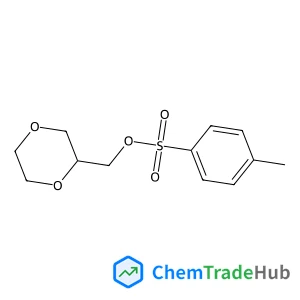
(S)-(1,4-Dioxan-2-yl)methyl 4-methylbenzenesulfonate
CAS Number:
917882-64-5
Molecular Formula:
C12H16O5S
![2-[(E)-(2-Methoxyphenyl)diazenyl]-3-oxo-N-(2-oxo-2,3-dihydro-1H-benzimidazol-5-yl)butanamide structure](https://static.chemtradehub.com/structs/821/82199-12-0-f1d0.webp "2-[(E)-(2-Methoxyphenyl)diazenyl]-3-oxo-N-(2-oxo-2,3-dihydro-1H-benzimidazol-5-yl)butanamide structure")
2-[(E)-(2-Methoxyphenyl)diazenyl]-3-oxo-N-(2-oxo-2,3-dihydro-1H-benzimidazol-5-yl)butanamide
CAS Number:
82199-12-0
Molecular Formula:
C18H17N5O4
Recommended Suppliers





Disclaimer
This page provides academic journal information for reference and research purposes only. We are not affiliated with any journal publishers and do not handle publication submissions. For publication-related inquiries, please contact the respective journal publishers directly.
If you notice any inaccuracies in the information displayed, please contact us at support@chemtradehub.com. We will promptly review and address your concerns.