












![2-[(E)-(2-Methoxyphenyl)diazenyl]-3-oxo-N-(2-oxo-2,3-dihydro-1H-benzimidazol-5-yl)butanamide structure](https://static.chemtradehub.com/structs/821/82199-12-0-f1d0.webp "2-[(E)-(2-Methoxyphenyl)diazenyl]-3-oxo-N-(2-oxo-2,3-dihydro-1H-benzimidazol-5-yl)butanamide structure")
2-[(E)-(2-Methoxyphenyl)diazenyl]-3-oxo-N-(2-oxo-2,3-dihydro-1H-benzimidazol-5-yl)butanamide
CAS Number:
82199-12-0
Molecular Formula:
C18H17N5O4
Pushkar Kanhere, Prathamesh Shenai, Sudip Chakraborty, Jianwei Zheng
Electronic structures of doped NaTaO3 compounds are of significant interest to visible light photocatalysis. This work involves the study of the band gap, band edge potentials, and thermodynamic stability of certain mono-doped and co-doped NaTaO3 systems, using DFT-PBE as well as hybrid (PBE0) functional calculations. Doping of certain non-magnetic cations (Ti, V, Cu, Zn, W, In, Sn, Sb, Ce, and La), certain anions (N, C, and I), and certain co-dopant pairs (W–Ti, W–Ce, N–I, N–W, La–C, Pb–I, and Cu–Sn) is investigated. Our calculations suggest that substitutional doping of Cu at the Ta site, Cu at the Na site, and C at the O site narrows the band gap of NaTaO3 to 2.3, 2.8, and 2.1 eV, respectively, inducing visible light absorption. Additionally, passivated co-doping of Pb–I and N–W narrows the band gap of NaTaO3 to the visible region, while maintaining the band potentials at favorable positions. Hybrid density of states (DOS) accurately describe the effective band potentials and the location of mid-gap states, which shed light on the possible mechanism of photoexcitation in relation to the photocatalysis reactions. Furthermore, the thermodynamic stability of the doped systems and defect pair binding energies of co-doped systems are discussed in detail. The present results provide useful insights into designing new photocatalysts based on NaTaO3.
Mathieu Chassé, Amélie Juhin, Delphine Cabaret, Steven Delhommaye, Delphine Vantelon, Georges Calas
DOI: 10.1039/C8CP04413A
Jingwen Zhu, Emilie-Laure Zins, Mohammad Esmail Alikhani
DOI: 10.1039/C8CP01970C
A. Tsurumaki, O. Palumbo, S. Panero, A. Paolone, M. A. Navarra
DOI: 10.1039/C7CP08134K
Joseph C. Deaton, Arnab Chakraborty, Rafal Czerwieniec, Hartmut Yersin, Felix N. Castellano
DOI: 10.1039/C8CP05213A
Behabitu Ergette Tebikachew, Fredrik Edhborg, Nina Kann, Bo Albinsson, Kasper Moth-Poulsen
DOI: 10.1039/C8CP04329A
Christian J. Burnham, Niall J. English
DOI: 10.1039/C7CP07406A
Y. Isshiki, S. Fujii, T. Nishino, M. Kiguchi
DOI: 10.1039/C8CP00317C
Eric Michoulier, Aude Simon, Joëlle Mascetti, Céline Toubin
DOI: 10.1039/C8CP00593A
2-(2-Chloroacetamido)-3-phenylpropanoic acid (CAS: 7765-11-9) is generally consi...
2-(Benzyloxy)-5-bromobenzoic acid can be handled safely if appropriate precautio...
(4-Methyl-1,2,5-oxadiazol-3-yl)methanamine hydrochloride is a chemical compound ...
2-(5-Hexylthiophen-2-yl)-4,4,5,5-tetramethyl-1,3,2-dioxaborolane (CAS: 917985-54...
While 4-(8-Methyl-9H-1,3-dioxolo[4,5-h][2,3]benzodiazepin-5-yl)benzenamine (CAS:...
The market for tert-butyl 3-hydroxy-4,5,7,8-tetrahydro-2H-pyrazolo[3,4-d]azepine...
Waste containing 3,5-Diamino-1H-pyrazole-4-carbonitrile (CAS: 6844-58-2) should ...
(6-Fluoro-3-pyridinyl)boronic acid can be synthesized through the reaction of 6-...
Dibenzyl carbonimidoylbiscarbamate (CAS: 10065-79-9) finds applications in vario...
The market for (beta,beta,2,3,4,5,6-~2~H_7_)Phenylalanine (CAS: 74228-83-4) is g...

Physical Chemistry Chemical Physics (PCCP) is an international journal co-owned by 19 physical chemistry and physics societies from around the world. This journal publishes original, cutting-edge research in physical chemistry, chemical physics and biophysical chemistry. To be suitable for publication in PCCP, articles must include significant innovation and/or insight into physical chemistry; this is the most important criterion that reviewers and Editors will judge against when evaluating submissions. The journal has a broad scope and welcomes contributions spanning experiment, theory, computation and data science. Topical coverage includes spectroscopy, dynamics, kinetics, statistical mechanics, thermodynamics, electrochemistry, catalysis, surface science, quantum mechanics, quantum computing and machine learning. Interdisciplinary research areas such as polymers and soft matter, materials, nanoscience, energy, surfaces/interfaces, and biophysical chemistry are welcomed if they demonstrate significant innovation and/or insight into physical chemistry. Joined experimental/theoretical studies are particularly appreciated when complementary and based on up-to-date approaches.
![(1R)-N-((1R)-1-Phenylethyl)-1-[4-(tert-butyldimethylsilyloxymethyl)cyclohexyl]ethan-1-amine structure](https://static.chemtradehub.com/structs/672/672314-45-3-47ef.webp "(1R)-N-((1R)-1-Phenylethyl)-1-[4-(tert-butyldimethylsilyloxymethyl)cyclohexyl]ethan-1-amine structure")
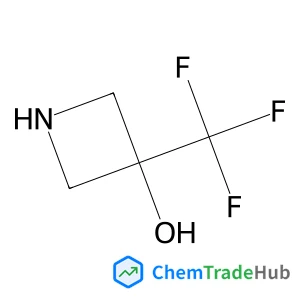
![3,7-Di(1,1':3',1''-terphenyl-5'-yl)-10,11,12,13-tetrahydrodiindeno[7,1-de:1',7'-fg][1,3,2]dioxaphosphocin-5-ol 5-oxide structure](https://static.chemtradehub.com/structs/135/1352810-38-8-3f10.webp "3,7-Di(1,1':3',1''-terphenyl-5'-yl)-10,11,12,13-tetrahydrodiindeno[7,1-de:1',7'-fg][1,3,2]dioxaphosphocin-5-ol 5-oxide structure")
![(1S)-1,5-Anhydro-2-O-alpha-L-arabinopyranosyl-1-[5-hydroxy-7-({6-O-[3-(4-hydroxy-3-methoxyphenyl)propanoyl]-beta-D-glucopyranosyl}oxy)-2-(4-hydroxyphenyl)-4-oxo-4H-chromen-6-yl]-D-glucitol structure](https://static.chemtradehub.com/structs/225/2252345-81-4-bcff.webp "(1S)-1,5-Anhydro-2-O-alpha-L-arabinopyranosyl-1-[5-hydroxy-7-({6-O-[3-(4-hydroxy-3-methoxyphenyl)propanoyl]-beta-D-glucopyranosyl}oxy)-2-(4-hydroxyphenyl)-4-oxo-4H-chromen-6-yl]-D-glucitol structure")





