


Poly(vinyl alcohol) as a water protecting agent for silver nanoparticles: the role of polymer size and structure
Literature Information
Publication Date
2017-02-07
DOI
10.1039/C6CP05562A
Impact Factor
3.676
Authors
Dmitry A. Pasko, Oleg N. Kalugin
View Original
Abstract
Chemical modification of silver nanoparticles (AgNPs) with a stabilizing agent, such as poly(vinyl alcohol) (PVA), plays an important role in shape-controlled seeded-growth and colloidal stability. However, theoretical aspects of the stabilizing mechanism of PVA are still poorly understood. To gain a better understanding of the role of PVA in water protecting effects for silver nanoparticles, we developed an atomistic model of a AgNP grafted with single-chain PVA of various lengths. Our model, designed for classical molecular dynamics (MD) simulations, approximates the AgNP as a quasi-spherical silver nanocrystal with 3.9 nm diameter and uses a united-atom representation for PVA with its polymer chain length varying from 220 up to 1540 repeating units. We found that PVA adsorbs onto the AgNP surface through multiple non-covalent interactions, among which non-covalent bonding of the hydroxyl groups plays a key role. The analysis of adsorption isotherms by using the Hill, Scatchard, and McGhee & von Hippel models exhibits evidence for positive binding cooperativity with the cooperativity parameter varying from 1.55 to 2.12. Our results indicate that the size of the PVA polymer rather than its structure plays a crucial role in providing water protecting effects for the AgNP core, varying from 40% up to 91%. The water-protecting efficiency was well approximated by the Langmuir–Freundlich equation, allowing us to predict that the saturated coverage of the nanoparticle of a given diameter of 3.9 nm should occur when the PVA molecular weight approaches 115 kDa, which corresponds to the number of vinyl alcohol monomers being equal to 3100 units.
Recommended Journals

Heteroatom Chemistry

Bioorganic & Medicinal Chemistry Letters

Atomization and Sprays

Journal of Chemical Sciences

Biocatalysis and Biotransformation

Chinese Journal of Chemistry

Bioorganic & Medicinal Chemistry

Polycyclic Aromatic Compounds

Herald of the Russian Academy of Sciences

Acta Metallurgica Sinica-English Letters
Related Literature
A geometric switching approach toward thermal activation of metalloenediynes
Sibaprasad Bhattacharyya, David F. Dye, Maren Pink, Jeffrey M. Zaleski
2005-09-22
Communication
DOI: 10.1039/B509125J
The direct α-zincation of amides, phosphonates and phosphine oxides by H–Zn exchange
Mark L. Hlavinka, Jeffrey F. Greco, John R. Hagadorn
2005-09-23
Communication
DOI: 10.1039/B509190J
Anion-templated assembly of interpenetrated and interlocked structures
Paul D. Beer, Mark R. Sambrook, David Curiel
2006-03-08
Feature Article
DOI: 10.1039/B516435B
PNA forms an i-motif
Yamuna Krishnan-Ghosh, Elaine Stephens, Shankar Balasubramanian
2005-09-23
Communication
DOI: 10.1039/B510405J
An achiral form of the hexameric resorcin[4]arene capsule sustained by hydrogen bonding with alcohols
Onome Ugono, K. Travis Holman
2006-04-26
Communication
DOI: 10.1039/B604148E
Achiral benzophenoneligand–rhodium complex with chiral diamine activator for high enantiocontrol in asymmetric transfer hydrogenation
Koichi Mikami, Kazuki Wakabayashi, Yukinori Yusa, Kohsuke Aikawa
2006-05-03
Communication
DOI: 10.1039/B517585B
Hexagonally ordered mesoporous ternary Li2O–TiO2–P2O5 oxides with high lithium content
Donglin Li, Haoshen Zhou, Itaru Honma, Masaki Ichihara
2005-09-20
Communication
DOI: 10.1039/B509028H
Cyclopolymerization of dimethyl dipropargylmalonate in supercritical carbon dioxide to give a highly regular polyene containing predominantly five-membered rings
Ji Won Pack, Young-Jae Hur, Hwayong Kim, Youn-Woo Lee
2005-09-21
Communication
DOI: 10.1039/B510046A
You might also like
Compound Q&A
What are the main uses of 1H-Indazole-6-carbonitrile (CAS: 141290-59-7)?
1H-Indazole-6-carbonitrile finds applications in pharmaceuticals, where it serve...
141290-59-71H-Indazole-6-carbon...
Compound Q&A
How should waste containing Dioctyl (2E)-2-butenedioate (CAS: 2997-85-5) be handled?
Waste containing Dioctyl (2E)-2-butenedioate (CAS: 2997-85-5) should be collecte...
2997-85-5Dioctyl (2E)-2-buten...
Compound Q&A
What industries use Sodium [(1,2-benzoxazol-3-ylmethyl)sulfonyl]azanide (CAS: 68291-98-5)?
Sodium [(1,2-benzoxazol-3-ylmethyl)sulfonyl]azanide is primarily used in pharmac...
68291-98-5Sodium [(1,2-benzoxa...
Compound Q&A
Are there alternatives to Dimethyl 4-(4,4,5,5-tetramethyl-1,3,2-dioxaborolan-2-yl)-2,6-pyridinedicarboxylate (CAS: 741709-66-0) in synthesis?
Dimethyl 4-(4,4,5,5-tetramethyl-1,3,2-dioxaborolan-2-yl)-2,6-pyridinedicarboxyla...
741709-66-0Dimethyl 4-(4,4,5,5-...
Compound Q&A
How should waste containing 2-Fluoro-6-hydrazinopyridine (CAS: 80714-39-2) be handled?
Waste containing 2-Fluoro-6-hydrazinopyridine (CAS: 80714-39-2) should be manage...
80714-39-22-Fluoro-6-hydrazino...
Compound Q&A
What is 6-Formyl-2-pyridinecarboxylic acid (CAS: 499214-11-8)?
6-Formyl-2-pyridinecarboxylic acid is an organic compound with the molecular for...
499214-11-86-Formyl-2-pyridinec...
Compound Q&A
What is the market or research trend for 3-(3,4-dimethoxyphenyl)-2,5-dimethyl-N-(2-morpholin-4-ylethyl)pyrazolo[1,5-a]pyrimidin-7-amine (CAS: 900874-91-1)?
Research trends for this compound indicate a focus on its potential applications...
900874-91-13-(3,4-dimethoxyphen...
Compound Q&A
How is 9H-Tribenzo[b,d,f]azepine (CAS: 29875-73-8) typically synthesized?
9H-Tribenzo[b,d,f]azepine is typically synthesized via a multi-step process invo...
29875-73-89H-Tribenzo[b,d,f]az...
Compound Q&A
How is 1-Cyclopropyl-7-ethoxy-6-fluoro-8-methoxy-4-oxo-1,4-dihydro-3-quinolinecarboxylic acid (CAS: 1797982-51-4) typically synthesized?
1-Cyclopropyl-7-ethoxy-6-fluoro-8-methoxy-4-oxo-1,4-dihydro-3-quinolinecarboxyli...
1797982-51-41-Cyclopropyl-7-etho...
Compound Q&A
How should waste containing Methyl 3-oxo-1,2,3,4-tetrahydro-6-quinoxalinecarboxylate (CAS: 671820-52-3) be handled?
Waste containing Methyl 3-oxo-1,2,3,4-tetrahydro-6-quinoxalinecarboxylate (CAS: ...
671820-52-3Methyl 3-oxo-1,2,3,4...
Source Journal
Physical Chemistry Chemical Physics

CiteScore:
5.5
Self-citation Rate:
10.3%
Articles per Year:
3036
Physical Chemistry Chemical Physics (PCCP) is an international journal co-owned by 19 physical chemistry and physics societies from around the world. This journal publishes original, cutting-edge research in physical chemistry, chemical physics and biophysical chemistry. To be suitable for publication in PCCP, articles must include significant innovation and/or insight into physical chemistry; this is the most important criterion that reviewers and Editors will judge against when evaluating submissions. The journal has a broad scope and welcomes contributions spanning experiment, theory, computation and data science. Topical coverage includes spectroscopy, dynamics, kinetics, statistical mechanics, thermodynamics, electrochemistry, catalysis, surface science, quantum mechanics, quantum computing and machine learning. Interdisciplinary research areas such as polymers and soft matter, materials, nanoscience, energy, surfaces/interfaces, and biophysical chemistry are welcomed if they demonstrate significant innovation and/or insight into physical chemistry. Joined experimental/theoretical studies are particularly appreciated when complementary and based on up-to-date approaches.
Recommended Compounds

Trichloro(3,3,4,4,5,5,6,6,7,7,8,8,8-tridecafluorooctyl)silane
CAS Number:
78560-45-9
Molecular Formula:
C8H4Cl3F13Si
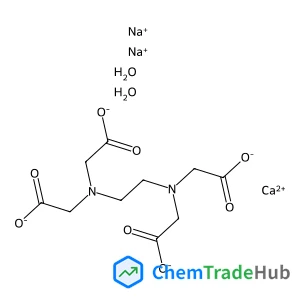
EthylenediaminetetraaceticacidcalciumDisodiumsalthydrate
CAS Number:
23411-34-9
Molecular Formula:
C10H16CaN2Na2O10
Recommended Suppliers






Disclaimer
This page provides academic journal information for reference and research purposes only. We are not affiliated with any journal publishers and do not handle publication submissions. For publication-related inquiries, please contact the respective journal publishers directly.
If you notice any inaccuracies in the information displayed, please contact us at support@chemtradehub.com. We will promptly review and address your concerns.