












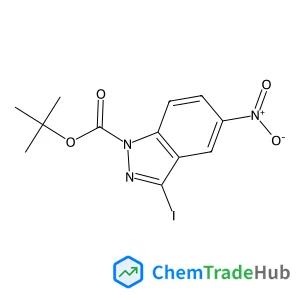
Tert-butyl 3-iodo-5-nitro-1H-indazole-1-carboxylate
CAS Number:
459133-69-8
Molecular Formula:
C12H12IN3O4
Debabrata Sikdar, Shakeeb B. Hasan, Michael Urbakh, Joshua B. Edel, Alexei A. Kornyshev
Mirror-on-mirror platforms based on arrays of metallic nanoparticles, arranged top-down or self-assembled on a thin metallic film, have interesting optical properties. Interaction of localized surface-plasmons in nanoparticles with propagating surface-plasmons in the film underpins the exotic features of such platforms. Here, we present a comprehensive theoretical framework which emulates such a system using a five-layer-stack model and calculate its reflectance, transmittance, and absorbance spectra. The theory rests on dipolar quasi-static approximations incorporating image-forces and effective medium theory. Systematically tested against full-wave simulations, this simple approach proves to be adequate within its obvious applicability limits. It is used to study optical signals as a function of nanoparticle dimensions, interparticle separation, metal film thickness, the gap between the film and nanoparticles, and incident light characteristics. Several peculiar features are found, e.g., quenching of reflectivity in certain frequency domains or shift of the reflectivity spectra. Schemes are proposed to tailor those as functions of the mentioned parameters. Calculating the system's optical responses in seconds, as compared to much longer running simulations, this theory helps to momentarily unravel the role of each system parameter in light reflection, transmission, and absorption, facilitating thereby the design and optimisation of novel mirror-on-mirror systems.
Mohammad G. Al-Shaal, Adam Dzierbinski, Regina Palkovits
DOI: 10.1039/C3GC41803K
Florian Stempfle, Stefan Mecking
DOI: 10.1039/C4GC00114A
Zillillah, Toh Ann Ngu, Zhi Li
DOI: 10.1039/C3GC41379A
Calvin Mukarakate, Xiaodong Zhang, Alexander R. Stanton, David J. Robichaud, Peter N. Ciesielski, Kara Malhotra, Bryon S. Donohoe, Erica Gjersing, Robert J. Evans, David S. Heroux, Ryan Richards, Kristiina Iisa, Mark R. Nimlos
DOI: 10.1039/C3GC42065E
DOI: 10.1039/C3GC42044B
Haoquan Li, Lin He, Helfried Neumann, Matthias Beller, Xiao-Feng Wu
DOI: 10.1039/C3GC42089B
Pierre Y. Dapsens, Cecilia Mondelli, Bright T. Kusema, René Verel, Javier Pérez-Ramírez
DOI: 10.1039/C3GC42353K
DOI: 10.1039/C3GC42640H
Roger A. Sheldon
DOI: 10.1039/C3GC41935E
When handling 4-Methyl-6-(trifluoromethyl)quinoline (CAS: 40716-16-3), safety go...
4-(3,5-Difluorophenyl)aniline is an aromatic organic compound with the CAS numbe...
5-{[4-(Trifluoromethyl)phenyl]sulfanyl}-1,2,3-thiadiazole-4-carboxylic acid can ...
The market for 4-Benzylaniline hydrochloride (CAS: 6317-57-3) is steadily growin...
[3-(Diethylsulfamoyl)phenyl]boronic acid is generally considered safe when handl...
3-Bromo-2,5-dimethoxyaniline is mainly used in the pharmaceutical and chemical i...
N-Methyl-1-(5-methyl-1H-indol-3-yl)methanamine (CAS: 915922-67-7) is subject to ...
This compound is primarily used in the pharmaceutical industry for the synthesis...
2-Methyl-2-propanyl [(1S,3R)-3-aminocyclohexyl]carbamate (CAS: 1298101-47-9) sho...
Ethyl 2-bromo-4,4,4-trifluorobutanoate (CAS: 367-33-9) is utilized in the pharma...

Physical Chemistry Chemical Physics (PCCP) is an international journal co-owned by 19 physical chemistry and physics societies from around the world. This journal publishes original, cutting-edge research in physical chemistry, chemical physics and biophysical chemistry. To be suitable for publication in PCCP, articles must include significant innovation and/or insight into physical chemistry; this is the most important criterion that reviewers and Editors will judge against when evaluating submissions. The journal has a broad scope and welcomes contributions spanning experiment, theory, computation and data science. Topical coverage includes spectroscopy, dynamics, kinetics, statistical mechanics, thermodynamics, electrochemistry, catalysis, surface science, quantum mechanics, quantum computing and machine learning. Interdisciplinary research areas such as polymers and soft matter, materials, nanoscience, energy, surfaces/interfaces, and biophysical chemistry are welcomed if they demonstrate significant innovation and/or insight into physical chemistry. Joined experimental/theoretical studies are particularly appreciated when complementary and based on up-to-date approaches.
![N-{3-[Benzyl(methyl)amino]propyl}-9-chloro-5,6,7,8-tetrahydro-2-acridinecarboxamide structure](https://static.chemtradehub.com/structs/142/1426944-49-1-1e4c.webp "N-{3-[Benzyl(methyl)amino]propyl}-9-chloro-5,6,7,8-tetrahydro-2-acridinecarboxamide structure")
![6,7-Dihydro-5H-pyrrolo[1,2-a]imidazole-6-carboxylic acid structure](https://static.chemtradehub.com/structs/136/1369160-12-2-6524.webp "6,7-Dihydro-5H-pyrrolo[1,2-a]imidazole-6-carboxylic acid structure")
![[3-(2,6-Dichlorophenyl)-5-isopropyl-1,2-oxazol-4-yl]methanol structure](https://static.chemtradehub.com/structs/278/278597-30-1-5c79.webp "[3-(2,6-Dichlorophenyl)-5-isopropyl-1,2-oxazol-4-yl]methanol structure")



