












Cascade synthesis of quinazolinones from 2-aminobenzonitriles and aryl bromides via palladium-catalyzed carbonylation reaction
Literature Information
Publication Date
2013-11-07
DOI
10.1039/C3GC42089B
Impact Factor
10.182
Authors
Haoquan Li, Lin He, Helfried Neumann, Matthias Beller, Xiao-Feng Wu
View Original
Abstract
A cascade synthesis of quinazolinones from 2-aminobenzonitriles and aryl bromides through a palladium-catalyzed carbonylation reaction has been developed. Various quinazolinones were produced in moderate to excellent yields. The reactions go through aminocarbonylation of aryl bromides–hydration of nitriles–cyclization sequence. Notably, all the products were isolated by recrystallization.
Related Literature
Rapid detection of metal impurities on the surfaces of intact objects with irregular shapes using electrochemical mass spectrometry
Lili Song, Jiaquan Xu, Dacai Zhong, Konstantin Chingin, Ying Qu, Huanwen Chen
2019-03-27
Paper
DOI: 10.1039/C8AN02472C
Sensitive detection of antibiotics using aptamer conformation cooperated enzyme-assisted SERS technology
Qianqian Fang, Yingying Li, Xinxing Miao, Yiqiu Zhang, Jun Yan, Tainrong Yu, Jian Liu
2019-05-10
Paper
DOI: 10.1039/C9AN00190E
A chip-based potentiometric sensor for a Zika virus diagnostic using 3D surface molecular imprinting
Vincent Ricotta, Yingjie Yu, Nicholas Clayton, Ya-Chen Chuang, Yantian Wang, Steffen Mueller, Kalle Levon, Marcia Simon, Miriam Rafailovich
2019-06-10
Paper
DOI: 10.1039/C9AN00580C
Correction: A new approach to find biomarkers in chronic fatigue syndrome/myalgic encephalomyelitis (CFS/ME) by single-cell Raman micro-spectroscopy
Jiabao Xu, Michelle Potter, Cara Tomas, Joanna L. Elson, Karl J. Morten, Joanna Poulton, Ning Wang, Hanqing Jin, Zhaoxu Hou, Wei E. Huang
2019-06-07
Correction
DOI: 10.1039/C9AN90055A
Bimetallic plasmonic Au@Ag nanocuboids for rapid and sensitive detection of phthalate plasticizers with label-free surface-enhanced Raman spectroscopy
Xiaoyan Hu, Xinru Wang, Zipan Ge, Le Zhang, Yaru Zhou, Jingya Li, Linfeng Bu, Hengan Wu, Pan Li
2019-04-30
Paper
DOI: 10.1039/C9AN00251K
A novel turn-on fluorescent probe for selective sensing and imaging of glutathione in live cells and organisms
Xiaodong Zhang, Ziqian Wang, Zongwei Guo, Nianzhe He, Peng Liu, Dasha Xia, Xiufen Yan, Zhichao Zhang
2019-03-28
Paper
DOI: 10.1039/C9AN00115H
Systematic analysis of enoxaparins from different sources with online one- and two-dimensional chromatography
Meng Zhu, Xin Wang, Lin Yi, Jawed Fareed, Robert J. Linhardt, Zhenqing Zhang
2019-04-06
Paper
DOI: 10.1039/C9AN00399A
Probing ligand and cation binding sites in G-quadruplex nucleic acids by mass spectrometry and electron photodetachment dissociation sequencing
Dababrata Paul, Adrien Marchand, Frédéric Rosu, Valérie Gabelica
2019-04-09
Paper
DOI: 10.1039/C9AN00398C
A visible-light-driven photoelectrochemical molecularly imprinted sensor based on titanium dioxide nanotube arrays loaded with silver iodide nanoparticles for the sensitive detection of benzoyl peroxide
Li Zhong, Xiuqi Li, Ruilin Liu, Xiaoping Wei, Jianping Li
2019-04-02
Paper
DOI: 10.1039/C9AN00234K
You might also like
Compound Q&A
What precautions should be taken when handling 4-Methyl-6-(trifluoromethyl)quinoline (CAS: 40716-16-3)?
When handling 4-Methyl-6-(trifluoromethyl)quinoline (CAS: 40716-16-3), safety go...
40716-16-34-Methyl-6-(trifluor...
Compound Q&A
What is 4-(3,5-Difluorophenyl)aniline (CAS: 405058-00-6)?
4-(3,5-Difluorophenyl)aniline is an aromatic organic compound with the CAS numbe...
405058-00-64-(3,5-Difluoropheny...
Compound Q&A
How is 5-{[4-(Trifluoromethyl)phenyl]sulfanyl}-1,2,3-thiadiazole-4-carboxylic acid (CAS: 338982-07-3) typically synthesized?
5-{[4-(Trifluoromethyl)phenyl]sulfanyl}-1,2,3-thiadiazole-4-carboxylic acid can ...
338982-07-35-{[4-(Trifluorometh...
Compound Q&A
What is the market or research trend for 4-Benzylaniline hydrochloride (CAS: 6317-57-3)?
The market for 4-Benzylaniline hydrochloride (CAS: 6317-57-3) is steadily growin...
6317-57-34-Benzylaniline hydr...
Compound Q&A
Is [3-(Diethylsulfamoyl)phenyl]boronic acid (CAS: 871329-58-7) safe?
[3-(Diethylsulfamoyl)phenyl]boronic acid is generally considered safe when handl...
871329-58-7[3-(Diethylsulfamoyl...
Compound Q&A
What are the main uses of 3-Bromo-2,5-dimethoxyaniline (CAS: 115929-62-9)?
3-Bromo-2,5-dimethoxyaniline is mainly used in the pharmaceutical and chemical i...
115929-62-93-Bromo-2,5-dimethox...
Compound Q&A
What regulatory guidelines apply to N-Methyl-1-(5-methyl-1H-indol-3-yl)methanamine (CAS: 915922-67-7)?
N-Methyl-1-(5-methyl-1H-indol-3-yl)methanamine (CAS: 915922-67-7) is subject to ...
915922-67-7N-Methyl-1-(5-methyl...
Compound Q&A
What industries use Carbamic acid, N-[(5S)-5,6-diamino-6-oxohexyl]-, 1,1-dimethylethyl ester (CAS: 24828-96-4)?
This compound is primarily used in the pharmaceutical industry for the synthesis...
24828-96-4Carbamic acid, N-[(5...
Compound Q&A
How should 2-Methyl-2-propanyl [(1S,3R)-3-aminocyclohexyl]carbamate (CAS: 1298101-47-9) be stored?
2-Methyl-2-propanyl [(1S,3R)-3-aminocyclohexyl]carbamate (CAS: 1298101-47-9) sho...
1298101-47-92-Methyl-2-propanyl ...
Compound Q&A
What industries use Ethyl 2-bromo-4,4,4-trifluorobutanoate (CAS: 367-33-9)?
Ethyl 2-bromo-4,4,4-trifluorobutanoate (CAS: 367-33-9) is utilized in the pharma...
367-33-9Ethyl 2-bromo-4,4,4-...
Source Journal
Green Chemistry

CiteScore:
16.1
Self-citation Rate:
7.5%
Articles per Year:
944
Green Chemistry provides a unique forum for the publication of innovative research on the development of alternative green and sustainable technologies. The scope of Green Chemistry is based on, but not limited to, the definition proposed by Anastas and Warner (Green Chemistry: Theory and Practice, P T Anastas and J C Warner, Oxford University Press, Oxford, 1998). Green chemistry is the utilisation of a set of principles that reduces or eliminates the use or generation of hazardous substances in the design, manufacture and application of chemical products. Green Chemistry is at the frontiers of this continuously-evolving interdisciplinary science and publishes research that attempts to reduce the environmental impact of the chemical enterprise by developing a technology base that is inherently non-toxic to living things and the environment. Submissions on all aspects of research relating to the endeavour are welcome. The journal publishes original and significant cutting-edge research that is likely to be of wide general appeal. To be published, work must present a significant advance in green chemistry. Papers must contain a comparison with existing methods and demonstrate advantages over those methods before publication can be considered. For more information please see this Editorial. Coverage includes the following, but is not limited to: Design (e.g. biomimicry, design for degradation/recycling/reduced toxicity…) Reagents & Feedstocks (e.g. renewables, CO2, solvents, auxiliary agents, waste utilization…) Synthesis (e.g. organic, inorganic, synthetic biology…) Catalysis (e.g. homogeneous, heterogeneous, enzyme, whole cell…) Process (e.g. process design, intensification, separations, recycling, efficiency…) Energy (e.g. renewable energy, fuels, photovoltaics, fuel cells, energy storage, energy carriers…) Applications (e.g. electronics, dyes, consumer products, coatings, pharmaceuticals, preservatives, building materials, chemicals for industry/agriculture/mining…) Impact (e.g. safety, metrics, LCA, sustainability, (eco)toxicology…) Green chemistry is, by definition, a continuously-evolving frontier. Therefore, the inclusion of a particular material or technology does not, of itself, guarantee that a paper is suitable for the journal. To be suitable, the novel advance should have the potential for reduced environmental impact relative to the state of the art. Green Chemistry does not normally deal with research associated with 'end-of-pipe' or remediation issues.
Recommended Compounds
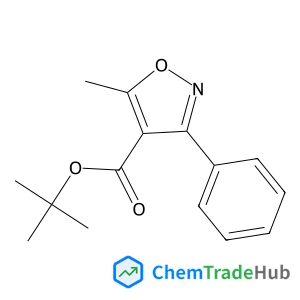
2-Methyl-2-propanyl 5-methyl-3-phenyl-1,2-oxazole-4-carboxylate
CAS Number:
211429-79-7
Molecular Formula:
C15H17NO3
Recommended Suppliers




Disclaimer
This page provides academic journal information for reference and research purposes only. We are not affiliated with any journal publishers and do not handle publication submissions. For publication-related inquiries, please contact the respective journal publishers directly.
If you notice any inaccuracies in the information displayed, please contact us at support@chemtradehub.com. We will promptly review and address your concerns.