












Long-chain aliphatic polyesters from plant oils for injection molding, film extrusion and electrospinning
Literature Information
Publication Date
2014-03-17
DOI
10.1039/C4GC00114A
Impact Factor
10.182
Authors
Florian Stempfle, Stefan Mecking
View Original
Abstract
The polycondensation of long-chain α,ω-diesters with long-chain α,ω-diols, prepared by means of catalytic conversion of plant oils, affords linear aliphatic polyesters. They contain both long crystallizable polyethylene-like hydrocarbon segments and ester moieties in the backbone. In a convenient catalytic one-step process a high-purity polycondensation grade dimethyl-1,19-nonadecanedioate monomer is obtained directly from the technical grade methyl ester of high oleic sunflower oil. Likewise, dimethyl-1,23-tricosanedioate is derived from methyl erucate. The successful scale-up renders both intermediates available on a 100 g scale. Injection molded parts of polyester-19.19 and -23.23 with a number average molecular mass of Mn = 3 × 10⁴ g mol−1 possess an elongation at break of >600% and a Young's modulus of 400 MPa. Electrospinning produces non-woven meshes. The polyesters prepared even enable film extrusion and represent new blend components for a variety of thermoplastics including polyethylene.
Related Literature
A highly sensitive endotoxin sensor based on redox cycling in a nanocavity
Kentaro Ito, Kumi Y. Inoue, Kosuke Ino, Tomokazu Matsue, Hitoshi Shiku
2019-04-24
Paper
DOI: 10.1039/C9AN00478E
Antibody modified gold nanoparticles for fast colorimetric screening of rheumatoid arthritis
Ana Matias, Tomás Calmeiro, Elvira Fortunato, Alexandra R. Fernandes, Pedro Viana Baptista
2019-04-15
Paper
DOI: 10.1039/C9AN00319C
Early and rapid detection of UCHL1 in the serum of brain-trauma patients: a novel gold nanoparticle-based method for diagnosing the severity of brain injury
Gyaninder Pal Singh, Richa Nigam, Gaurav Singh Tomar, Mohan Monisha, Sanjeev Kumar Bhoi, Arulselvi S, Kangana Sengar, Deepa Akula, Prashanth Panta, Roy Anindya
2018-06-12
Paper
DOI: 10.1039/C8AN00533H
The effect of dielectrophoresis on living cells: crossover frequencies and deregulation in gene expression
Vahé Nerguizian, Ion Stiharu, Nosayba Al-Azzam, Bader Yassine-Diab
2019-04-23
Paper
DOI: 10.1039/C9AN00320G
Standardization of PGC-LC-MS-based glycomics for sample specific glycotyping
Brian Pratt, Brendan X. MacLean
2019-05-07
Paper
DOI: 10.1039/C9AN00486F
Electrogenerated chemiluminescence at a 9,10-diphenylanthracene/polyvinyl butyral film modified electrode with a tetraphenylborate coreactant
Guobao Xu
2018-06-08
Paper
DOI: 10.1039/C8AN00889B
R-phycoerythrin proteins@ZIF-8 composite thin films for mercury ion detection
Xiaobin Wang, Zhishan Fang, Zhuoyi Li, Wen Ying, Danke Chen, Haiping He, Xinsheng Peng
2019-05-06
Paper
DOI: 10.1039/C9AN00449A
You might also like
Compound Q&A
What precautions should be taken when handling 4-Methyl-6-(trifluoromethyl)quinoline (CAS: 40716-16-3)?
When handling 4-Methyl-6-(trifluoromethyl)quinoline (CAS: 40716-16-3), safety go...
40716-16-34-Methyl-6-(trifluor...
Compound Q&A
What is 4-(3,5-Difluorophenyl)aniline (CAS: 405058-00-6)?
4-(3,5-Difluorophenyl)aniline is an aromatic organic compound with the CAS numbe...
405058-00-64-(3,5-Difluoropheny...
Compound Q&A
How is 5-{[4-(Trifluoromethyl)phenyl]sulfanyl}-1,2,3-thiadiazole-4-carboxylic acid (CAS: 338982-07-3) typically synthesized?
5-{[4-(Trifluoromethyl)phenyl]sulfanyl}-1,2,3-thiadiazole-4-carboxylic acid can ...
338982-07-35-{[4-(Trifluorometh...
Compound Q&A
What is the market or research trend for 4-Benzylaniline hydrochloride (CAS: 6317-57-3)?
The market for 4-Benzylaniline hydrochloride (CAS: 6317-57-3) is steadily growin...
6317-57-34-Benzylaniline hydr...
Compound Q&A
Is [3-(Diethylsulfamoyl)phenyl]boronic acid (CAS: 871329-58-7) safe?
[3-(Diethylsulfamoyl)phenyl]boronic acid is generally considered safe when handl...
871329-58-7[3-(Diethylsulfamoyl...
Compound Q&A
What are the main uses of 3-Bromo-2,5-dimethoxyaniline (CAS: 115929-62-9)?
3-Bromo-2,5-dimethoxyaniline is mainly used in the pharmaceutical and chemical i...
115929-62-93-Bromo-2,5-dimethox...
Compound Q&A
What regulatory guidelines apply to N-Methyl-1-(5-methyl-1H-indol-3-yl)methanamine (CAS: 915922-67-7)?
N-Methyl-1-(5-methyl-1H-indol-3-yl)methanamine (CAS: 915922-67-7) is subject to ...
915922-67-7N-Methyl-1-(5-methyl...
Compound Q&A
What industries use Carbamic acid, N-[(5S)-5,6-diamino-6-oxohexyl]-, 1,1-dimethylethyl ester (CAS: 24828-96-4)?
This compound is primarily used in the pharmaceutical industry for the synthesis...
24828-96-4Carbamic acid, N-[(5...
Compound Q&A
How should 2-Methyl-2-propanyl [(1S,3R)-3-aminocyclohexyl]carbamate (CAS: 1298101-47-9) be stored?
2-Methyl-2-propanyl [(1S,3R)-3-aminocyclohexyl]carbamate (CAS: 1298101-47-9) sho...
1298101-47-92-Methyl-2-propanyl ...
Compound Q&A
What industries use Ethyl 2-bromo-4,4,4-trifluorobutanoate (CAS: 367-33-9)?
Ethyl 2-bromo-4,4,4-trifluorobutanoate (CAS: 367-33-9) is utilized in the pharma...
367-33-9Ethyl 2-bromo-4,4,4-...
Source Journal
Green Chemistry

CiteScore:
16.1
Self-citation Rate:
7.5%
Articles per Year:
944
Green Chemistry provides a unique forum for the publication of innovative research on the development of alternative green and sustainable technologies. The scope of Green Chemistry is based on, but not limited to, the definition proposed by Anastas and Warner (Green Chemistry: Theory and Practice, P T Anastas and J C Warner, Oxford University Press, Oxford, 1998). Green chemistry is the utilisation of a set of principles that reduces or eliminates the use or generation of hazardous substances in the design, manufacture and application of chemical products. Green Chemistry is at the frontiers of this continuously-evolving interdisciplinary science and publishes research that attempts to reduce the environmental impact of the chemical enterprise by developing a technology base that is inherently non-toxic to living things and the environment. Submissions on all aspects of research relating to the endeavour are welcome. The journal publishes original and significant cutting-edge research that is likely to be of wide general appeal. To be published, work must present a significant advance in green chemistry. Papers must contain a comparison with existing methods and demonstrate advantages over those methods before publication can be considered. For more information please see this Editorial. Coverage includes the following, but is not limited to: Design (e.g. biomimicry, design for degradation/recycling/reduced toxicity…) Reagents & Feedstocks (e.g. renewables, CO2, solvents, auxiliary agents, waste utilization…) Synthesis (e.g. organic, inorganic, synthetic biology…) Catalysis (e.g. homogeneous, heterogeneous, enzyme, whole cell…) Process (e.g. process design, intensification, separations, recycling, efficiency…) Energy (e.g. renewable energy, fuels, photovoltaics, fuel cells, energy storage, energy carriers…) Applications (e.g. electronics, dyes, consumer products, coatings, pharmaceuticals, preservatives, building materials, chemicals for industry/agriculture/mining…) Impact (e.g. safety, metrics, LCA, sustainability, (eco)toxicology…) Green chemistry is, by definition, a continuously-evolving frontier. Therefore, the inclusion of a particular material or technology does not, of itself, guarantee that a paper is suitable for the journal. To be suitable, the novel advance should have the potential for reduced environmental impact relative to the state of the art. Green Chemistry does not normally deal with research associated with 'end-of-pipe' or remediation issues.
Recommended Compounds
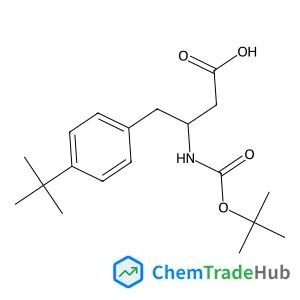
(S)-3-((tert-Butoxycarbonyl)amino)-4-(4-(tert-butyl)phenyl)butanoic acid
CAS Number:
403661-85-8
Molecular Formula:
C19H29NO4
![6,7-Dihydro-5H-pyrrolo[1,2-a]imidazole-6-carboxylic acid structure](https://static.chemtradehub.com/structs/136/1369160-12-2-6524.webp "6,7-Dihydro-5H-pyrrolo[1,2-a]imidazole-6-carboxylic acid structure")
6,7-Dihydro-5H-pyrrolo[1,2-a]imidazole-6-carboxylic acid
CAS Number:
1369160-12-2
Molecular Formula:
C7H8N2O2
Recommended Suppliers




Disclaimer
This page provides academic journal information for reference and research purposes only. We are not affiliated with any journal publishers and do not handle publication submissions. For publication-related inquiries, please contact the respective journal publishers directly.
If you notice any inaccuracies in the information displayed, please contact us at support@chemtradehub.com. We will promptly review and address your concerns.