












![Ethyl thieno[3,2-f]quinoline-2-carboxylate structure](https://static.chemtradehub.com/structs/299/29948-26-3-f62b.webp "Ethyl thieno[3,2-f]quinoline-2-carboxylate structure")
Low-field thermal mixing in [1-13C] pyruvic acid for brute-force hyperpolarization
Literature Information
Publication Date
2016-06-24
DOI
10.1039/C6CP02853E
Impact Factor
3.676
Authors
David T. Peat, Matthew L. Hirsch, David G. Gadian, Anthony J. Horsewill, John R. Owers-Bradley, James G. Kempf
View Original
Abstract
We detail the process of low-field thermal mixing (LFTM) between 1H and 13C nuclei in neat [1-13C] pyruvic acid at cryogenic temperatures (4–15 K). Using fast-field-cycling NMR, 1H nuclei in the molecule were polarized at modest high field (2 T) and then equilibrated with 13C nuclei by fast cycling (∼300–400 ms) to a low field (0–300 G) that activates thermal mixing. The 13C NMR spectrum was recorded after fast cycling back to 2 T. The 13C signal derives from 1H polarization via LFTM, in which the polarized (‘cold’) proton bath contacts the unpolarised (‘hot’) 13C bath at a field so low that Zeeman and dipolar interactions are similar-sized and fluctuations in the latter drive 1H–13C equilibration. By varying mixing time (tmix) and field (Bmix), we determined field-dependent rates of polarization transfer (1/τ) and decay (1/T1m) during mixing. This defines conditions for effective mixing, as utilized in ‘brute-force’ hyperpolarization of low-γ nuclei like 13C using Boltzmann polarization from nearby protons. For neat pyruvic acid, near-optimum mixing occurs for tmix ∼ 100–300 ms and Bmix ∼ 30–60 G. Three forms of frozen neat pyruvic acid were tested: two glassy samples, (one well-deoxygenated, the other O2-exposed) and one sample pre-treated by annealing (also well-deoxygenated). Both annealing and the presence of O2 are known to dramatically alter high-field longitudinal relaxation (T1) of 1H and 13C (up to 102–103-fold effects). Here, we found smaller, but still critical factors of ∼(2–5)× on both τ and T1m. Annealed, well-deoxygenated samples exhibit the longest time constants, e.g., τ ∼ 30–70 ms and T1m ∼ 1–20 s, each growing vs. Bmix. Mixing ‘turns off’ for Bmix > ∼100 G. That T1m ≫ τ is consistent with earlier success with polarization transfer from 1H to 13C by LFTM.
Related Literature
Manganese(iii)-mediated selective phosphorylation of enamides: direct synthesis of β-phosphoryl enamides
Dong-Liang Zhang, Cheng-Kun Li, Run-Sheng Zeng, Adedamola Shoberu, Jian-Ping Zou
2018-12-12
Research Article
DOI: 10.1039/C8QO01098F
DDQ-mediated regioselective C–S bond formation: efficient access to allylic sulfides
Chunsheng Li, Jianxiao Li, Chaowei Tan, Wanqing Wu, Huanfeng Jiang
2018-09-18
Research Article
DOI: 10.1039/C8QO00799C
Transition-metal-free cleavage of C–C double bonds: a three-component reaction of aromatic alkenes with S8 and amides towards aryl thioamides‡
Zhanghong Guo, Kai Xu, Shuangshuang Hui, Xiaofang Zhao, Yangjie Wu
2018-10-05
Research Article
DOI: 10.1039/C8QO00835C
Syntheses of 2-(2,2,2-trifluoroethylidene)/(2,2-difluoroethyl)-1,3-dicarbonyl compounds and their fungicidal activities
Yueji Chen, Yi You, Zhiqiang Weng
2018-12-07
Research Article
DOI: 10.1039/C8QO01118D
Cationic iridium-catalyzed C–H alkylation of 2-substituted pyridine N-oxides with acrylates‡
Hideaki Takano
2015-02-11
Research Article
DOI: 10.1039/C4QO00355A
CO-enabled rhenium hydride catalyst for directed C(sp2)–H bond alkylation with olefins‡
Hongming Jin, Zhengbo Zhu, Ning Jin, Jin Xie, Yixiang Cheng
2015-02-03
Research Article
DOI: 10.1039/C4QO00329B
A highly stereo-controlled protocol to prepare pipecolic acids based on Heck and cyclohydrocarbonylation reactions‡
Giada Arena, Elena Cini, Elena Petricci, Rosario Randino, Maurizio Taddei
2015-03-09
Research Article
DOI: 10.1039/C5QO00025D
You might also like
Compound Q&A
Is 2-(2-chloroacetamido)-3-phenylpropanoic acid (CAS: 7765-11-9) safe?
2-(2-Chloroacetamido)-3-phenylpropanoic acid (CAS: 7765-11-9) is generally consi...
7765-11-92-(2-chloroacetamido...
Compound Q&A
Is 2-(Benzyloxy)-5-bromobenzoic acid (CAS: 62176-31-2) safe?
2-(Benzyloxy)-5-bromobenzoic acid can be handled safely if appropriate precautio...
62176-31-22-(Benzyloxy)-5-brom...
Compound Q&A
What is (4-Methyl-1,2,5-oxadiazol-3-yl)methanamine hydrochloride (CAS: 1159825-48-5)?
(4-Methyl-1,2,5-oxadiazol-3-yl)methanamine hydrochloride is a chemical compound ...
1159825-48-5(4-Methyl-1,2,5-oxad...
Compound Q&A
What is 2-(5-Hexylthiophen-2-yl)-4,4,5,5-tetramethyl-1,3,2-dioxaborolane (CAS: 917985-54-7)?
2-(5-Hexylthiophen-2-yl)-4,4,5,5-tetramethyl-1,3,2-dioxaborolane (CAS: 917985-54...
917985-54-72-(5-Hexylthiophen-2...
Compound Q&A
Are there alternatives to 4-(8-Methyl-9H-1,3-dioxolo[4,5-h][2,3]benzodiazepin-5-yl)benzenamine (CAS: 102771-26-6) in synthesis?
While 4-(8-Methyl-9H-1,3-dioxolo[4,5-h][2,3]benzodiazepin-5-yl)benzenamine (CAS:...
102771-26-64-(8-Methyl-9H-1,3-d...
Compound Q&A
What is the market or research trend for tert-butyl 3-hydroxy-4,5,7,8-tetrahydro-2H-pyrazolo[3,4-d]azepine-6-carboxylate (CAS: 851376-80-2)?
The market for tert-butyl 3-hydroxy-4,5,7,8-tetrahydro-2H-pyrazolo[3,4-d]azepine...
851376-80-2tert-butyl 3-hydroxy...
Compound Q&A
How should waste containing 3,5-Diamino-1H-pyrazole-4-carbonitrile (CAS: 6844-58-2) be handled?
Waste containing 3,5-Diamino-1H-pyrazole-4-carbonitrile (CAS: 6844-58-2) should ...
6844-58-23,5-Diamino-1H-pyraz...
Compound Q&A
How is (6-Fluoro-3-pyridinyl)boronic acid (CAS: 351019-18-6) typically synthesized?
(6-Fluoro-3-pyridinyl)boronic acid can be synthesized through the reaction of 6-...
351019-18-6(6-Fluoro-3-pyridiny...
Compound Q&A
What industries use Dibenzyl carbonimidoylbiscarbamate (CAS: 10065-79-9)?
Dibenzyl carbonimidoylbiscarbamate (CAS: 10065-79-9) finds applications in vario...
10065-79-9Dibenzyl carbonimido...
Compound Q&A
What is the market or research trend for (beta,beta,2,3,4,5,6-~2~H_7_)Phenylalanine (CAS: 74228-83-4)?
The market for (beta,beta,2,3,4,5,6-~2~H_7_)Phenylalanine (CAS: 74228-83-4) is g...
74228-83-4(beta,beta,2,3,4,5,6...
Source Journal
Physical Chemistry Chemical Physics

CiteScore:
5.5
Self-citation Rate:
10.3%
Articles per Year:
3036
Physical Chemistry Chemical Physics (PCCP) is an international journal co-owned by 19 physical chemistry and physics societies from around the world. This journal publishes original, cutting-edge research in physical chemistry, chemical physics and biophysical chemistry. To be suitable for publication in PCCP, articles must include significant innovation and/or insight into physical chemistry; this is the most important criterion that reviewers and Editors will judge against when evaluating submissions. The journal has a broad scope and welcomes contributions spanning experiment, theory, computation and data science. Topical coverage includes spectroscopy, dynamics, kinetics, statistical mechanics, thermodynamics, electrochemistry, catalysis, surface science, quantum mechanics, quantum computing and machine learning. Interdisciplinary research areas such as polymers and soft matter, materials, nanoscience, energy, surfaces/interfaces, and biophysical chemistry are welcomed if they demonstrate significant innovation and/or insight into physical chemistry. Joined experimental/theoretical studies are particularly appreciated when complementary and based on up-to-date approaches.
Recommended Compounds
![(1S)-1,5-Anhydro-2-O-alpha-L-arabinopyranosyl-1-[5-hydroxy-7-({6-O-[3-(4-hydroxy-3-methoxyphenyl)propanoyl]-beta-D-glucopyranosyl}oxy)-2-(4-hydroxyphenyl)-4-oxo-4H-chromen-6-yl]-D-glucitol structure](https://static.chemtradehub.com/structs/225/2252345-81-4-bcff.webp "(1S)-1,5-Anhydro-2-O-alpha-L-arabinopyranosyl-1-[5-hydroxy-7-({6-O-[3-(4-hydroxy-3-methoxyphenyl)propanoyl]-beta-D-glucopyranosyl}oxy)-2-(4-hydroxyphenyl)-4-oxo-4H-chromen-6-yl]-D-glucitol structure")
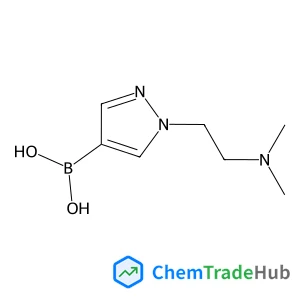
(1-(2-(Dimethylamino)ethyl)-1H-pyrazol-4-yl)boronic acid
CAS Number:
1086063-73-1
Molecular Formula:
C7H14BN3O2
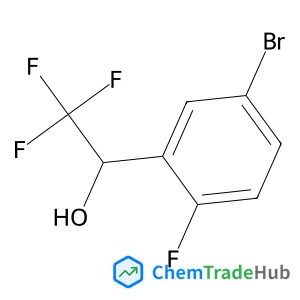
1-(5-Bromo-2-fluorophenyl)-2,2,2-trifluoroethanol
CAS Number:
1039827-16-1
Molecular Formula:
C8H5BrF4O
Recommended Suppliers







Disclaimer
This page provides academic journal information for reference and research purposes only. We are not affiliated with any journal publishers and do not handle publication submissions. For publication-related inquiries, please contact the respective journal publishers directly.
If you notice any inaccuracies in the information displayed, please contact us at support@chemtradehub.com. We will promptly review and address your concerns.