












A comparison of the experimental and theoretical charge density distributions in two polymorphic modifications of piroxicam
Literature Information
Publication Date
2016-10-10
DOI
10.1039/C6CP02690G
Impact Factor
3.676
Authors
Felcia Lai, Jonathan J. Du, Linda Váradi, Daniel Baker, Paul W. Groundwater, Jacob Overgaard, James A. Platts, David E. Hibbs
View Original
Abstract
Experimental charge density distribution studies of two polymorphic forms of piroxicam, β-piroxicam (1) and piroxicam monohydrate (2), were carried out via high-resolution single crystal X-ray diffraction experiments and multipole refinement. The asymmetric unit of (2) consists of two discrete piroxicam molecules, (2a) and (2b), and two water molecules. Geometry differs between (1) and (2) due to the zwitterionic nature of (2) which results in the rotation of the pyridine ring around the C(10)–N(2) bond by approximately 180°. Consequently, the pyridine and amide are no longer co-planar and (2) forms two exclusive, strong hydrogen bonds, H(3)⋯O(4) and H(2)⋯O(3), with bond energies of 66.14 kJ mol−1 and 112.82 kJ mol−1 for (2a), and 58.35 kJ mol−1 and 159.51 kJ mol−1 for (2b), respectively. Proton transfer between O(3) and N(3) in (2) results in significant differences in surface electrostatic potentials. This is clarified by the calculation of atomic charges in the zwitterion that shows the formally positive charge of the pyridyl nitrogen which is redistributed over the whole of the pyridine ring instead of concentrating at N–H. Similarly, the negative charge of the oxygen is distributed across the benzothiazine carboxamide moiety. The multipole derived lattice energy for (1) is −304 kJ mol−1 and that for (2) is −571 kJ mol−1, which is in agreement with the experimentally determined observations of higher solubility and dissolution rates of (1) compared to (2).
Recommended Journals
Related Literature
Metal doped armchair graphene nanoribbons: electronic structure, carrier mobility and device properties
J. N. Han, X. He, Z. Q. Fan, Z. H. Zhang
2018-12-20
Paper
DOI: 10.1039/C8CP06471G
Electrokinetic ion transport in an asymmetric double-gated nanochannel with a pH-tunable zwitterionic surface
Yu-Min Chen, Chih-Yuan Lin, Shiojenn Tseng
2019-03-18
Paper
DOI: 10.1039/C9CP00266A
De novo prediction of cross-effect efficiency for magic angle spinning dynamic nuclear polarization
Anne-Laure Barra, Johan van Tol, Sabine Hediger, Daniel Lee, Gaël De Paëpe
2019-01-03
Paper
DOI: 10.1039/C8CP06819D
A molecular dynamics study on glucose molecular recognition by a non-enzymatic selective sensor based on a conducting polymer
David Zanuy, Carlos A. Ferreira
2019-03-25
Paper
DOI: 10.1039/C9CP00567F
Thermochemistry of germanium and organogermanium compounds
Rosa Becerra, Robin Walsh
2018-11-28
Perspective
DOI: 10.1039/C8CP06208K
Ferrocenes with simple chiral substituents: an in-depth theoretical and experimental VCD and ECD study
Angela Patti, Sonia Pedotti, Giuseppe Mazzeo, Giovanna Longhi, Sergio Abbate, Lorenzo Paoloni, Sergio Rampino, Vincenzo Barone
2019-04-10
Paper
DOI: 10.1039/C9CP00437H
Crystallization kinetics of thin water films on Pt(111): effects of oxygen and carbon-monoxide adspecies
Takashi Aizawa
2019-01-04
Paper
DOI: 10.1039/C8CP06438E
Hysteresis and its impact on characterization of mechanical properties of suspended monolayer molybdenum-disulfide sheets
Haosheng Pang, Peng Huang, Weirong Zhuo, Chenghui Gao, Dan Guo
2019-03-01
Paper
DOI: 10.1039/C8CP07158F
Electronic transport properties and magnetoresistance in the Fe3O4/SiO2/p-Si heterostructure with an in-plane current geometry
Xiang Liu, Wenbo Mi
2019-03-06
Paper
DOI: 10.1039/C9CP00033J
You might also like
Compound Q&A
Are there alternatives to 1-(4-Chlorophenyl)-N-hydroxymethanimine (CAS: 3848-36-0) in synthesis?
When considering alternatives to 1-(4-Chlorophenyl)-N-hydroxymethanimine (CAS: 3...
3848-36-01-(4-Chlorophenyl)-N...
Compound Q&A
How should (1R,9S,10S,12S,14E,16S,19R,20R,21S,22R)-3,9,21-Trihydroxy-5,10,12,14,16,20,22-heptamethyl-23,24-dioxatetracyclo[17.3.1.1~6,9~.0~2,7~]tetracosa-2,5,7,14-tetraen-4-one (CAS: 183202-73-5) be stored?
This compound should be stored in a cool, dry place away from direct sunlight. I...
183202-73-5(1R,9S,10S,12S,14E,1...
Compound Q&A
How is 3-(4-Bromophenyl)-5-(2-fluorophenyl)-1,2,4-oxadiazole (CAS: 419553-16-5) typically synthesized?
3-(4-Bromophenyl)-5-(2-fluorophenyl)-1,2,4-oxadiazole is synthesized through a m...
419553-16-53-(4-Bromophenyl)-5-...
Compound Q&A
How is 5-Chloro-2-(4-chlorophenyl)-4-methyl-6-[3-(1-piperidinyl)propoxy]pyrimidine (CAS: 1639220-19-1) typically synthesized?
5-Chloro-2-(4-chlorophenyl)-4-methyl-6-[3-(1-piperidinyl)propoxy]pyrimidine (CAS...
1639220-19-15-Chloro-2-(4-chloro...
Compound Q&A
What industries use 2-Chloro-4-(difluoromethoxy)pyridine (CAS: 1206978-15-5)?
2-Chloro-4-(difluoromethoxy)pyridine is used in the pharmaceutical industry for ...
1206978-15-52-Chloro-4-(difluoro...
Compound Q&A
What regulatory guidelines apply to 3-Chloro-6-methylpyridazine (CAS: 1121-79-5)?
3-Chloro-6-methylpyridazine (CAS: 1121-79-5) is classified under the Globally Ha...
1121-79-53-Chloro-6-methylpyr...
Compound Q&A
Are there alternatives to Methyl 4,5-dimethyl-2-nitrobenzoate in synthesis?
Several alternatives can be used in the synthesis of Methyl 4,5-dimethyl-2-nitro...
90922-74-0Methyl 4,5-dimethyl-...
Compound Q&A
Are there alternatives to (2E,2'E)-3,3'-(1,4-Phenylene)bisacrylaldehyde in synthesis?
Alternatives to (2E,2'E)-3,3'-(1,4-Phenylene)bisacrylaldehyde include other acry...
63405-68-5(2E,2'E)-3,3'-(1,4-P...
Compound Q&A
What is 3-Amino-5-chloropyridin-2-ol hydrochloride (CAS: 1261906-29-9)?
3-Amino-5-chloropyridin-2-ol hydrochloride is an organic compound with the CAS n...
1261906-29-93-Amino-5-chloropyri...
Compound Q&A
What precautions should be taken when handling 6,7-Difluoro-2,3-dihydro-4H-chromen-4-one (CAS: 1092349-93-3)?
When handling 6,7-Difluoro-2,3-dihydro-4H-chromen-4-one, it is essential to wear...
1092349-93-36,7-Difluoro-2,3-dih...
Source Journal
Physical Chemistry Chemical Physics

CiteScore:
5.5
Self-citation Rate:
10.3%
Articles per Year:
3036
Physical Chemistry Chemical Physics (PCCP) is an international journal co-owned by 19 physical chemistry and physics societies from around the world. This journal publishes original, cutting-edge research in physical chemistry, chemical physics and biophysical chemistry. To be suitable for publication in PCCP, articles must include significant innovation and/or insight into physical chemistry; this is the most important criterion that reviewers and Editors will judge against when evaluating submissions. The journal has a broad scope and welcomes contributions spanning experiment, theory, computation and data science. Topical coverage includes spectroscopy, dynamics, kinetics, statistical mechanics, thermodynamics, electrochemistry, catalysis, surface science, quantum mechanics, quantum computing and machine learning. Interdisciplinary research areas such as polymers and soft matter, materials, nanoscience, energy, surfaces/interfaces, and biophysical chemistry are welcomed if they demonstrate significant innovation and/or insight into physical chemistry. Joined experimental/theoretical studies are particularly appreciated when complementary and based on up-to-date approaches.
Recommended Compounds
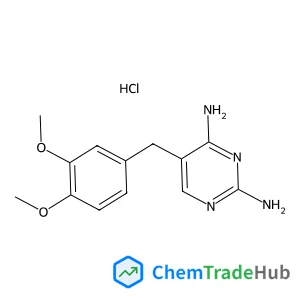
5-(3,4-Dimethoxybenzyl)-2,4-pyrimidinediamine hydrochloride (1:1)
CAS Number:
2507-23-5
Molecular Formula:
C13H17ClN4O2
Recommended Suppliers



Disclaimer
This page provides academic journal information for reference and research purposes only. We are not affiliated with any journal publishers and do not handle publication submissions. For publication-related inquiries, please contact the respective journal publishers directly.
If you notice any inaccuracies in the information displayed, please contact us at support@chemtradehub.com. We will promptly review and address your concerns.