












Hysteresis and its impact on characterization of mechanical properties of suspended monolayer molybdenum-disulfide sheets
Literature Information
Publication Date
2019-03-01
DOI
10.1039/C8CP07158F
Impact Factor
3.676
Authors
Haosheng Pang, Peng Huang, Weirong Zhuo, Chenghui Gao, Dan Guo
View Original
Abstract
The hysteresis phenomenon frequently arises in two-dimensional (2D) material nanoindentation, which is generally expected to be excluded from characterizing the elastic properties due to the imperfect elastic behaviour. However, the underlying mechanism of hysteresis and its effect on the characterization of the mechanical properties of 2D materials remain unclear. Cyclic loadings are exerted on the suspended monolayer molybdenum-disulfide (MoS2) films in atomic force microscopy (AFM) nanoindentation experiments. The elastic hysteresis loops are observed for most of the force–displacement curves. The friction/wear between the AFM silicon tip and the MoS2 monolayer is deemed to be dominant compared to the friction between the monolayer and the silicon dioxide substrate after the analysis, as determined using the finite element method (FEM) simulation. The loading force–displacement curves instead of the unloading curves have been used to deduce the elastic mechanical properties using a modified regression equation. The mean value of the obtained Young's modulus of monolayer MoS2, E, is equal to 209 ± 18 GPa, which is close to the inherent stiffness value, predicted by first principles calculation. Our results have confirmed that it is not obligatory to exclude the sample data with hysteresis behaviour for characterizing the elastic properties of 2D materials. In addition, all sample sheets have finally been penetrated and the mean breaking stress value, σmax, is 36.6 ± 0.9 GPa, determined using the radius value of the worn tip. Furthermore, the effect of the loading force and the shape/size of the suspended monolayer MoS2 sheets on the hysteresis behaviour in the 2D nanoindentation have also been analyzed and discussed, exhibiting interesting trends. Our findings provide guidance for the characterization of the mechanical properties of 2D materials using the AFM nanoindentation and the experimental samples with elastic hysteresis behaviour.
Related Literature
Synthesis of para-sulfonatocalix[4]arene-modified silver nanoparticles as colorimetric histidine probes
Dejun Xiong, Mingliang Chen, Haibing Li
2007-12-18
Communication
DOI: 10.1039/B716270G
Nickeladihydrofuran. Key intermediate for nickel-catalyzed reaction of alkyne and aldehyde
Sensuke Ogoshi, Tomoya Arai, Masato Ohashi, Hideo Kurosawa
2008-01-21
Communication
DOI: 10.1039/B717261C
Enzyme catalytic membrane based on a hybrid mesoporous membrane
Wensheng Fu, Hideaki Kaneda, Norio Teramae
2007-12-18
Communication
DOI: 10.1039/B717094G
Amorphous oxide as a novel efficient catalyst for direct selective oxidation of methanol to dimethoxymethane
Sébastien Royer, Xavier Sécordel, Markus Brandhorst, Franck Dumeignil, Sylvain Cristol, Christophe Dujardin, Mickaël Capron, Edmond Payen, Jean-Luc Dubois
2007-12-20
Communication
DOI: 10.1039/B714260A
Fabrication of zeolite-4A membranes on a catalyst particle level
Yijun Zhong, Mengfei Luo, Yunlong Xie, Weidong Zhu
2006-06-05
Communication
DOI: 10.1039/B603128E
m-Benziporphodimethene: a new porphyrin analogue fluorescence zinc(ii) sensor
Chen-Hsiung Hung, Gao-Fong Chang, Anil Kumar, Geng-Fong Lin, Wei-Min Ching, Eric Wei-Guang Diau
2007-12-21
Communication
DOI: 10.1039/B714412A
Direct synthesis of the 1,2,3-[C6H4PPP]− anion, isoelectronic with the indenyl anion [C6H4CHCHCH]−
Felipe García, Robert J. Less, Vesal Naseri, Mary McPartlin, Jeremy M. Rawson, Maria Sancho Tomas, Dominic S. Wright
2008-01-15
Communication
DOI: 10.1039/B718425E
Towards technomimetic spoked wheels: dynamic hexakis-heteroleptic coordination at a hexakis-terpyridine scaffold
Michael Schmittel, Prasenjit Mal
2008-01-09
Communication
DOI: 10.1039/B718185J
High capacity carbon-coated Si70Sn30 nanoalloys for lithium battery anode material
YooJeong Kwon, Jaephil Cho
2008-01-02
Communication
DOI: 10.1039/B716694J
You might also like
Compound Q&A
Are there alternatives to 1-(4-Chlorophenyl)-N-hydroxymethanimine (CAS: 3848-36-0) in synthesis?
When considering alternatives to 1-(4-Chlorophenyl)-N-hydroxymethanimine (CAS: 3...
3848-36-01-(4-Chlorophenyl)-N...
Compound Q&A
How should (1R,9S,10S,12S,14E,16S,19R,20R,21S,22R)-3,9,21-Trihydroxy-5,10,12,14,16,20,22-heptamethyl-23,24-dioxatetracyclo[17.3.1.1~6,9~.0~2,7~]tetracosa-2,5,7,14-tetraen-4-one (CAS: 183202-73-5) be stored?
This compound should be stored in a cool, dry place away from direct sunlight. I...
183202-73-5(1R,9S,10S,12S,14E,1...
Compound Q&A
How is 3-(4-Bromophenyl)-5-(2-fluorophenyl)-1,2,4-oxadiazole (CAS: 419553-16-5) typically synthesized?
3-(4-Bromophenyl)-5-(2-fluorophenyl)-1,2,4-oxadiazole is synthesized through a m...
419553-16-53-(4-Bromophenyl)-5-...
Compound Q&A
How is 5-Chloro-2-(4-chlorophenyl)-4-methyl-6-[3-(1-piperidinyl)propoxy]pyrimidine (CAS: 1639220-19-1) typically synthesized?
5-Chloro-2-(4-chlorophenyl)-4-methyl-6-[3-(1-piperidinyl)propoxy]pyrimidine (CAS...
1639220-19-15-Chloro-2-(4-chloro...
Compound Q&A
What industries use 2-Chloro-4-(difluoromethoxy)pyridine (CAS: 1206978-15-5)?
2-Chloro-4-(difluoromethoxy)pyridine is used in the pharmaceutical industry for ...
1206978-15-52-Chloro-4-(difluoro...
Compound Q&A
What regulatory guidelines apply to 3-Chloro-6-methylpyridazine (CAS: 1121-79-5)?
3-Chloro-6-methylpyridazine (CAS: 1121-79-5) is classified under the Globally Ha...
1121-79-53-Chloro-6-methylpyr...
Compound Q&A
Are there alternatives to Methyl 4,5-dimethyl-2-nitrobenzoate in synthesis?
Several alternatives can be used in the synthesis of Methyl 4,5-dimethyl-2-nitro...
90922-74-0Methyl 4,5-dimethyl-...
Compound Q&A
Are there alternatives to (2E,2'E)-3,3'-(1,4-Phenylene)bisacrylaldehyde in synthesis?
Alternatives to (2E,2'E)-3,3'-(1,4-Phenylene)bisacrylaldehyde include other acry...
63405-68-5(2E,2'E)-3,3'-(1,4-P...
Compound Q&A
What is 3-Amino-5-chloropyridin-2-ol hydrochloride (CAS: 1261906-29-9)?
3-Amino-5-chloropyridin-2-ol hydrochloride is an organic compound with the CAS n...
1261906-29-93-Amino-5-chloropyri...
Compound Q&A
What precautions should be taken when handling 6,7-Difluoro-2,3-dihydro-4H-chromen-4-one (CAS: 1092349-93-3)?
When handling 6,7-Difluoro-2,3-dihydro-4H-chromen-4-one, it is essential to wear...
1092349-93-36,7-Difluoro-2,3-dih...
Source Journal
Physical Chemistry Chemical Physics

CiteScore:
5.5
Self-citation Rate:
10.3%
Articles per Year:
3036
Physical Chemistry Chemical Physics (PCCP) is an international journal co-owned by 19 physical chemistry and physics societies from around the world. This journal publishes original, cutting-edge research in physical chemistry, chemical physics and biophysical chemistry. To be suitable for publication in PCCP, articles must include significant innovation and/or insight into physical chemistry; this is the most important criterion that reviewers and Editors will judge against when evaluating submissions. The journal has a broad scope and welcomes contributions spanning experiment, theory, computation and data science. Topical coverage includes spectroscopy, dynamics, kinetics, statistical mechanics, thermodynamics, electrochemistry, catalysis, surface science, quantum mechanics, quantum computing and machine learning. Interdisciplinary research areas such as polymers and soft matter, materials, nanoscience, energy, surfaces/interfaces, and biophysical chemistry are welcomed if they demonstrate significant innovation and/or insight into physical chemistry. Joined experimental/theoretical studies are particularly appreciated when complementary and based on up-to-date approaches.
Recommended Compounds


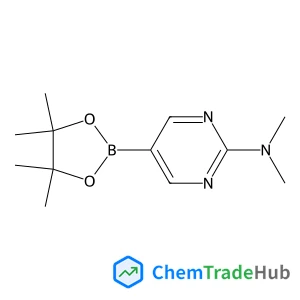
N,N-Dimethyl-5-(4,4,5,5-tetramethyl-1,3,2-dioxaborolan-2-yl)-2-pyrimidinamine
CAS Number:
1032759-30-0
Molecular Formula:
C12H20BN3O2
Recommended Suppliers





Disclaimer
This page provides academic journal information for reference and research purposes only. We are not affiliated with any journal publishers and do not handle publication submissions. For publication-related inquiries, please contact the respective journal publishers directly.
If you notice any inaccuracies in the information displayed, please contact us at support@chemtradehub.com. We will promptly review and address your concerns.