













Ferrocenes with simple chiral substituents: an in-depth theoretical and experimental VCD and ECD study
Literature Information
Publication Date
2019-04-10
DOI
10.1039/C9CP00437H
Impact Factor
3.676
Authors
Angela Patti, Sonia Pedotti, Giuseppe Mazzeo, Giovanna Longhi, Sergio Abbate, Lorenzo Paoloni, Sergio Rampino, Vincenzo Barone
View Original
Abstract
Circular dichroism spectra in the IR range (VCD = vibrational circular dichroism) and in the UV range (ECD = electronic circular dichroism) have been recorded for both enantiomers of simple mono-substituted ferrocenes containing chiral pendants: 1-acetoxyethylferrocene, 1, 1-methoxyethylferrocene, 2, and 1-hydroxyethylferrocene, 3; the related disubstituted 1,1′-bis(1-hydroxyethyl)ferrocene, 4, was also considered. These two types of spectra, with the support of DFT calculations, concur to unequivocally confirm the absolute configuration for 1–4. In particular, our computational results point out the clear advantage of using an anharmonic oscillator model for the interpretation of VCD spectra of chiral ferrocenes. Interesting conformational properties are either confirmed or established by the technique, like the eclipsed conformation of the two cyclopentadienyl rings and an intra-molecular interaction involving the OH for 3. For 4, NMR, VCD and IR spectra are compatible with dimer formation and in this case a distorted conformation is predicted. Of utmost importance for the absolute configuration assignment in mono-substituted ferrocenes, we were able to identify a diagnostic VCD band at 950 cm−1 and a (low intensity) ECD band that clearly indicate the absolute configuration of the whole series.
Related Literature
Evolved CYP102A1 (P450BM3) variants oxidise a range of non-natural substrates and offer new selectivity options
Christopher J. C. Whitehouse, Stephen G. Bell, Henry G. Tufton, Richard J. P. Kenny, Lydia C. I. Ogilvie, Luet-Lok Wong
2008-01-11
Communication
DOI: 10.1039/B718124H
Elusive AuF in the solid state as accessed via high pressure comproportionation‡
Dominik Kurzydłowski
2008-01-03
Communication
DOI: 10.1039/B716705A
Nickel catalyzed stereoselective conjugate addition of dimethylzinc upon aldimines across 1,3-dien-8-ynes and 1,3-dien-9-ynes
Masanari Kimura, Masahiko Mori, Nahoko Mukai, Keisuke Kojima, Yoshinao Tamaru
2006-05-31
Communication
DOI: 10.1039/B605728D
Stereoselective coordination of ditopic phospholyl-azahelicenes: a novel approach towards structural diversity in chiral π-conjugated assemblies
Wenting Shen, Sébastien Graule, Jeanne Crassous, Christophe Lescop, Heinz Gornitzka, Régis Réau
2007-12-18
Communication
DOI: 10.1039/B714340K
STEM characterization on silicananowires with new mesopore structures by space-confined self-assembly within nano-scale channels
Michael Z. Hu, Donglu Shi, Douglas Blom
2008-01-23
Communication
DOI: 10.1039/B717461F
Photoisomerization of the green fluorescence proteinchromophore and the meta- and para-amino analogues
Jye-Shane Yang, Guan-Jhih Huang, Yi-Hung Liu, Shie-Ming Peng
2008-01-18
Communication
DOI: 10.1039/B717714C
Unprecedented twofold intramolecular hydroamination in diam(m)ine-dicarboxylatodichloridoplatinum(iv) complexes – ethane-1,2-diaminevs.ammine ligands
Michael R. Reithofer, Mathea S. Galanski, Vladimir B. Arion, Bernhard K. Keppler
2008-01-09
Communication
DOI: 10.1039/B715680D
1,2-Diphosphinobenzene as a synthon for the 1,2,3-triphospha- and 2-arsa-1,3-diphosphaindenyl anions and a stable organo derivative of the P8 unit of Hittorf’s phosphorus
Craig P. Butts, Michael Green, Thomas N. Hooper, Richard J. Kilby, John E. McGrady, Dimitrios A. Pantazis, Christopher A. Russell
2008-01-15
Communication
DOI: 10.1039/B717204D
Cu-catalyzed regioselective carbomagnesiation of dienes and enynes with sec- and tert-alkyl Grignard reagents
Hirohisa Todo, Jun Terao, Hideyuki Watanabe, Hitoshi Kuniyasu, Nobuaki Kambe
2008-01-11
Communication
DOI: 10.1039/B716678H
You might also like
Compound Q&A
Are there alternatives to 1-(4-Chlorophenyl)-N-hydroxymethanimine (CAS: 3848-36-0) in synthesis?
When considering alternatives to 1-(4-Chlorophenyl)-N-hydroxymethanimine (CAS: 3...
3848-36-01-(4-Chlorophenyl)-N...
Compound Q&A
How should (1R,9S,10S,12S,14E,16S,19R,20R,21S,22R)-3,9,21-Trihydroxy-5,10,12,14,16,20,22-heptamethyl-23,24-dioxatetracyclo[17.3.1.1~6,9~.0~2,7~]tetracosa-2,5,7,14-tetraen-4-one (CAS: 183202-73-5) be stored?
This compound should be stored in a cool, dry place away from direct sunlight. I...
183202-73-5(1R,9S,10S,12S,14E,1...
Compound Q&A
How is 3-(4-Bromophenyl)-5-(2-fluorophenyl)-1,2,4-oxadiazole (CAS: 419553-16-5) typically synthesized?
3-(4-Bromophenyl)-5-(2-fluorophenyl)-1,2,4-oxadiazole is synthesized through a m...
419553-16-53-(4-Bromophenyl)-5-...
Compound Q&A
How is 5-Chloro-2-(4-chlorophenyl)-4-methyl-6-[3-(1-piperidinyl)propoxy]pyrimidine (CAS: 1639220-19-1) typically synthesized?
5-Chloro-2-(4-chlorophenyl)-4-methyl-6-[3-(1-piperidinyl)propoxy]pyrimidine (CAS...
1639220-19-15-Chloro-2-(4-chloro...
Compound Q&A
What industries use 2-Chloro-4-(difluoromethoxy)pyridine (CAS: 1206978-15-5)?
2-Chloro-4-(difluoromethoxy)pyridine is used in the pharmaceutical industry for ...
1206978-15-52-Chloro-4-(difluoro...
Compound Q&A
What regulatory guidelines apply to 3-Chloro-6-methylpyridazine (CAS: 1121-79-5)?
3-Chloro-6-methylpyridazine (CAS: 1121-79-5) is classified under the Globally Ha...
1121-79-53-Chloro-6-methylpyr...
Compound Q&A
Are there alternatives to Methyl 4,5-dimethyl-2-nitrobenzoate in synthesis?
Several alternatives can be used in the synthesis of Methyl 4,5-dimethyl-2-nitro...
90922-74-0Methyl 4,5-dimethyl-...
Compound Q&A
Are there alternatives to (2E,2'E)-3,3'-(1,4-Phenylene)bisacrylaldehyde in synthesis?
Alternatives to (2E,2'E)-3,3'-(1,4-Phenylene)bisacrylaldehyde include other acry...
63405-68-5(2E,2'E)-3,3'-(1,4-P...
Compound Q&A
What is 3-Amino-5-chloropyridin-2-ol hydrochloride (CAS: 1261906-29-9)?
3-Amino-5-chloropyridin-2-ol hydrochloride is an organic compound with the CAS n...
1261906-29-93-Amino-5-chloropyri...
Compound Q&A
What precautions should be taken when handling 6,7-Difluoro-2,3-dihydro-4H-chromen-4-one (CAS: 1092349-93-3)?
When handling 6,7-Difluoro-2,3-dihydro-4H-chromen-4-one, it is essential to wear...
1092349-93-36,7-Difluoro-2,3-dih...
Source Journal
Physical Chemistry Chemical Physics

CiteScore:
5.5
Self-citation Rate:
10.3%
Articles per Year:
3036
Physical Chemistry Chemical Physics (PCCP) is an international journal co-owned by 19 physical chemistry and physics societies from around the world. This journal publishes original, cutting-edge research in physical chemistry, chemical physics and biophysical chemistry. To be suitable for publication in PCCP, articles must include significant innovation and/or insight into physical chemistry; this is the most important criterion that reviewers and Editors will judge against when evaluating submissions. The journal has a broad scope and welcomes contributions spanning experiment, theory, computation and data science. Topical coverage includes spectroscopy, dynamics, kinetics, statistical mechanics, thermodynamics, electrochemistry, catalysis, surface science, quantum mechanics, quantum computing and machine learning. Interdisciplinary research areas such as polymers and soft matter, materials, nanoscience, energy, surfaces/interfaces, and biophysical chemistry are welcomed if they demonstrate significant innovation and/or insight into physical chemistry. Joined experimental/theoretical studies are particularly appreciated when complementary and based on up-to-date approaches.
Recommended Compounds

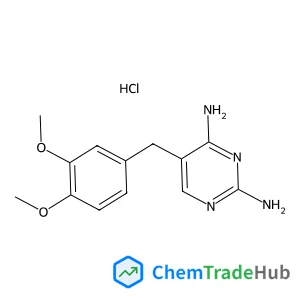
5-(3,4-Dimethoxybenzyl)-2,4-pyrimidinediamine hydrochloride (1:1)
CAS Number:
2507-23-5
Molecular Formula:
C13H17ClN4O2
Recommended Suppliers






Disclaimer
This page provides academic journal information for reference and research purposes only. We are not affiliated with any journal publishers and do not handle publication submissions. For publication-related inquiries, please contact the respective journal publishers directly.
If you notice any inaccuracies in the information displayed, please contact us at support@chemtradehub.com. We will promptly review and address your concerns.