












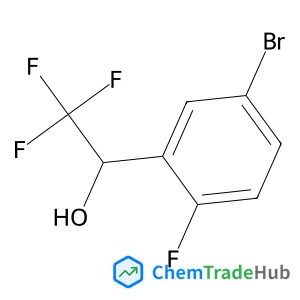
1-(5-Bromo-2-fluorophenyl)-2,2,2-trifluoroethanol
CAS Number:
1039827-16-1
Molecular Formula:
C8H5BrF4O
Emilio Martínez-Núñez
The potential energy surface of protonated uracil has been explored by an automated transition state search procedure, resulting in the finding of 1398 stationary points and 751 reactive channels, which can be categorized into isomerizations between pairs of isomers, unimolecular fragmentations and bimolecular reactions. The use of statistical Rice–Ramsperger–Kassel–Marcus (RRKM) theory and Kinetic Monte Carlo (KMC) simulations allowed us to determine the relative abundances of each fragmentation channel as a function of the ion's internal energy. The KMC/RRKM product abundances are compared with novel mass spectrometry (MS) experiments in the collision energy range 1–6 eV. To facilitate the comparison between theory and experiments, further dynamics simulations are carried out to determine the fraction of collision energy converted into the ion's internal energy. The KMC simulations show that the major fragmentation channels are isocyanic acid and ammonia losses, in good agreement with experiments. The third predominant channel is water loss according to both theory and experiments, although the abundance obtained in the KMC simulations is very low, suggesting that non-statistical dynamics might play an important role in this channel. Isocyanic acid (HNCOH+) is also an important product in the KMC simulations, although its abundance is only significant at internal energies not accessible in the MS experiments.
Rafea Naffa
DOI: 10.1039/D0QO00624F
Hui Xu, Fei Yu, Ronglu Huang, Mingyue Weng, Hong Chen, Ze Zhang
DOI: 10.1039/D0QO00709A
Manickam Bakthadoss, Srinivasan Jayakumar, Selvakumar Raman, Anthonisamy Devaraj, Duddu S. Sharada
DOI: 10.1039/C8OB02970A
Bo Cao, Yin Wei
DOI: 10.1039/C9OB00585D
Arumugam Mariappan, Kandasamy Rajaguru, Shanmugam Muthusubramanian, Nattamai Bhuvanesh
DOI: 10.1039/C9OB00300B
Eloi P. Coutant, Sophie Goyard, Vincent Hervin, Racha Baatallah, Yves Jacob, Thierry Rose, Yves L. Janin
DOI: 10.1039/C9OB00459A
Guo-Jie Wu, Xiu Han
DOI: 10.1039/D0QO00758G
Maxim G. Vinogradov, Olga V. Turova, Sergei G. Zlotin
DOI: 10.1039/C8OB03034K
Shanyong Yi, Tongdong Kuang, Yuanyuan Miao, Yanqing Xu, Zhe Wang, Liao-Bin Dong, Ninghua Tan
DOI: 10.1039/D0QO00579G
2-(2-Chloroacetamido)-3-phenylpropanoic acid (CAS: 7765-11-9) is generally consi...
2-(Benzyloxy)-5-bromobenzoic acid can be handled safely if appropriate precautio...
(4-Methyl-1,2,5-oxadiazol-3-yl)methanamine hydrochloride is a chemical compound ...
2-(5-Hexylthiophen-2-yl)-4,4,5,5-tetramethyl-1,3,2-dioxaborolane (CAS: 917985-54...
While 4-(8-Methyl-9H-1,3-dioxolo[4,5-h][2,3]benzodiazepin-5-yl)benzenamine (CAS:...
The market for tert-butyl 3-hydroxy-4,5,7,8-tetrahydro-2H-pyrazolo[3,4-d]azepine...
Waste containing 3,5-Diamino-1H-pyrazole-4-carbonitrile (CAS: 6844-58-2) should ...
(6-Fluoro-3-pyridinyl)boronic acid can be synthesized through the reaction of 6-...
Dibenzyl carbonimidoylbiscarbamate (CAS: 10065-79-9) finds applications in vario...
The market for (beta,beta,2,3,4,5,6-~2~H_7_)Phenylalanine (CAS: 74228-83-4) is g...

Physical Chemistry Chemical Physics (PCCP) is an international journal co-owned by 19 physical chemistry and physics societies from around the world. This journal publishes original, cutting-edge research in physical chemistry, chemical physics and biophysical chemistry. To be suitable for publication in PCCP, articles must include significant innovation and/or insight into physical chemistry; this is the most important criterion that reviewers and Editors will judge against when evaluating submissions. The journal has a broad scope and welcomes contributions spanning experiment, theory, computation and data science. Topical coverage includes spectroscopy, dynamics, kinetics, statistical mechanics, thermodynamics, electrochemistry, catalysis, surface science, quantum mechanics, quantum computing and machine learning. Interdisciplinary research areas such as polymers and soft matter, materials, nanoscience, energy, surfaces/interfaces, and biophysical chemistry are welcomed if they demonstrate significant innovation and/or insight into physical chemistry. Joined experimental/theoretical studies are particularly appreciated when complementary and based on up-to-date approaches.
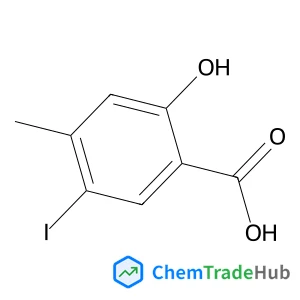
![3,7-Di(1,1':3',1''-terphenyl-5'-yl)-10,11,12,13-tetrahydrodiindeno[7,1-de:1',7'-fg][1,3,2]dioxaphosphocin-5-ol 5-oxide structure](https://static.chemtradehub.com/structs/135/1352810-38-8-3f10.webp "3,7-Di(1,1':3',1''-terphenyl-5'-yl)-10,11,12,13-tetrahydrodiindeno[7,1-de:1',7'-fg][1,3,2]dioxaphosphocin-5-ol 5-oxide structure")
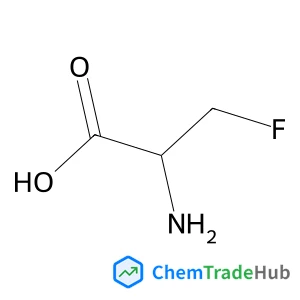
![3-[4-(difluoromethoxy)phenyl]-2-({[(9H-fluoren-9-yl)methoxy]carbonyl}amino)propanoic acid structure](https://static.chemtradehub.com/structs/149/1496564-27-2-952e.webp "3-[4-(difluoromethoxy)phenyl]-2-({[(9H-fluoren-9-yl)methoxy]carbonyl}amino)propanoic acid structure")







