












Discovery and characterization of four glycosyltransferases involved in anthraquinone glycoside biosynthesis in Rubia yunnanensis
Literature Information
Publication Date
2020-07-14
DOI
10.1039/D0QO00579G
Impact Factor
5.281
Authors
Shanyong Yi, Tongdong Kuang, Yuanyuan Miao, Yanqing Xu, Zhe Wang, Liao-Bin Dong, Ninghua Tan
View Original
Abstract
Glycosylation, which is catalyzed by UDP-glycosyltransferases, represents one of the most common modifications in plant secondary metabolites and plays significant roles in plant physiology. While the roots and rhizomes of R. yunnanensis Diels are the well-known traditional Chinese medicine “Xiaohongshen” and R. yunnanensis is rich in different types of glycoside natural products, no glycosyltransferase has yet been molecular genetically and biochemically explored before. Here we report the discovery and characterization of four new glycosyltransferases (GTs), RyUGT3A, RyUGT3B, RyUGT11, and RyUGT12 that mediated anthraquinone glycoside biosynthesis, from the transcriptome of R. yunnanensis. RyUGT3A and RyUGT12 are regioselective glycosyltransferases of β-OH anthraquinones and showed broad substrate promiscuity toward at least 28 compounds to form O-, N-, and S-glycosides. Through the developed one-pot transglycosylation reaction, 18 glycoside congeners, including four new ones, were produced. Molecular modelling and site-directed mutagenesis further revealed the critical residues for substrate binding and glycosylation. The expression profiles of these four GTs with or without methyl jasmonate (MeJA) induced provided a reasonable genetic explanation for the phenomenon that the anthraquinone glycosides are majorly accumulated in the roots of R. yunnanensis. Finally, the subcellular localization of RyUGT3A and RyUGT12 showed that both enzymes were located in the cytomembrane and nucleus. This study expands the growing toolbox of novel glycosyltransferases that could be exploited as practical biocatalysts and provides insights into the continued exploration of other family enzymes in this traditional Chinese medicine as well.
Related Literature
Covalent functionalization of graphene oxide with porphyrin and porphyrin incorporated polymers for optical limiting
Yinlong Du, Ningning Dong, Menghan Zhang, Kai Zhu, Ruiqi Na, Shuling Zhang, Ningwei Sun, Guibin Wang, Jun Wang
2016-12-09
Paper
DOI: 10.1039/C6CP05920A
Second-order nonlinear optical properties of bulk GeC polytypes, g-GeC and corresponding nanotubes: first-principles calculations
Dongshan Wei
2016-12-14
Paper
DOI: 10.1039/C6CP07573H
Is energy transfer limiting multiphotochromism? answers from ab initio quantifications
Roberto Russo, Lorenzo Cupellini, Benedetta Mennucci
2016-12-19
Paper
DOI: 10.1039/C6CP07458H
Dynamic phase change and local structures in IL-containing mixtures: classical MD simulations and experiments
Yang Wu, Xia Wang, Qiaozhen Liu, Dawei Fang, Xuefei Jiang, Wei Guan
2016-12-16
Paper
DOI: 10.1039/C6CP06300D
Hot electron-driven photocatalytic water splitting
Bingya Hou, Lang Shen, Haotian Shi, Rehan Kapadia
2017-01-05
Paper
DOI: 10.1039/C6CP07542H
Enhanced electrooxidation of glucose at nano-chitosan–NiOOH modified GC electrode: fuel blends and hydrocarbon impurities
Christina Roth
2016-12-22
Paper
DOI: 10.1039/C6CP08360A
Polar solvent fluctuations drive proton transfer in hydrogen bonded complexes of carboxylic acid with pyridines: NMR, IR and ab initio MD study
B. Koeppe, S. A. Pylaeva, C. Allolio, D. Sebastiani, E. T. J. Nibbering, G. S. Denisov, H.-H. Limbach, P. M. Tolstoy
2016-12-02
Paper
DOI: 10.1039/C6CP06677A
Polyelectrolyte multilayer-cushioned fluid lipid bilayers: a parachute model
Jingxin Shao, Caixia Wen, Mingjun Xuan, Hongyue Zhang, Johannes Frueh, Mingwei Wan, Lianghui Gao, Qiang He
2016-12-02
Paper
DOI: 10.1039/C6CP06787E
Charge ordering and scattering pre-peaks in ionic liquids and alcohols
2016-12-06
Paper
DOI: 10.1039/C6CP07834F
The impact of the structuring of hydrotropes in water on the mesoscale solubilisation of a third hydrophobic component
Thomas Buchecker, Sebastian Krickl, Robert Winkler, Isabelle Grillo, Pierre Bauduin, Didier Touraud, Arno Pfitzner, Werner Kunz
2016-11-30
Paper
DOI: 10.1039/C6CP06696H
You might also like
Compound Q&A
Is 2-(2-chloroacetamido)-3-phenylpropanoic acid (CAS: 7765-11-9) safe?
2-(2-Chloroacetamido)-3-phenylpropanoic acid (CAS: 7765-11-9) is generally consi...
7765-11-92-(2-chloroacetamido...
Compound Q&A
Is 2-(Benzyloxy)-5-bromobenzoic acid (CAS: 62176-31-2) safe?
2-(Benzyloxy)-5-bromobenzoic acid can be handled safely if appropriate precautio...
62176-31-22-(Benzyloxy)-5-brom...
Compound Q&A
What is (4-Methyl-1,2,5-oxadiazol-3-yl)methanamine hydrochloride (CAS: 1159825-48-5)?
(4-Methyl-1,2,5-oxadiazol-3-yl)methanamine hydrochloride is a chemical compound ...
1159825-48-5(4-Methyl-1,2,5-oxad...
Compound Q&A
What is 2-(5-Hexylthiophen-2-yl)-4,4,5,5-tetramethyl-1,3,2-dioxaborolane (CAS: 917985-54-7)?
2-(5-Hexylthiophen-2-yl)-4,4,5,5-tetramethyl-1,3,2-dioxaborolane (CAS: 917985-54...
917985-54-72-(5-Hexylthiophen-2...
Compound Q&A
Are there alternatives to 4-(8-Methyl-9H-1,3-dioxolo[4,5-h][2,3]benzodiazepin-5-yl)benzenamine (CAS: 102771-26-6) in synthesis?
While 4-(8-Methyl-9H-1,3-dioxolo[4,5-h][2,3]benzodiazepin-5-yl)benzenamine (CAS:...
102771-26-64-(8-Methyl-9H-1,3-d...
Compound Q&A
What is the market or research trend for tert-butyl 3-hydroxy-4,5,7,8-tetrahydro-2H-pyrazolo[3,4-d]azepine-6-carboxylate (CAS: 851376-80-2)?
The market for tert-butyl 3-hydroxy-4,5,7,8-tetrahydro-2H-pyrazolo[3,4-d]azepine...
851376-80-2tert-butyl 3-hydroxy...
Compound Q&A
How should waste containing 3,5-Diamino-1H-pyrazole-4-carbonitrile (CAS: 6844-58-2) be handled?
Waste containing 3,5-Diamino-1H-pyrazole-4-carbonitrile (CAS: 6844-58-2) should ...
6844-58-23,5-Diamino-1H-pyraz...
Compound Q&A
How is (6-Fluoro-3-pyridinyl)boronic acid (CAS: 351019-18-6) typically synthesized?
(6-Fluoro-3-pyridinyl)boronic acid can be synthesized through the reaction of 6-...
351019-18-6(6-Fluoro-3-pyridiny...
Compound Q&A
What industries use Dibenzyl carbonimidoylbiscarbamate (CAS: 10065-79-9)?
Dibenzyl carbonimidoylbiscarbamate (CAS: 10065-79-9) finds applications in vario...
10065-79-9Dibenzyl carbonimido...
Compound Q&A
What is the market or research trend for (beta,beta,2,3,4,5,6-~2~H_7_)Phenylalanine (CAS: 74228-83-4)?
The market for (beta,beta,2,3,4,5,6-~2~H_7_)Phenylalanine (CAS: 74228-83-4) is g...
74228-83-4(beta,beta,2,3,4,5,6...
Source Journal
Organic Chemistry Frontiers

CiteScore:
7.8
Self-citation Rate:
8.7%
Articles per Year:
724
Organic Chemistry Frontiers publishes high-quality research from across organic chemistry. Emphases are placed on studies that make significant contributions to the field of organic chemistry by reporting either new or significantly improved protocols or methodologies. Topics include, but are not limited to the following: Organic synthesis Development of synthetic methodologies Catalysis Natural products Functional organic materials Supramolecular and macromolecular chemistry Physical and computational organic chemistry
Recommended Compounds
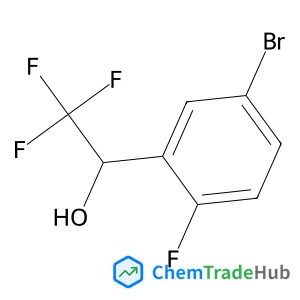
1-(5-Bromo-2-fluorophenyl)-2,2,2-trifluoroethanol
CAS Number:
1039827-16-1
Molecular Formula:
C8H5BrF4O
Recommended Suppliers




Disclaimer
This page provides academic journal information for reference and research purposes only. We are not affiliated with any journal publishers and do not handle publication submissions. For publication-related inquiries, please contact the respective journal publishers directly.
If you notice any inaccuracies in the information displayed, please contact us at support@chemtradehub.com. We will promptly review and address your concerns.