











A medium range order structural connection to the configurational heat capacity of borate–silicate mixed glasses
Literature Information
Publication Date
2016-03-15
DOI
10.1039/C6CP00749J
Impact Factor
3.676
Authors
Morten M. Smedskjaer, Haizheng Tao, Lars R. Jensen, Xiujian Zhao
View Original
Abstract
It has been reported that the configurational heat capacity (Cp,conf) first increases and then becomes saturated with increasing B2O3/SiO2 ratio in borate–silicate mixed glasses. Through Raman spectroscopy measurements, we have, in this work, found an implication for the intermediate range order (IRO) structural connection to the composition dependence of the Cp,conf of borate–silicate mixed glasses. In the silica-rich compositions, the Cp,conf rapidly increases with increasing B2O3 content. This is attributed to the increase of the content of the B–O–Si network units ([B2Si2O8]2−) and 6-membered borate rings with 1 or 2 B4. In the boron-rich compositions, the Cp,conf is almost constant, independent of the increase in the B2O3/SiO2 ratio. This is likely attributed to the counteraction between the decrease of the fraction of two types of metaborate groups and the increase of the fraction of other borate superstructural units (particularly 6-membered borate rings). The overall results suggest that the glasses containing more types of superstructural units have a larger Cp,conf.
Recommended Journals
Related Literature
A down-scaled fluorimetric determination of the solubility properties of drugs to minimize waste generation
Víctor González-Ruiz, Ana I. Olives, M. Antonia Martín
2013-07-16
Paper
DOI: 10.1039/C3GC40974K
Preparation of waterborne functional polymers using a bifunctional coupler
Subrata Chattopadhyay, Helmut Keul, Martin Moeller
2013-08-29
Communication
DOI: 10.1039/C3GC41406J
Highly atom-efficient and chemoselective reduction of ketones in the presence of aldehydes using heterogeneous catalysts
Yusuke Takahashi, Takato Mitsudome, Tomoo Mizugaki, Koichiro Jitsukawa
2013-08-01
Communication
DOI: 10.1039/C3GC41322E
Extraction desulfurization process of fuels with ammonium-based deep eutectic solvents
Changping Li, Dan Li, Shuangshuang Zou, Jingmei Yin, Ailing Wang, Yingna Cui, Zhilong Yao, Qi Zhao
2013-07-31
Paper
DOI: 10.1039/C3GC41067F
Facile preparation of agarose–chitosan hybrid materials and nanocomposite ionogels using an ionic liquid via dissolution, regeneration and sol–gel transition
Tushar J. Trivedi, K. Srinivasa Rao, Arvind Kumar
2013-09-05
Paper
DOI: 10.1039/C3GC41317A
“Release and catch” catalytic systems
Michelangelo Gruttadauria, Francesco Giacalone, Renato Noto
2013-07-24
Perspective
DOI: 10.1039/C3GC41132J
En route to full implementation: driving the green chemistry agenda in the pharmaceutical industry
2013-09-16
Perspective
DOI: 10.1039/C3GC41629A
Asymmetric anti-Mannich reactions in continuous flow
Rafael Martín-Rapún, Sonia Sayalero
2013-09-20
Communication
DOI: 10.1039/C3GC41444B
Self-healable polymer networks based on the cross-linking of epoxidised soybean oil by an aqueous citric acid solution
Facundo I. Altuna, Valeria Pettarin, Roberto J. J. Williams
2013-09-09
Paper
DOI: 10.1039/C3GC41384E
A self-assembled Pd6L8 nanoball for Suzuki–Miyaura coupling reactions in both homogeneous and heterogeneous formats
Chao-Wei Zhao, Jian-Ping Ma, Qi-Kui Liu, Yang Yu, Peng Wang, Yan-An Li, Kui Wang, Yu-Bin Dong
2013-09-05
Communication
DOI: 10.1039/C3GC41154K
You might also like
Compound Q&A
What are the main uses of 1-(3-Aminophenyl)-3-[(3R)-1-(3,3-dimethyl-2-oxobutyl)-2-oxo-5-(2-pyridinyl)-2,3-dihydro-1H-1,4-benzodiazepin-3-yl]urea (CAS: 155412-88-7)?
This compound is mainly used as an intermediate in the synthesis of antipsychoti...
155412-88-71-(3-Aminophenyl)-3-...
Compound Q&A
How should waste containing 1-(D-Ribofuranosyl)-1,4-dihydro-3-pyridinecarboxamide (CAS: 19132-12-8) be handled?
Waste containing 1-(D-Ribofuranosyl)-1,4-dihydro-3-pyridinecarboxamide (CAS: 191...
19132-12-81-(D-Ribofuranosyl)-...
Compound Q&A
What regulatory guidelines apply to 2-Methyl-2-propanyl 3-bromo-3-(hydroxymethyl)-1-azetidinecarboxylate (CAS: 2007919-81-3)?
2-Methyl-2-propanyl 3-bromo-3-(hydroxymethyl)-1-azetidinecarboxylate (CAS: 20079...
2007919-81-32-Methyl-2-propanyl ...
Compound Q&A
What is N-(4-Chloro-2-pyridinyl)acetamide (CAS: 245056-66-0)?
N-(4-Chloro-2-pyridinyl)acetamide (CAS: 245056-66-0) is a chemical compound with...
245056-66-0N-(4-Chloro-2-pyridi...
Compound Q&A
What is 5-Chloro-2-hydroxybenzoic acid (CAS: 321-14-2)?
5-Chloro-2-hydroxybenzoic acid, also known as 5-chlorosalicylic acid, is an arom...
321-14-25-Chloro-2-hydroxybe...
Compound Q&A
What precautions should be taken when handling 1,1-Dichloro-1-fluoroethane (CAS: 1717-00-6)?
When handling 1,1-Dichloro-1-fluoroethane (CAS: 1717-00-6), it is important to u...
1717-00-61,1-Dichloro-1-fluor...
Compound Q&A
What are the physical and chemical properties of Fmoc-(2S,3R)-3-phenylpyrrolidine-2-carboxylic acid (CAS: 281655-32-1)?
Fmoc-(2S,3R)-3-phenylpyrrolidine-2-carboxylic acid is a white crystalline solid ...
281655-32-1Fmoc-(2S,3R)-3-pheny...
Compound Q&A
What are the main uses of 4-Amino-5-bromo-2-pyridinecarboxylic acid (CAS: 1363381-01-4)?
4-Amino-5-bromo-2-pyridinecarboxylic acid is primarily used as a precursor in th...
1363381-01-44-Amino-5-bromo-2-py...
Compound Q&A
What precautions should be taken when handling (S)-tert-butyl 2-((2-(4-bromophenyl)-2-oxoethyl)carbamoyl)pyrrolidine-1-carboxylate (CAS: 1007881-98-2)?
Handling this compound should be done with personal protective equipment (PPE) i...
1007881-98-2(S)-tert-butyl 2-((2...
Compound Q&A
What precautions should be taken when handling 8-bromo-2,2-dimethyl-3,4-dihydro-2H-1,4-benzoxazin-3-one (CAS: 688363-73-7)?
When handling 8-bromo-2,2-dimethyl-3,4-dihydro-2H-1,4-benzoxazin-3-one, use prop...
688363-73-78-bromo-2,2-dimethyl...
Source Journal
Physical Chemistry Chemical Physics

CiteScore:
5.5
Self-citation Rate:
10.3%
Articles per Year:
3036
Physical Chemistry Chemical Physics (PCCP) is an international journal co-owned by 19 physical chemistry and physics societies from around the world. This journal publishes original, cutting-edge research in physical chemistry, chemical physics and biophysical chemistry. To be suitable for publication in PCCP, articles must include significant innovation and/or insight into physical chemistry; this is the most important criterion that reviewers and Editors will judge against when evaluating submissions. The journal has a broad scope and welcomes contributions spanning experiment, theory, computation and data science. Topical coverage includes spectroscopy, dynamics, kinetics, statistical mechanics, thermodynamics, electrochemistry, catalysis, surface science, quantum mechanics, quantum computing and machine learning. Interdisciplinary research areas such as polymers and soft matter, materials, nanoscience, energy, surfaces/interfaces, and biophysical chemistry are welcomed if they demonstrate significant innovation and/or insight into physical chemistry. Joined experimental/theoretical studies are particularly appreciated when complementary and based on up-to-date approaches.
Recommended Compounds
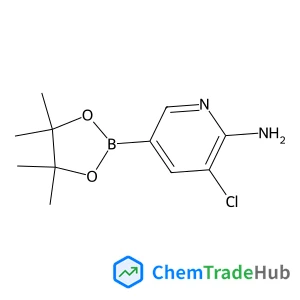
3-Chloro-5-(4,4,5,5-tetramethyl-1,3,2-dioxaborolan-2-yl)-2-pyridinamine
CAS Number:
1032758-99-8
Molecular Formula:
C11H16BClN2O2

![Pyrazolo[1,5-a]pyridine-3-carbothioamide structure](https://static.chemtradehub.com/structs/885/885275-44-5-aae0.webp "Pyrazolo[1,5-a]pyridine-3-carbothioamide structure")
Recommended Suppliers







Disclaimer
This page provides academic journal information for reference and research purposes only. We are not affiliated with any journal publishers and do not handle publication submissions. For publication-related inquiries, please contact the respective journal publishers directly.
If you notice any inaccuracies in the information displayed, please contact us at support@chemtradehub.com. We will promptly review and address your concerns.