



Highly atom-efficient and chemoselective reduction of ketones in the presence of aldehydes using heterogeneous catalysts
Literature Information
Publication Date
2013-08-01
DOI
10.1039/C3GC41322E
Impact Factor
10.182
Authors
Yusuke Takahashi, Takato Mitsudome, Tomoo Mizugaki, Koichiro Jitsukawa
View Original
Abstract
The first demonstration of a 100% atom-efficient selective reduction of less reactive ketones over aldehydes using heterogeneous catalysts is reported. Extremely high selectivities for intra- and intermolecular reductions of ketones over aldehydes were achieved. This system was also applicable to a column reactor, leading to a gram-scale synthesis.
Recommended Journals

Heteroatom Chemistry

Herald of the Russian Academy of Sciences

Critical Reviews in Solid State and Materials Sciences

Bioorganic & Medicinal Chemistry Letters

Journal of Asian Natural Products Research

Medicinal Chemistry Research

Bioorganic & Medicinal Chemistry

Atomization and Sprays

NDT & E International

Biocatalysis and Biotransformation
Related Literature
Chip-based platform for dynamic analysis of NK cell cytolysis mediated by a triplebody
Elisavet I. Chatzopoulou, Claudia C. Roskopf, Farzad Sekhavati, Todd A. Braciak, Nadja C. Fenn, Karl-Peter Hopfner, Fuat S. Oduncu, Georg H. Fey, Joachim O. Rädler
2016-03-09
Paper
DOI: 10.1039/C5AN02585K
Spatially resolved endogenous improved metabolite detection in human osteoarthritis cartilage by matrix assisted laser desorption ionization mass spectrometry imaging
M. R. Eveque-Mourroux, P. J. Emans, R. R. M. Zautsen, A. Boonen, R. M. A. Heeren, B. Cillero-Pastor
2019-08-09
Paper
DOI: 10.1039/C9AN00944B
Potentiometric analysis of sialic acid with a flexible carbon cloth based on boronate affinity and molecularly imprinted polymers
Yanli Zhou, Huijie Huangfu, Jie Yang, Hui Dong, Lantao liu, Maotian Xu
2019-09-27
Paper
DOI: 10.1039/C9AN01600G
A highly sensitive and simply operated protease sensor toward point-of-care testing
Seonhwa Park, Yu Mi Shin, Jeongwook Seo, Ji-Joon Song, Haesik Yang
2016-03-16
Paper
DOI: 10.1039/C6AN00251J
Sensitive and selective colorimetric detection of Hg2+ by a Hg2+ induced dual signal amplification strategy based on cascade-type catalytic reactions
Yuejing Tong, Guobao Xu
2016-03-08
Communication
DOI: 10.1039/C5AN02672E
Composition and charge state influence on the ion-neutral collision cross sections of protonated N-linked glycopeptides: an experimental and theoretical deconstruction of coulombic repulsion vs. charge solvation effects
Abby S. Gelb, Rui Lai
2019-08-20
Paper
DOI: 10.1039/C9AN00875F
Dual-emissive fluorescence measurements of hydroxyl radicals using a coumarin-activated silica nanohybrid probe
Lei Yang, Yajun Zhang, Lijun Wu
2016-02-23
Paper
DOI: 10.1039/C5AN02261D
Lateral resolution of desorption nanoelectrospray: a nanospray tip without nebulizing gas as a source of primary charged droplets
L. Hartmanová, I. Lorencová, M. Volný, P. Fryčák, H. Chmelíčková, T. Ingr, K. Lemr
2016-03-01
Communication
DOI: 10.1039/C5AN02665B
Carbon–carbon double bond position elucidation in fatty acids using ozone-coupled direct analysis in real time mass spectrometry
Nicolas Cetraro, Robert B. Cody, Joanne Y. Yew
2019-08-27
Paper
DOI: 10.1039/C9AN01059A
You might also like
Compound Q&A
What are the main uses of 1-(3-Aminophenyl)-3-[(3R)-1-(3,3-dimethyl-2-oxobutyl)-2-oxo-5-(2-pyridinyl)-2,3-dihydro-1H-1,4-benzodiazepin-3-yl]urea (CAS: 155412-88-7)?
This compound is mainly used as an intermediate in the synthesis of antipsychoti...
155412-88-71-(3-Aminophenyl)-3-...
Compound Q&A
How should waste containing 1-(D-Ribofuranosyl)-1,4-dihydro-3-pyridinecarboxamide (CAS: 19132-12-8) be handled?
Waste containing 1-(D-Ribofuranosyl)-1,4-dihydro-3-pyridinecarboxamide (CAS: 191...
19132-12-81-(D-Ribofuranosyl)-...
Compound Q&A
What regulatory guidelines apply to 2-Methyl-2-propanyl 3-bromo-3-(hydroxymethyl)-1-azetidinecarboxylate (CAS: 2007919-81-3)?
2-Methyl-2-propanyl 3-bromo-3-(hydroxymethyl)-1-azetidinecarboxylate (CAS: 20079...
2007919-81-32-Methyl-2-propanyl ...
Compound Q&A
What is N-(4-Chloro-2-pyridinyl)acetamide (CAS: 245056-66-0)?
N-(4-Chloro-2-pyridinyl)acetamide (CAS: 245056-66-0) is a chemical compound with...
245056-66-0N-(4-Chloro-2-pyridi...
Compound Q&A
What is 5-Chloro-2-hydroxybenzoic acid (CAS: 321-14-2)?
5-Chloro-2-hydroxybenzoic acid, also known as 5-chlorosalicylic acid, is an arom...
321-14-25-Chloro-2-hydroxybe...
Compound Q&A
What precautions should be taken when handling 1,1-Dichloro-1-fluoroethane (CAS: 1717-00-6)?
When handling 1,1-Dichloro-1-fluoroethane (CAS: 1717-00-6), it is important to u...
1717-00-61,1-Dichloro-1-fluor...
Compound Q&A
What are the physical and chemical properties of Fmoc-(2S,3R)-3-phenylpyrrolidine-2-carboxylic acid (CAS: 281655-32-1)?
Fmoc-(2S,3R)-3-phenylpyrrolidine-2-carboxylic acid is a white crystalline solid ...
281655-32-1Fmoc-(2S,3R)-3-pheny...
Compound Q&A
What are the main uses of 4-Amino-5-bromo-2-pyridinecarboxylic acid (CAS: 1363381-01-4)?
4-Amino-5-bromo-2-pyridinecarboxylic acid is primarily used as a precursor in th...
1363381-01-44-Amino-5-bromo-2-py...
Compound Q&A
What precautions should be taken when handling (S)-tert-butyl 2-((2-(4-bromophenyl)-2-oxoethyl)carbamoyl)pyrrolidine-1-carboxylate (CAS: 1007881-98-2)?
Handling this compound should be done with personal protective equipment (PPE) i...
1007881-98-2(S)-tert-butyl 2-((2...
Compound Q&A
What precautions should be taken when handling 8-bromo-2,2-dimethyl-3,4-dihydro-2H-1,4-benzoxazin-3-one (CAS: 688363-73-7)?
When handling 8-bromo-2,2-dimethyl-3,4-dihydro-2H-1,4-benzoxazin-3-one, use prop...
688363-73-78-bromo-2,2-dimethyl...
Source Journal
Green Chemistry

CiteScore:
16.1
Self-citation Rate:
7.5%
Articles per Year:
944
Green Chemistry provides a unique forum for the publication of innovative research on the development of alternative green and sustainable technologies. The scope of Green Chemistry is based on, but not limited to, the definition proposed by Anastas and Warner (Green Chemistry: Theory and Practice, P T Anastas and J C Warner, Oxford University Press, Oxford, 1998). Green chemistry is the utilisation of a set of principles that reduces or eliminates the use or generation of hazardous substances in the design, manufacture and application of chemical products. Green Chemistry is at the frontiers of this continuously-evolving interdisciplinary science and publishes research that attempts to reduce the environmental impact of the chemical enterprise by developing a technology base that is inherently non-toxic to living things and the environment. Submissions on all aspects of research relating to the endeavour are welcome. The journal publishes original and significant cutting-edge research that is likely to be of wide general appeal. To be published, work must present a significant advance in green chemistry. Papers must contain a comparison with existing methods and demonstrate advantages over those methods before publication can be considered. For more information please see this Editorial. Coverage includes the following, but is not limited to: Design (e.g. biomimicry, design for degradation/recycling/reduced toxicity…) Reagents & Feedstocks (e.g. renewables, CO2, solvents, auxiliary agents, waste utilization…) Synthesis (e.g. organic, inorganic, synthetic biology…) Catalysis (e.g. homogeneous, heterogeneous, enzyme, whole cell…) Process (e.g. process design, intensification, separations, recycling, efficiency…) Energy (e.g. renewable energy, fuels, photovoltaics, fuel cells, energy storage, energy carriers…) Applications (e.g. electronics, dyes, consumer products, coatings, pharmaceuticals, preservatives, building materials, chemicals for industry/agriculture/mining…) Impact (e.g. safety, metrics, LCA, sustainability, (eco)toxicology…) Green chemistry is, by definition, a continuously-evolving frontier. Therefore, the inclusion of a particular material or technology does not, of itself, guarantee that a paper is suitable for the journal. To be suitable, the novel advance should have the potential for reduced environmental impact relative to the state of the art. Green Chemistry does not normally deal with research associated with 'end-of-pipe' or remediation issues.
Recommended Compounds

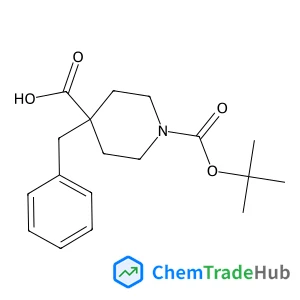
4-Benzyl-1-(tert-butoxycarbonyl)piperidine-4-carboxylic acid
CAS Number:
170838-87-6
Molecular Formula:
C18H25NO4

(3-Oxo-1,2,3,4-tetrahydro-2-quinoxalinyl)acetic acid
CAS Number:
136584-14-0
Molecular Formula:
C10H10N2O3
Recommended Suppliers






Disclaimer
This page provides academic journal information for reference and research purposes only. We are not affiliated with any journal publishers and do not handle publication submissions. For publication-related inquiries, please contact the respective journal publishers directly.
If you notice any inaccuracies in the information displayed, please contact us at support@chemtradehub.com. We will promptly review and address your concerns.