


![1-[3-(4-Morpholinylsulfonyl)phenyl]methanamine structure](https://static.chemtradehub.com/structs/933/933989-32-3-51af.webp "1-[3-(4-Morpholinylsulfonyl)phenyl]methanamine structure")
“Release and catch” catalytic systems
Literature Information
Publication Date
2013-07-24
DOI
10.1039/C3GC41132J
Impact Factor
10.182
Authors
Michelangelo Gruttadauria, Francesco Giacalone, Renato Noto
View Original
Abstract
In this perspective article the “release and catch” catalytic system concept is discussed. A “release and catch” catalytic system is prepared by non-covalent immobilization of the catalytic moiety on a suitable support, but differently from the usual non-covalently supported catalyst, the catalytic moiety is released in solution over the course of the reaction and it is recaptured at the end of the reaction. Such a “catalyst-sponge like” or “boomerang” system allows one to combine the benefits of homogeneous and heterogeneous catalysis and can be applied to organometallic-based catalysts, organocatalysts and metal-based catalysts.
Recommended Journals

Physical Chemistry Chemical Physics

Journal of Medical Biochemistry

Journal of Enzyme inhibition and Medicinal Chemistry

Molecules

Faraday Discussions

Angewandte Chemie International Edition

Mini-Reviews in Medicinal Chemistry

Contact Lens & Anterior Eye

Advanced Engineering Materials

Environmental Toxicology and Pharmacology
Related Literature
Exploring the local solvation structure of redox molecules in a mixed solvent for increasing the Seebeck coefficient of thermocells
Hirotaka Inoue, Hongyao Zhou, Hideo Ando, Sakuya Nakagawa, Teppei Yamada
2023-11-27
Edge Article
DOI: 10.1039/D3SC04955H
New light on the imbroglio surrounding the C8H +6 isomers formed from ionized azulene and naphthalene using ion–molecule reactions
Corentin Rossi, Giel Muller, Sandesh Gondarry, Paul M. Mayer, Ugo Jacovella
2023-11-24
Edge Article
DOI: 10.1039/D3SC03015F
Supramolecular “baking powder”: a hexameric halogen-bonded phosphonium salt cage encapsulates and functionalises small-molecule carbonyl compounds
Hatem M. Titi, Yong Teoh
2023-11-28
Edge Article
DOI: 10.1039/D2SC04615F
Endogenous metal-ion dynamic nuclear polarization for NMR signal enhancement in metal organic frameworks
Ilia B. Moroz, Yishay Feldman, Raanan Carmieli, Xinyu Liu, Michal Leskes
2023-12-02
Edge Article
DOI: 10.1039/D3SC03456A
Cu-based catalyst designs in CO2 electroreduction: precise modulation of reaction intermediates for high-value chemical generation
Liangyiqun Xie, Yujing Jiang, Wenlei Zhu, Shichao Ding, Yang Zhou, Jun-Jie Zhu
2023-10-16
Review Article
DOI: 10.1039/D3SC04353C
A high affinity pan-PI3K binding module supports selective targeted protein degradation of PI3Kα
Werner Theodor Jauslin, Matthias Schild, Thorsten Schaefer, Chiara Borsari, Clara Orbegozo, Lukas Bissegger, Saule Zhanybekova, Danilo Ritz, Alexander Schmidt, Matthias Wymann, Dennis Gillingham
2023-12-12
Edge Article
DOI: 10.1039/D3SC04629J
A single phosphorylation mechanism in early metabolism – the case of phosphoenolpyruvate
Joris Zimmermann, Robert J. Mayer
2023-12-04
Edge Article
DOI: 10.1039/D3SC04116F
Boosting the interfacial dynamics and thermodynamics in polyanion cathode by carbon dots for ultrafast-charging sodium ion batteries
Yujin Li, Yu Mei, Roya Momen, Bai Song, Yujie Huang, Xue Zhong, Hanrui Ding, Wentao Deng, Guoqiang Zou, Hongshuai Hou, Xiaobo Ji
2023-11-30
Edge Article
DOI: 10.1039/D3SC05593K
Thermally activated delayed fluorescence in a deep red dinuclear iridium(iii) complex: a hidden mechanism for short luminescence lifetimes
Andrey V. Zaytsev, Amit Sil, Glib V. Baryshnikov, J. A. Gareth Williams, Fernando B. Dias, Valery N. Kozhevnikov
2023-11-14
Edge Article
DOI: 10.1039/D3SC04450E
Photocatalytic ethane conversion on rutile TiO2(110): identifying the role of the ethyl radical
Fangliang Li, Yuemiao Lai, Yi Zeng, Xiao Chen, Tao Wang, Qing Guo
2023-11-27
Edge Article
DOI: 10.1039/D3SC05623F
You might also like
Compound Q&A
What precautions should be taken when handling 4-(2-Furylmethyl)thiomorpholine 1,1-dioxide (CAS: 79206-94-3)?
When handling 4-(2-Furylmethyl)thiomorpholine 1,1-dioxide (CAS: 79206-94-3), it ...
79206-94-34-(2-Furylmethyl)thi...
Compound Q&A
What precautions should be taken when handling 4-Chloro-N-[2-(4-morpholinyl)ethyl]benzamide (CAS: 71320-77-9)?
When handling 4-Chloro-N-[2-(4-morpholinyl)ethyl]benzamide (CAS: 71320-77-9), it...
71320-77-94-Chloro-N-[2-(4-mor...
Compound Q&A
How should waste containing 2-[2-(2-Methoxyethoxy)ethoxy]ethyl 4-methylbenzenesulfonate (CAS: 62921-74-8) be handled?
Waste containing this compound (CAS: 62921-74-8) should be handled according to ...
62921-74-82-[2-(2-Methoxyethox...
Compound Q&A
How should waste containing (S)-Methyl 2-amino-3-cyclohexylpropanoate be handled?
Waste containing (S)-Methyl 2-amino-3-cyclohexylpropanoate should be collected i...
40056-18-6(S)-Methyl 2-amino-3...
Compound Q&A
How is 5-({4-[(2S,4R)-4-Hydroxy-2-methyltetrahydro-2H-pyran-4-yl]-2-thienyl}sulfanyl)-1-methyl-1,3-dihydro-2H-indol-2-one (CAS: 166882-70-8) typically synthesized?
This compound can be synthesized using a multi-step process involving the conjug...
166882-70-85-({4-[(2S,4R)-4-Hyd...
Compound Q&A
Are there alternatives to (2E)-3-(3,4-Dichlorophenyl)acrylic acid (CAS: 7312-27-8) in synthesis?
There are several alternatives to (2E)-3-(3,4-Dichlorophenyl)acrylic acid in syn...
7312-27-8(2E)-3-(3,4-Dichloro...
Compound Q&A
How should Ethyl 6-(2-nitrophenyl)imidazo[2,1-b][1,3]thiazole-3-carboxylate (CAS: 925437-84-9) be stored?
Ethyl 6-(2-nitrophenyl)imidazo[2,1-b][1,3]thiazole-3-carboxylate (CAS: 925437-84...
925437-84-9Ethyl 6-(2-nitrophen...
Compound Q&A
How should waste containing 2-(1,3-Thiazol-2-yl)ethanamine (CAS: 18453-07-1) be handled?
Waste containing 2-(1,3-Thiazol-2-yl)ethanamine (CAS: 18453-07-1) should be coll...
18453-07-12-(1,3-Thiazol-2-yl)...
Compound Q&A
How is Methyl 5-iodo-2-methylbenzoate (CAS: 103440-54-6) typically synthesized?
Methyl 5-iodo-2-methylbenzoate can be synthesized through the iodination of meth...
103440-54-6Methyl 5-iodo-2-meth...
Compound Q&A
How is 5-Chloro[1,2,4]triazolo[1,5-a]pyridine (CAS: 1427399-34-5) typically synthesized?
5-Chloro[1,2,4]triazolo[1,5-a]pyridine is commonly synthesized via the condensat...
1427399-34-55-Chloro[1,2,4]triaz...
Source Journal
Green Chemistry

CiteScore:
16.1
Self-citation Rate:
7.5%
Articles per Year:
944
Green Chemistry provides a unique forum for the publication of innovative research on the development of alternative green and sustainable technologies. The scope of Green Chemistry is based on, but not limited to, the definition proposed by Anastas and Warner (Green Chemistry: Theory and Practice, P T Anastas and J C Warner, Oxford University Press, Oxford, 1998). Green chemistry is the utilisation of a set of principles that reduces or eliminates the use or generation of hazardous substances in the design, manufacture and application of chemical products. Green Chemistry is at the frontiers of this continuously-evolving interdisciplinary science and publishes research that attempts to reduce the environmental impact of the chemical enterprise by developing a technology base that is inherently non-toxic to living things and the environment. Submissions on all aspects of research relating to the endeavour are welcome. The journal publishes original and significant cutting-edge research that is likely to be of wide general appeal. To be published, work must present a significant advance in green chemistry. Papers must contain a comparison with existing methods and demonstrate advantages over those methods before publication can be considered. For more information please see this Editorial. Coverage includes the following, but is not limited to: Design (e.g. biomimicry, design for degradation/recycling/reduced toxicity…) Reagents & Feedstocks (e.g. renewables, CO2, solvents, auxiliary agents, waste utilization…) Synthesis (e.g. organic, inorganic, synthetic biology…) Catalysis (e.g. homogeneous, heterogeneous, enzyme, whole cell…) Process (e.g. process design, intensification, separations, recycling, efficiency…) Energy (e.g. renewable energy, fuels, photovoltaics, fuel cells, energy storage, energy carriers…) Applications (e.g. electronics, dyes, consumer products, coatings, pharmaceuticals, preservatives, building materials, chemicals for industry/agriculture/mining…) Impact (e.g. safety, metrics, LCA, sustainability, (eco)toxicology…) Green chemistry is, by definition, a continuously-evolving frontier. Therefore, the inclusion of a particular material or technology does not, of itself, guarantee that a paper is suitable for the journal. To be suitable, the novel advance should have the potential for reduced environmental impact relative to the state of the art. Green Chemistry does not normally deal with research associated with 'end-of-pipe' or remediation issues.
Recommended Compounds
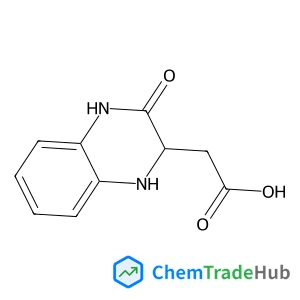
(3-Oxo-1,2,3,4-tetrahydro-2-quinoxalinyl)acetic acid
CAS Number:
136584-14-0
Molecular Formula:
C10H10N2O3

![6-Benzyl-4,5,6,7-tetrahydro-1H-pyrazolo[3,4-c]pyridin-3(2H)-one structure](https://static.chemtradehub.com/structs/909/909187-64-0-f54f.webp "6-Benzyl-4,5,6,7-tetrahydro-1H-pyrazolo[3,4-c]pyridin-3(2H)-one structure")
6-Benzyl-4,5,6,7-tetrahydro-1H-pyrazolo[3,4-c]pyridin-3(2H)-one
CAS Number:
909187-64-0
Molecular Formula:
C13H15N3O
Recommended Suppliers






Disclaimer
This page provides academic journal information for reference and research purposes only. We are not affiliated with any journal publishers and do not handle publication submissions. For publication-related inquiries, please contact the respective journal publishers directly.
If you notice any inaccuracies in the information displayed, please contact us at support@chemtradehub.com. We will promptly review and address your concerns.