












Dehydrogenation of methanol to formaldehyde catalyzed by pristine and defective ceria surfaces‡
Literature Information
Publication Date
2016-03-09
DOI
10.1039/C6CP00151C
Impact Factor
3.676
Authors
Steven H. Overbury
View Original
Abstract
We have explored the dehydrogenation of methoxy on pristine and defective (111), (100), and (110) ceria surfaces with density functional methods. Methanol conversion is used as a probe reaction to understand structure sensitivity of the oxide catalysis. Differences in reaction selectivity have been observed experimentally as a function of crystallographically exposed faces and degree of reduction. We find that the barrier for carbon–hydrogen cleavage in methoxy is similar for the pristine and defective (111), (100), and (110) surfaces. However, there are large differences in the stability of the surface intermediates on the different surfaces. The variations in experimentally observed product selectivities are a consequence of the interplay between barrier controlled bond cleavage and desorption processes. Subtle differences in activation energies for carbon–hydrogen cleavage on the different crystallographic faces of ceria could not be correlated with structural or electronic descriptors.
Related Literature
Development of a robust reagent for the two-carbon homologation of aldehydes to (E)-α,β-unsaturated aldehydes in water
James McNulty, Carlos Zepeda-Velázquez, David McLeod
2013-09-09
Communication
DOI: 10.1039/C3GC41383G
High activity and switchable selectivity in the synthesis of cyclic and polymeric cyclohexene carbonates with iron amino triphenolate catalysts
Masoumeh Taherimehr, Syed M. Al-Amsyar, Christopher J. Whiteoak, Paolo P. Pescarmona
2013-08-27
Paper
DOI: 10.1039/C3GC41303A
Practical metal-free synthesis of chalcone derivatives via a tandem cross-dehydrogenative-coupling/elimination reaction
Yu Wei, Jinghua Tang, Xuefeng Cong, Xiaoming Zeng
2013-08-27
Communication
DOI: 10.1039/C3GC41403E
Polymer anchored Cu(ii) complex: an efficient and recyclable catalytic system for the one-pot synthesis of 1,4-disubstituted 1,2,3-triazoles starting from anilines in water
Susmita Roy, Tanmay Chatterjee, Sk. Manirul Islam
2013-07-12
Paper
DOI: 10.1039/C3GC41114A
Preparation of waterborne functional polymers using a bifunctional coupler
Subrata Chattopadhyay, Helmut Keul, Martin Moeller
2013-08-29
Communication
DOI: 10.1039/C3GC41406J
Antioxidant canolol production from a renewable feedstock via an engineered decarboxylase
Krista L. Morley, Stephan Grosse, Hannes Leisch
2013-10-03
Paper
DOI: 10.1039/C3GC40748A
Depolymerisation of condensed tannins in ethanol as a gateway to biosourced phenolic synthons
Chahinez Aouf, Eric Dubreucq, Hélène Fulcrand
2013-08-23
Paper
DOI: 10.1039/C3GC41281D
A continuous ionic liquid extraction process for the separation of cobalt from nickel
Remi Goovaerts, Claudia Möller, Jan Luyten, Ben Thijs, Koen Binnemans
2013-09-10
Communication
DOI: 10.1039/C3GC41519H
Direct synthesis of hydrogen peroxide in water in a continuous trickle bed reactor optimized to maximize productivity
Pierdomenico Biasi, Juan García-Serna, Alice Bittante, Tapio Salmi
2013-07-01
Paper
DOI: 10.1039/C3GC40811F
You might also like
Compound Q&A
What are the main uses of 1-(3-Aminophenyl)-3-[(3R)-1-(3,3-dimethyl-2-oxobutyl)-2-oxo-5-(2-pyridinyl)-2,3-dihydro-1H-1,4-benzodiazepin-3-yl]urea (CAS: 155412-88-7)?
This compound is mainly used as an intermediate in the synthesis of antipsychoti...
155412-88-71-(3-Aminophenyl)-3-...
Compound Q&A
How should waste containing 1-(D-Ribofuranosyl)-1,4-dihydro-3-pyridinecarboxamide (CAS: 19132-12-8) be handled?
Waste containing 1-(D-Ribofuranosyl)-1,4-dihydro-3-pyridinecarboxamide (CAS: 191...
19132-12-81-(D-Ribofuranosyl)-...
Compound Q&A
What regulatory guidelines apply to 2-Methyl-2-propanyl 3-bromo-3-(hydroxymethyl)-1-azetidinecarboxylate (CAS: 2007919-81-3)?
2-Methyl-2-propanyl 3-bromo-3-(hydroxymethyl)-1-azetidinecarboxylate (CAS: 20079...
2007919-81-32-Methyl-2-propanyl ...
Compound Q&A
What is N-(4-Chloro-2-pyridinyl)acetamide (CAS: 245056-66-0)?
N-(4-Chloro-2-pyridinyl)acetamide (CAS: 245056-66-0) is a chemical compound with...
245056-66-0N-(4-Chloro-2-pyridi...
Compound Q&A
What is 5-Chloro-2-hydroxybenzoic acid (CAS: 321-14-2)?
5-Chloro-2-hydroxybenzoic acid, also known as 5-chlorosalicylic acid, is an arom...
321-14-25-Chloro-2-hydroxybe...
Compound Q&A
What precautions should be taken when handling 1,1-Dichloro-1-fluoroethane (CAS: 1717-00-6)?
When handling 1,1-Dichloro-1-fluoroethane (CAS: 1717-00-6), it is important to u...
1717-00-61,1-Dichloro-1-fluor...
Compound Q&A
What are the physical and chemical properties of Fmoc-(2S,3R)-3-phenylpyrrolidine-2-carboxylic acid (CAS: 281655-32-1)?
Fmoc-(2S,3R)-3-phenylpyrrolidine-2-carboxylic acid is a white crystalline solid ...
281655-32-1Fmoc-(2S,3R)-3-pheny...
Compound Q&A
What are the main uses of 4-Amino-5-bromo-2-pyridinecarboxylic acid (CAS: 1363381-01-4)?
4-Amino-5-bromo-2-pyridinecarboxylic acid is primarily used as a precursor in th...
1363381-01-44-Amino-5-bromo-2-py...
Compound Q&A
What precautions should be taken when handling (S)-tert-butyl 2-((2-(4-bromophenyl)-2-oxoethyl)carbamoyl)pyrrolidine-1-carboxylate (CAS: 1007881-98-2)?
Handling this compound should be done with personal protective equipment (PPE) i...
1007881-98-2(S)-tert-butyl 2-((2...
Compound Q&A
What precautions should be taken when handling 8-bromo-2,2-dimethyl-3,4-dihydro-2H-1,4-benzoxazin-3-one (CAS: 688363-73-7)?
When handling 8-bromo-2,2-dimethyl-3,4-dihydro-2H-1,4-benzoxazin-3-one, use prop...
688363-73-78-bromo-2,2-dimethyl...
Source Journal
Physical Chemistry Chemical Physics

CiteScore:
5.5
Self-citation Rate:
10.3%
Articles per Year:
3036
Physical Chemistry Chemical Physics (PCCP) is an international journal co-owned by 19 physical chemistry and physics societies from around the world. This journal publishes original, cutting-edge research in physical chemistry, chemical physics and biophysical chemistry. To be suitable for publication in PCCP, articles must include significant innovation and/or insight into physical chemistry; this is the most important criterion that reviewers and Editors will judge against when evaluating submissions. The journal has a broad scope and welcomes contributions spanning experiment, theory, computation and data science. Topical coverage includes spectroscopy, dynamics, kinetics, statistical mechanics, thermodynamics, electrochemistry, catalysis, surface science, quantum mechanics, quantum computing and machine learning. Interdisciplinary research areas such as polymers and soft matter, materials, nanoscience, energy, surfaces/interfaces, and biophysical chemistry are welcomed if they demonstrate significant innovation and/or insight into physical chemistry. Joined experimental/theoretical studies are particularly appreciated when complementary and based on up-to-date approaches.
Recommended Compounds
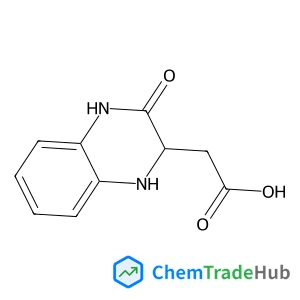
(3-Oxo-1,2,3,4-tetrahydro-2-quinoxalinyl)acetic acid
CAS Number:
136584-14-0
Molecular Formula:
C10H10N2O3
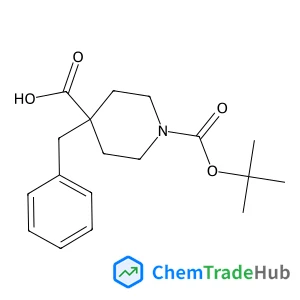
4-Benzyl-1-(tert-butoxycarbonyl)piperidine-4-carboxylic acid
CAS Number:
170838-87-6
Molecular Formula:
C18H25NO4

N,N-Diethyl-4-(4,4,5,5-tetramethyl-1,3,2-dioxaborolan-2-yl)benzamide
CAS Number:
325142-99-2
Molecular Formula:
C17H26BNO3
Recommended Suppliers




Disclaimer
This page provides academic journal information for reference and research purposes only. We are not affiliated with any journal publishers and do not handle publication submissions. For publication-related inquiries, please contact the respective journal publishers directly.
If you notice any inaccuracies in the information displayed, please contact us at support@chemtradehub.com. We will promptly review and address your concerns.