












![1-[3-(4-Morpholinylsulfonyl)phenyl]methanamine structure](https://static.chemtradehub.com/structs/933/933989-32-3-51af.webp "1-[3-(4-Morpholinylsulfonyl)phenyl]methanamine structure")
A continuous ionic liquid extraction process for the separation of cobalt from nickel
Literature Information
Publication Date
2013-09-10
DOI
10.1039/C3GC41519H
Impact Factor
10.182
Authors
Remi Goovaerts, Claudia Möller, Jan Luyten, Ben Thijs, Koen Binnemans
View Original
Abstract
A continuous ionic liquid extraction process using the ionic liquid trihexyl(tetradecyl)phosphonium chloride (Cyphos® IL 101) has been developed for the selective extraction of cobalt from nickel. The performance of this continuous extraction process is competitive with that of currently applied industrial processes. Moreover, the elimination of volatile odorous compounds from the extraction phase leads to environmentally friendlier and healthier working conditions.
Recommended Journals
Related Literature
Novel structurally tuned DAMN receptor for “in situ” diagnosis of bicarbonate in environmental waters
2016-03-02
Communication
DOI: 10.1039/C6AN00218H
Carbon dot-based inverse opal hydrogels with photoluminescence: dual-mode sensing of solvents and metal ions
Yuhua Zhu, Jianying Wang, Xiang Zhu, Jun Wang, Lijie Zhou, Jinhua Li, Tao Mei, Jingwen Qian, Lai Wei, Xianbao Wang
2019-08-09
Paper
DOI: 10.1039/C9AN01287G
Sequence-encoded quantitative invader assay enables highly sensitive hepatitis B virus DNA quantification in a single tube without the use of a calibration curve
Nan Sheng, Bingjie Zou, Huan Tong, Yan Lu, Sixi Xing
2019-08-08
Paper
DOI: 10.1039/C9AN00970A
Lateral resolution of desorption nanoelectrospray: a nanospray tip without nebulizing gas as a source of primary charged droplets
L. Hartmanová, I. Lorencová, M. Volný, P. Fryčák, H. Chmelíčková, T. Ingr, K. Lemr
2016-03-01
Communication
DOI: 10.1039/C5AN02665B
Fluorescence turn-on for the highly selective detection of nitric oxide in vitro and in living cells
Xiaomei Liu, Shuang Liu, Gaolin Liang
2016-03-18
Paper
DOI: 10.1039/C6AN00110F
A colorimetric probe for the real-time naked eye detection of cyanide and hydroxide ions in tap water: experimental and theoretical studies
Veikko Uahengo, Johannes Naimhwaka, Likius S. Daniel, Ateeq Rahman, Mohamed I. Elzagheid, Ping Cai
2019-09-18
Paper
DOI: 10.1039/C9AN01481K
A highly selective and sensitive fluorescent sensor based on Tb3+-functionalized MOFs to determine arginine in urine: a potential application for the diagnosis of cystinuria
Ruixue Cui, Yongyan Wan, Guanfeng Ji, Zhiliang Liu
2019-08-24
Paper
DOI: 10.1039/C9AN01204D
A sensitive magnetic nanoparticle-based immunoassay of phosphorylated acetylcholinesterase using protein cage templated lead phosphate for signal amplification with graphite furnace atomic absorption spectrometry detection
Pei Liang, Caiyan Kang, Enjian Yang, Xiaoxiao Ge, Dan Du, Yuehe Lin
2016-02-23
Paper
DOI: 10.1039/C5AN02656C
A Dean-flow-coupled interfacial viscoelastic fluid for microparticle separation applied in a cell smear method
Xin Shi, Liyan Liu, Wenfeng Cao, Guorui Zhu, Wei Tan
2019-08-27
Paper
DOI: 10.1039/C9AN01070J
You might also like
Compound Q&A
What precautions should be taken when handling 4-(2-Furylmethyl)thiomorpholine 1,1-dioxide (CAS: 79206-94-3)?
When handling 4-(2-Furylmethyl)thiomorpholine 1,1-dioxide (CAS: 79206-94-3), it ...
79206-94-34-(2-Furylmethyl)thi...
Compound Q&A
What precautions should be taken when handling 4-Chloro-N-[2-(4-morpholinyl)ethyl]benzamide (CAS: 71320-77-9)?
When handling 4-Chloro-N-[2-(4-morpholinyl)ethyl]benzamide (CAS: 71320-77-9), it...
71320-77-94-Chloro-N-[2-(4-mor...
Compound Q&A
How should waste containing 2-[2-(2-Methoxyethoxy)ethoxy]ethyl 4-methylbenzenesulfonate (CAS: 62921-74-8) be handled?
Waste containing this compound (CAS: 62921-74-8) should be handled according to ...
62921-74-82-[2-(2-Methoxyethox...
Compound Q&A
How should waste containing (S)-Methyl 2-amino-3-cyclohexylpropanoate be handled?
Waste containing (S)-Methyl 2-amino-3-cyclohexylpropanoate should be collected i...
40056-18-6(S)-Methyl 2-amino-3...
Compound Q&A
How is 5-({4-[(2S,4R)-4-Hydroxy-2-methyltetrahydro-2H-pyran-4-yl]-2-thienyl}sulfanyl)-1-methyl-1,3-dihydro-2H-indol-2-one (CAS: 166882-70-8) typically synthesized?
This compound can be synthesized using a multi-step process involving the conjug...
166882-70-85-({4-[(2S,4R)-4-Hyd...
Compound Q&A
Are there alternatives to (2E)-3-(3,4-Dichlorophenyl)acrylic acid (CAS: 7312-27-8) in synthesis?
There are several alternatives to (2E)-3-(3,4-Dichlorophenyl)acrylic acid in syn...
7312-27-8(2E)-3-(3,4-Dichloro...
Compound Q&A
How should Ethyl 6-(2-nitrophenyl)imidazo[2,1-b][1,3]thiazole-3-carboxylate (CAS: 925437-84-9) be stored?
Ethyl 6-(2-nitrophenyl)imidazo[2,1-b][1,3]thiazole-3-carboxylate (CAS: 925437-84...
925437-84-9Ethyl 6-(2-nitrophen...
Compound Q&A
How should waste containing 2-(1,3-Thiazol-2-yl)ethanamine (CAS: 18453-07-1) be handled?
Waste containing 2-(1,3-Thiazol-2-yl)ethanamine (CAS: 18453-07-1) should be coll...
18453-07-12-(1,3-Thiazol-2-yl)...
Compound Q&A
How is Methyl 5-iodo-2-methylbenzoate (CAS: 103440-54-6) typically synthesized?
Methyl 5-iodo-2-methylbenzoate can be synthesized through the iodination of meth...
103440-54-6Methyl 5-iodo-2-meth...
Compound Q&A
How is 5-Chloro[1,2,4]triazolo[1,5-a]pyridine (CAS: 1427399-34-5) typically synthesized?
5-Chloro[1,2,4]triazolo[1,5-a]pyridine is commonly synthesized via the condensat...
1427399-34-55-Chloro[1,2,4]triaz...
Source Journal
Green Chemistry

CiteScore:
16.1
Self-citation Rate:
7.5%
Articles per Year:
944
Green Chemistry provides a unique forum for the publication of innovative research on the development of alternative green and sustainable technologies. The scope of Green Chemistry is based on, but not limited to, the definition proposed by Anastas and Warner (Green Chemistry: Theory and Practice, P T Anastas and J C Warner, Oxford University Press, Oxford, 1998). Green chemistry is the utilisation of a set of principles that reduces or eliminates the use or generation of hazardous substances in the design, manufacture and application of chemical products. Green Chemistry is at the frontiers of this continuously-evolving interdisciplinary science and publishes research that attempts to reduce the environmental impact of the chemical enterprise by developing a technology base that is inherently non-toxic to living things and the environment. Submissions on all aspects of research relating to the endeavour are welcome. The journal publishes original and significant cutting-edge research that is likely to be of wide general appeal. To be published, work must present a significant advance in green chemistry. Papers must contain a comparison with existing methods and demonstrate advantages over those methods before publication can be considered. For more information please see this Editorial. Coverage includes the following, but is not limited to: Design (e.g. biomimicry, design for degradation/recycling/reduced toxicity…) Reagents & Feedstocks (e.g. renewables, CO2, solvents, auxiliary agents, waste utilization…) Synthesis (e.g. organic, inorganic, synthetic biology…) Catalysis (e.g. homogeneous, heterogeneous, enzyme, whole cell…) Process (e.g. process design, intensification, separations, recycling, efficiency…) Energy (e.g. renewable energy, fuels, photovoltaics, fuel cells, energy storage, energy carriers…) Applications (e.g. electronics, dyes, consumer products, coatings, pharmaceuticals, preservatives, building materials, chemicals for industry/agriculture/mining…) Impact (e.g. safety, metrics, LCA, sustainability, (eco)toxicology…) Green chemistry is, by definition, a continuously-evolving frontier. Therefore, the inclusion of a particular material or technology does not, of itself, guarantee that a paper is suitable for the journal. To be suitable, the novel advance should have the potential for reduced environmental impact relative to the state of the art. Green Chemistry does not normally deal with research associated with 'end-of-pipe' or remediation issues.
Recommended Compounds
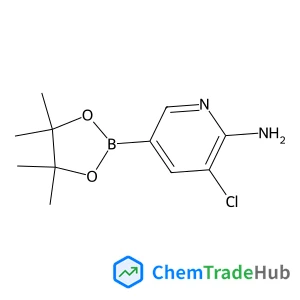
3-Chloro-5-(4,4,5,5-tetramethyl-1,3,2-dioxaborolan-2-yl)-2-pyridinamine
CAS Number:
1032758-99-8
Molecular Formula:
C11H16BClN2O2
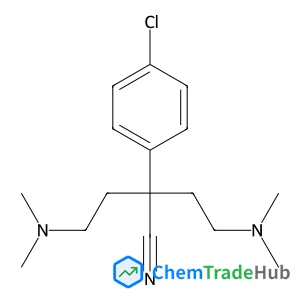
2-(4-Chlorophenyl)-4-(dimethylamino)-2-(2-(dimethylamino)ethyl)butanenitrile
CAS Number:
1246816-57-8
Molecular Formula:
C16H24ClN3
Recommended Suppliers





Disclaimer
This page provides academic journal information for reference and research purposes only. We are not affiliated with any journal publishers and do not handle publication submissions. For publication-related inquiries, please contact the respective journal publishers directly.
If you notice any inaccuracies in the information displayed, please contact us at support@chemtradehub.com. We will promptly review and address your concerns.